How much does HVAC maintenance cost in San Marcos?
The company you are matched with quotes the visit in writing. Ask whether they offer a single appointment or a plan, what they inspect, and which fees are extra. Climate Pros SD does not sell a branded maintenance plan or inspection protocol. Filter replacement is priced separately by filter type and is separate from the tune-up cost. Ask whether coil cleaning is included. If a refrigerant top-off or capacitor replacement is needed, that gets quoted separately before doing anything.
How often should I service my HVAC in San Marcos?
Twice a year. San Marcos has a nine-month cooling season with summer peaks regularly hitting 87 to 89 degrees. The long runtime and inland heat accelerate wear more than a single annual tune-up can adequately address. A spring visit in March or April and a fall visit in October is the right schedule. Ask the matched company whether they offer both visits and how they bill them.
Is San Marcos hot enough to need more frequent HVAC service than coastal cities?
Yes. Coastal cities like Carlsbad and Encinitas get marine layer moderation that keeps summer peaks in the mid-80s on most days. San Marcos does not. Inland valley heat means more run hours, more heat cycle stress on capacitors, and faster coil clogging from dry terrain dust. That combination is why many inland homeowners ask about two visits a year even when a coastal zip code might run one.
What should I ask the matched company to inspect?
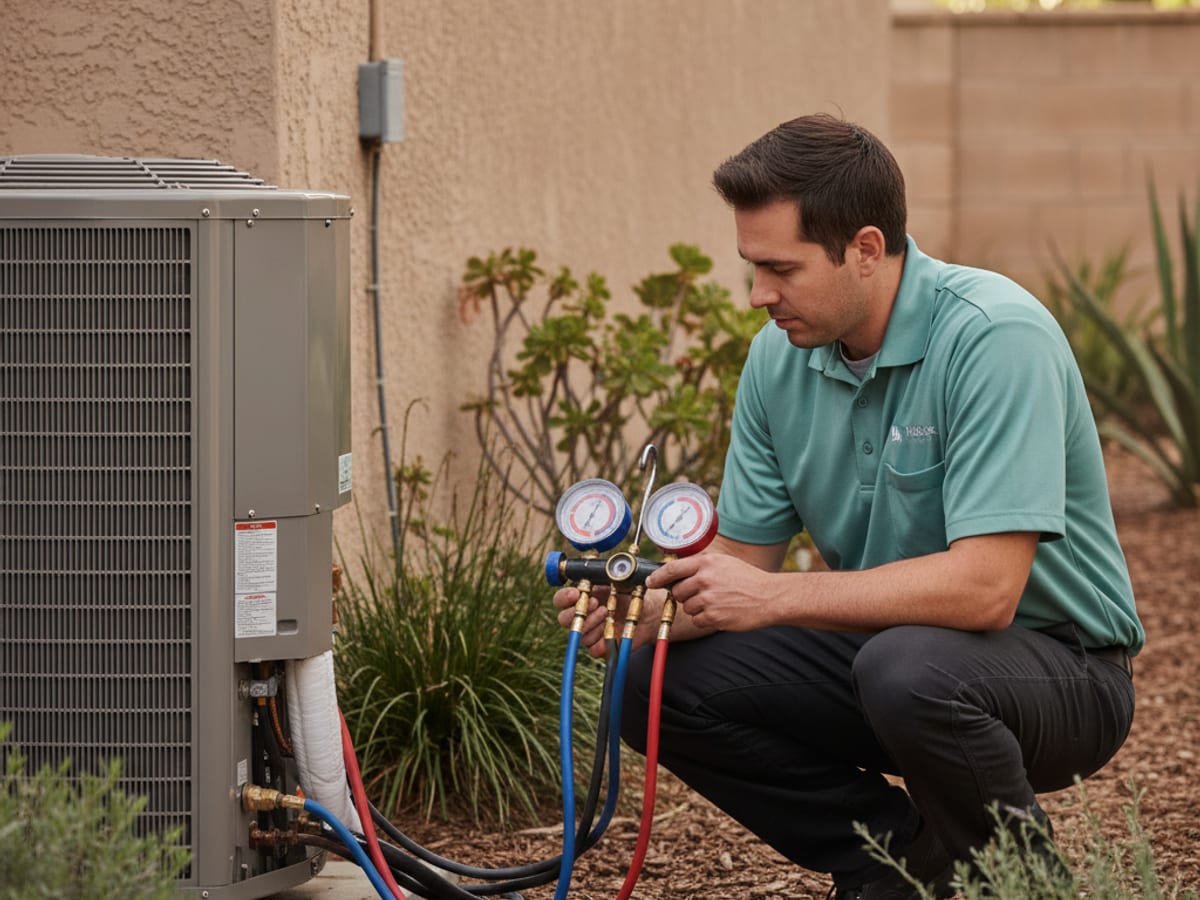
Refrigerant level check with gauges, capacitor microfarad test, compressor and motor amp draw, condenser coil cleaning, evaporator coil inspection, static pressure measurement, condensate drain flush and float switch test, contactor and electrical connection check, thermostat calibration and cycle timing, temperature split measurement, filter condition check, and blower wheel inspection. Every visit ends with a written summary of everything found.
My home is in San Elijo Hills. When should I schedule service?
March or April is the right window for the pre-summer visit. San Elijo Hills sits on a ridgeline and gets afternoon wind that loads coils with inland dust faster than valley floor properties. The system needs to be clean and fully charged before the first heat wave arrives, which typically starts in late May or June. Book before April if you want morning appointment availability.
I have an older Lake San Marcos home. Is maintenance worth it?
Yes, and the inspection will tell you exactly where the system stands. Lake San Marcos has a lot of older housing stock with systems that have been updated in pieces over the years. A thorough tune-up documents what each component looks like right now, so you are not making decisions without information. If the system is sound, you get another year of service out of it. If there's compressor stress, refrigerant that keeps declining, and electrical connections showing heat damage, that gets communicated clearly.
How does inland heat affect capacitor lifespan?
Capacitors lose their rated microfarad capacity faster under sustained high heat loads. A San Marcos system logging nine months of runtime in temperatures that regularly hit well above the coastal normals ages its capacitors faster than a coastal system running four months at 85. Capacitor failure is the single most common cause of a no-cooling call in any San Diego inland city during summer. A weak one is a scheduled cost to replace in spring. Caught on the first hot day of summer, it comes with urgency.
How often should I change my air filter in San Marcos?
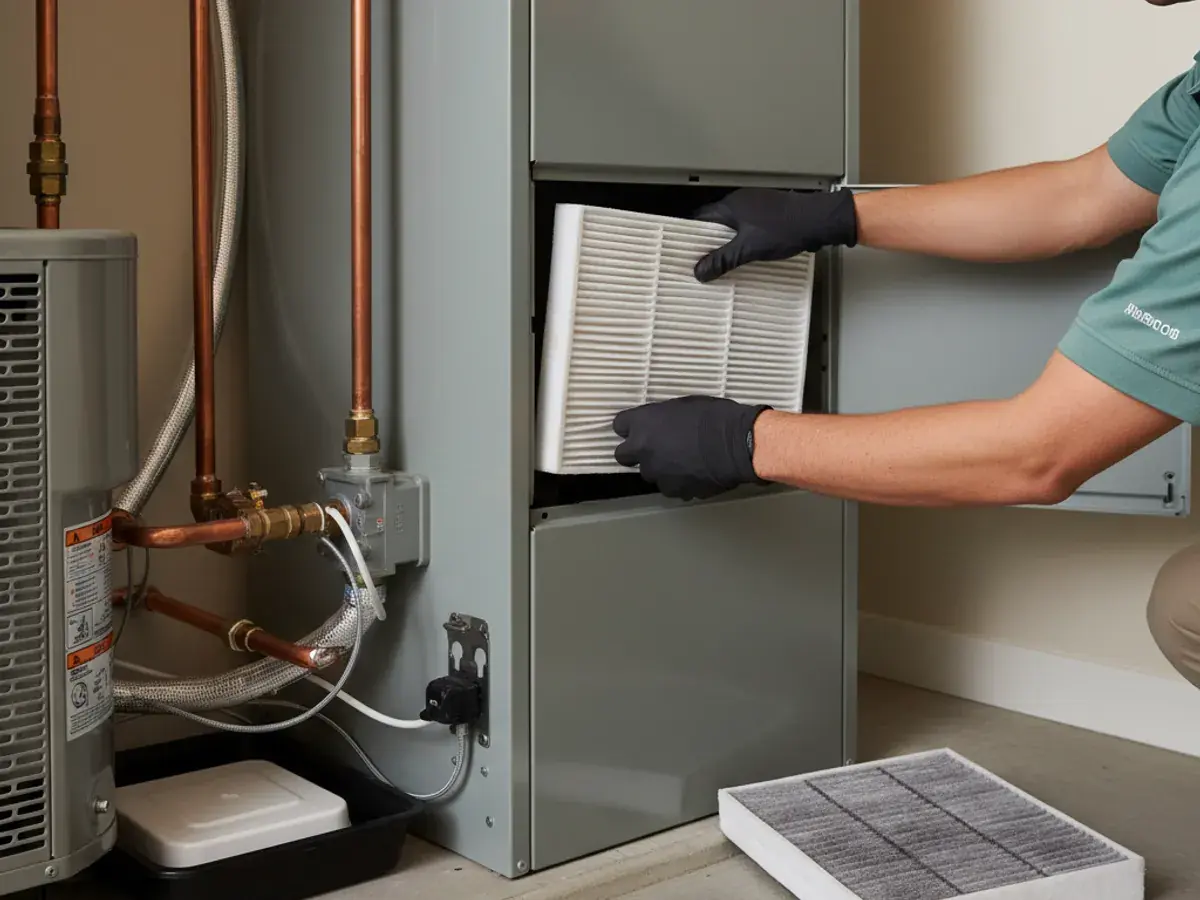
More often than the package says. Standard guidance is every two to three months, but that assumes normal air quality and moderate use. San Marcos has dry inland terrain that generates dust, and the long cooling season means the blower runs many more hours per year than a coastal home. Check the filter monthly and change it when it is visibly loaded. During periods of reduced air quality, check every two weeks. A clogged filter is the most common avoidable cause of coil freezing and compressor overload.
What is the difference between a single tune-up and a yearly plan?
A single tune-up is one visit. Some companies sell a plan with spring and fall visits. Climate Pros SD does not sell that plan. Ask the matched company whether they offer one and how they bill it. For a San Marcos home running a nine-month cooling season plus a furnace in winter, ask whether two visits per year are available. The fall visit includes furnace heat exchanger inspection and heating controls check, which are not covered in a cooling-only visit.
Do you service Discovery Hills and Twin Oaks Valley?
Yes. Pros in our network cover all San Marcos neighborhoods, including Discovery Hills, Twin Oaks Valley, San Elijo Hills, Lake San Marcos, and the areas around Cal State SM. Ask how they price hillside properties and homes on private roads.
My upstairs is always hotter than the downstairs. Can maintenance fix that?
Sometimes, yes. Airflow imbalance between floors is often a duct problem rather than an equipment problem, but a tune-up catches several contributing factors. Static pressure measurement identifies duct leaks that are bleeding air before it reaches the upper registers. Dirty evaporator coils reduce total airflow, which shows up first in the hardest-to-reach zones. Thermostat placement also matters. What gets found, and whether the fix is a tune-up item, a duct repair, or a zoning conversation, all gets communicated clearly.
Is there a heat pump advantage in San Marcos over a traditional AC?
Heat pumps work well in San Marcos's climate. The winters are mild enough that heat pump heating is efficient well below what Escondido or Julian temperatures would require, and the same unit handles all nine months of cooling. If you are replacing equipment, a heat pump is worth considering. Maintenance needs are similar to a traditional AC, though the reversing valve and defrost controls also get checked on the fall visit.