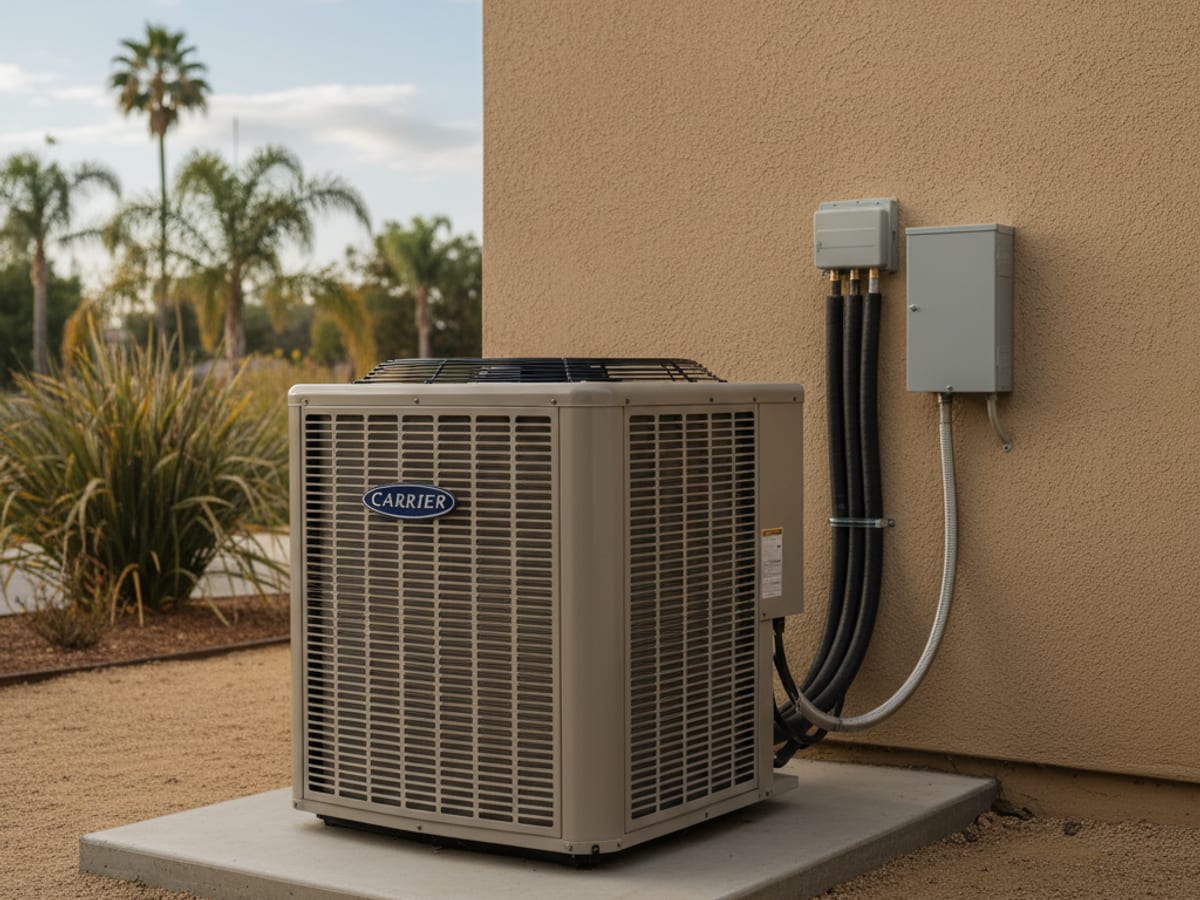
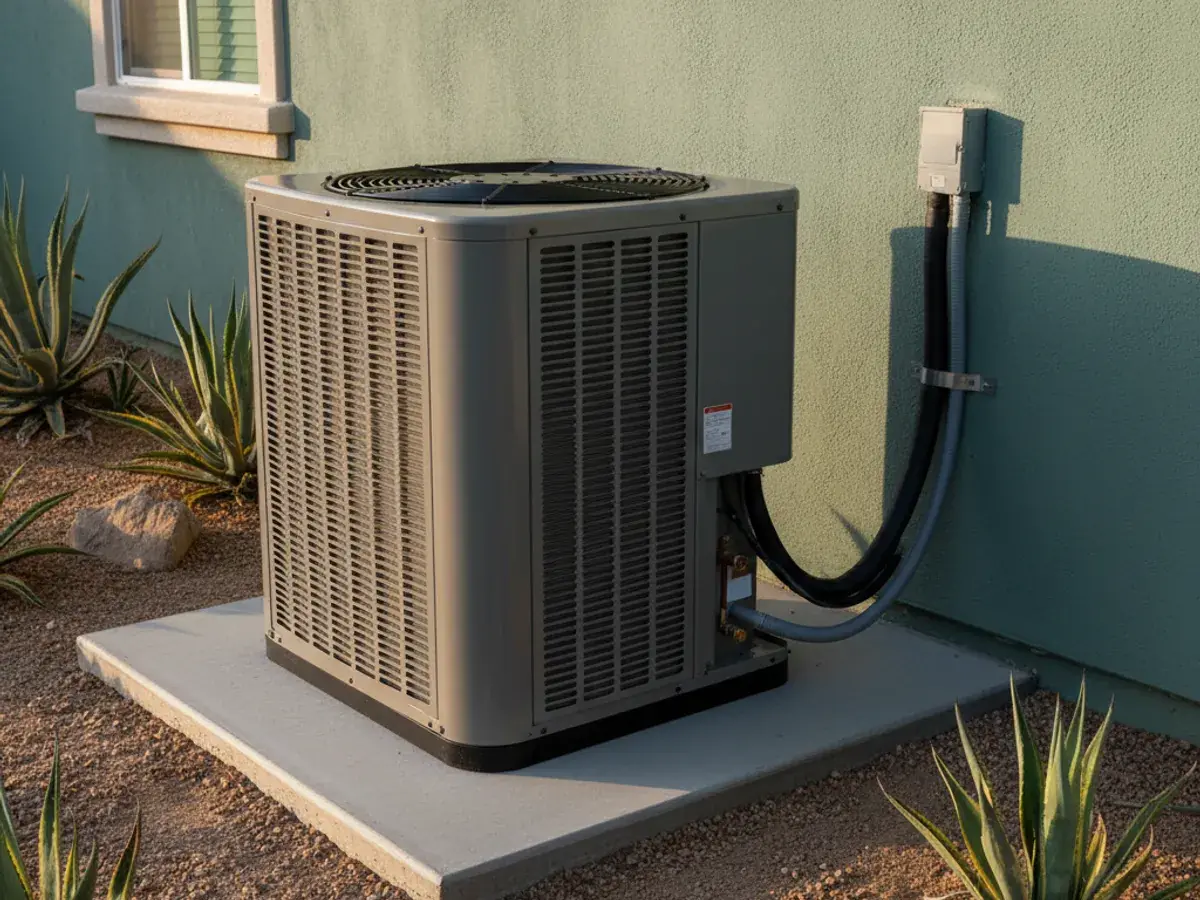
How much does AC installation cost in San Marcos?
It depends on system size, efficiency tier, and heat pump versus AC-only, which is why every install starts with an in-home estimate rather than a phone quote. The estimate is line-itemed so you see every cost before deciding.
What size AC do I need for the San Marcos heat?
Enough to hold setpoint on a peak-summer-plus afternoon, which is why a Manual J load calculation matters here. Square footage, insulation, window orientation, ceiling height, and sun exposure all get factored in. San Marcos summers are long and hot, and an undersized system simply will not keep up the first real week of heat.
How fast can you install a new AC in San Marcos?
Once you approve the estimate, the matched company quotes timing. Ask whether they prioritize a no-cool house. Ask the matched company how long a standard changeout takes. Jobs that need new ductwork, an electrical panel upgrade, or a zoned design take two to three days. During a summer heat wave the calendar fills fast, so call early.
Do I need a permit to replace my AC in San Marcos?
Yes. San Marcos requires a mechanical permit through the city Building Division for an AC system changeout. Ask whether the matched company pulls that permit as part of the job, and the work is inspected and recorded. A permitted install protects you at resale and keeps your manufacturer warranty valid.
Should I install a heat pump instead of an AC in San Marcos?
Often, yes. A heat pump replaces both your AC and furnace with one efficient system, and even in the hot inland climate it handles winter heating easily. Heat pump systems qualify for the largest SDG&E rebates. The numbers get run during the estimate so you can compare the options.
Are there rebates for a new AC or heat pump in San Marcos?
Yes. Where an SDG&E offer is open, it is typically largest for qualifying heat pump systems. The federal 25C tax credit ended for systems installed after December 31, 2025, so it does not apply to a 2026 install. The matched company may file live SDG&E paperwork if an offer exists. Check sdge.com/rebates for any offer that is currently open. 25C does not apply to a 2026 install.
My two-story home in Santa Fe Hills runs hot upstairs. Will a new system fix that?
It can, if it is the right system. Many older two-story San Marcos homes have an upstairs that runs warm because a single-stage unit cannot balance the floors. A zoned system or a variable-speed unit handles that far better. The layout gets checked during the estimate and the recommendation targets what actually solves the upstairs heat.
Can you reuse my existing ductwork?
Often, yes, but it gets inspected first. Many older Lake San Marcos homes have undersized or leaky ducts running through attics far hotter than the outdoor air. The duct runs get checked during the estimate. If the ducts are sound, they get reused. If they are losing real airflow, sealing or partial replacement gets quoted so the new system can keep up.
Do you charge extra to install in San Elijo Hills or Twin Oaks Valley?
Climate Pros SD does not set a citywide price. The matched company quotes that address.
How long does a new AC system last in San Marcos?
Service life for a central AC system in San Marcos depends on runtime, exposure, and maintenance more than on any published average. The long, hot inland summers push the equipment hard, so a long service life depends on regular maintenance. Systems that get a yearly tune-up and clean filters reliably outlast systems that do not.
My older Lake San Marcos home has a small electrical panel. Is that a problem?
It can be. Many older homes around Lake San Marcos have panels that were never sized for a modern condenser or a heat pump. The panel gets checked during the on-site estimate. If a circuit or panel upgrade is needed, it shows up as a line item in the quote, so nothing lands on the final bill unannounced.
What AC brands do you install?
All major brands, including Carrier, Trane, Lennox, Rheem, Goodman, Daikin, and Mitsubishi. The recommendation is brand-neutral, based on your home, the San Marcos heat load, and your budget, not a vendor bonus.