How much does AC repair cost in San Marcos?
AC repair in San Marcos is quoted after a diagnostic, and the price depends on which part failed and how the system is built. A capacitor or contactor repair tends to cost less than a coil or compressor job. At that point the matched company helps you weigh repair against replacement. Every repair is quoted before work starts.
How fast can you get to San Marcos for AC repair?
Call volume spikes during a heat wave. Ask the matched company whether they offer after-hours visits, when they could arrive, and what the fee would be.
Is it cheaper to repair or replace an AC?
Repair is cheaper when the fix costs less than half the price of a new unit. Replacement wins when the unit is older, uses R-22 refrigerant, or needs a compressor or evaporator coil. Ask for both numbers and a straight read so you can decide.
What is the 5,000 rule for AC?
Multiply the age of your AC, in years, by the repair cost, in dollars. If the result is over 5,000, replace the system. On an older unit, even a moderate repair bill can push the total past that threshold, favoring replacement. The same repair cost on a much newer unit stays well under the threshold, favoring repair.
Why is my AC not cooling in San Marcos?
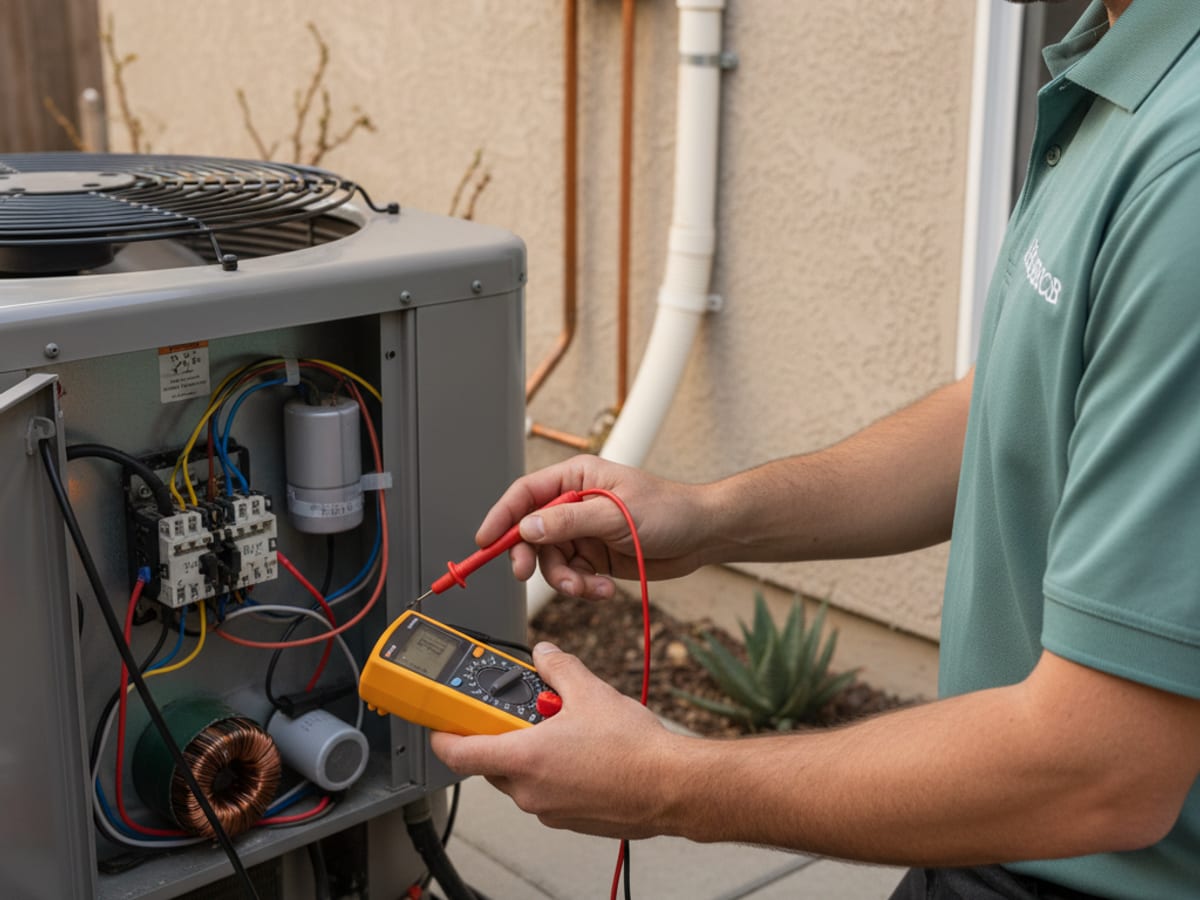
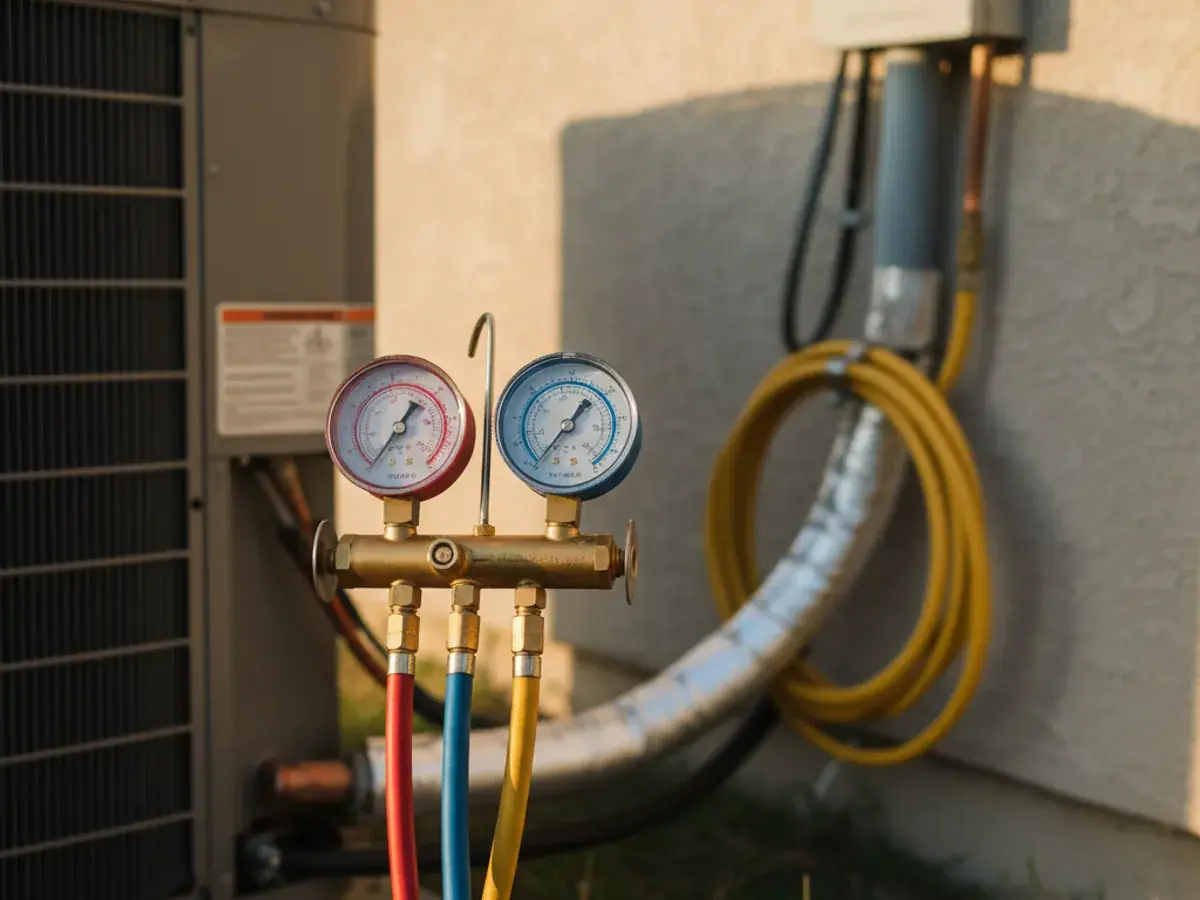
In San Marcos the most common causes are a failed run capacitor, low refrigerant from a slow leak, a frozen evaporator coil, or a dirty condenser coil choked by the dry inland dust. The matched company's diagnostic checks all of these with gauges, a multimeter, and static pressure readings before quoting anything.
My AC is blowing warm air. What should I check first?
Check that the thermostat is set to cool and the filter is not clogged. Then look at the outdoor unit. If it hums but the fan will not spin, that is usually a capacitor. If the fan runs but the air is still warm, the system is likely low on refrigerant. Both are usually quick, single-visit repairs.
Do you need a permit for AC work in San Marcos?
A repair does not need a permit. Replacing the AC system does. San Marcos requires a mechanical permit through the city Building Division for a changeout, and that permit gets pulled as part of the job so the work is inspected and on record.
How long does an AC unit last in the San Marcos climate?
Service life in San Marcos depends on runtime, exposure, and maintenance more than on any published average. The long, hot inland summers push the equipment hard, so a long service life depends on regular maintenance. Units that get a yearly tune-up and clean filters reliably outlast units that do not.
Do you charge extra to come to San Elijo Hills or Lake San Marcos?
Climate Pros SD does not set a citywide price. The matched company quotes that address.
Can you repair my AC quickly?
Often, yes. The technician you are matched with typically carries the parts that fail most often in San Marcos, including capacitors, contactors, motors, and refrigerant. Capacitor and contactor jobs are almost always finished in a single visit. A part that has to be ordered, like a specific control board, may take longer.
Are there rebates for replacing my AC in San Marcos?
Yes, if you replace rather than repair. Where an SDG&E offer is open, it is typically largest for heat pump systems. The pro tells you exactly what your home and equipment qualify for. Ask for the actual rebate amount, not a rounded sales figure.
What AC brands do you repair?
The matched company repairs major brands, including Carrier, Trane, Lennox, Goodman, Rheem, American Standard, York, and Bryant. Ask the matched company which brands they service. Typical shops cover both modern R-410A systems and older R-22 units still running in many established San Marcos homes.
Does AC run cooler in San Elijo Hills than in downtown San Marcos?
Yes. San Elijo Hills sits between 900 and 1,500 feet of elevation, so summer afternoons there usually run five to eight degrees cooler than the valley floor around Lake San Marcos. Same model of AC works less hard at the higher elevation, so hillside units tend to last longer and fail differently. Ask the matched company how they adjust the diagnostic based on which part of the city you are in.
I rent near CSUSM and my AC is broken. Who calls in the repair?
Either you or your landlord can call. The technician runs the diagnostic, sends written findings and a quote to the property owner or manager, and the repair is scheduled once they approve. Working directly with tenants and managers keeps the timeline moving so the home is not sitting well above a comfortable setpoint while messages bounce around.
Should I change my filter more often during wildfire smoke?
Yes. During a smoke event in San Marcos a technician typically recommends changing the air filter every two weeks instead of the usual two to three months. Smoke loads the filter fast, which chokes airflow, freezes the evaporator coil, and stresses the compressor. A clean filter is the single most important thing you can do for the AC during smoke season.
Should I shut off my AC during a Santa Ana wind smoke event?
No. Keep windows closed and run the AC, ideally with the fan in auto mode. The AC keeps indoor air below outdoor temperature and circulates it through the filter, which removes most of the smoke particulate. Shutting it down lets outdoor smoke seep in. If your filter is older than two weeks during a smoke event, change it first.
My AC keeps tripping the breaker. What is happening?
A breaker trip almost always means an electrical fault on the AC, not on the breaker. The most common causes in San Marcos are a failing run capacitor pushing the compressor into high amp draw, a shorted contactor, a grounded compressor winding, or a refrigerant charge so low the compressor is overheating. Stop resetting the breaker repeatedly. Each reset stresses the equipment further. Call for the diagnostic.
How do I know if my AC is undersized for my San Marcos home?
The clearest signal is a system that runs almost continuously through July afternoons and still cannot hold the thermostat setpoint. Other clues are upstairs rooms staying eight or more degrees warmer than downstairs, and the AC failing every year in midsummer rather than at the start of the season. The matched company runs a Manual J load calculation as part of the diagnostic to confirm whether the unit you have is the right size for the house you live in.