Fallbrook summers run 87 to 89 degrees and stay there for months. Agricultural dust from the avocado groves and wildfire smoke from late summer through fall load filters fast and pack condenser coils tight. Equipment that does not get serviced here fails on a schedule.
Climate Pros SD matches Fallbrook homeowners with a licensed HVAC company. That company quotes in writing whether they offer a single visit or a maintenance plan, what they inspect, and any fees before work starts. Typical industry tune-ups look at capacitors, coils, and refrigerant charge. Ask the matched company which of those they include. Appointment length is set by that company.
Fallbrook is one of the hotter communities in San Diego County's rural north. Temperatures climb well above the coastal normals regularly from late May through September, and the cooling season effectively runs year-round for anything with older equipment. The agricultural environment adds a dust load that is different from what urban systems face: avocado pollen, orchard dust, and fine grit from unpaved property roads pack condenser coils faster than almost anywhere in the county. Properties in De Luz and Live Oak Park can see significant coil buildup in six months.
We match homeowners with pros across the full Fallbrook area including De Luz, Live Oak Park, Rainbow Road, and equestrian properties throughout the rural zones. Ask the matched company whether heavy agricultural coil cleaning is extra when the buildup needs more than a rinse, and get that in writing.
What to ask a matched company to inspect in Fallbrook
Ask the matched company what they inspect. Typical industry tune-ups look at capacitors, coils, and refrigerant charge. Get that list in writing.
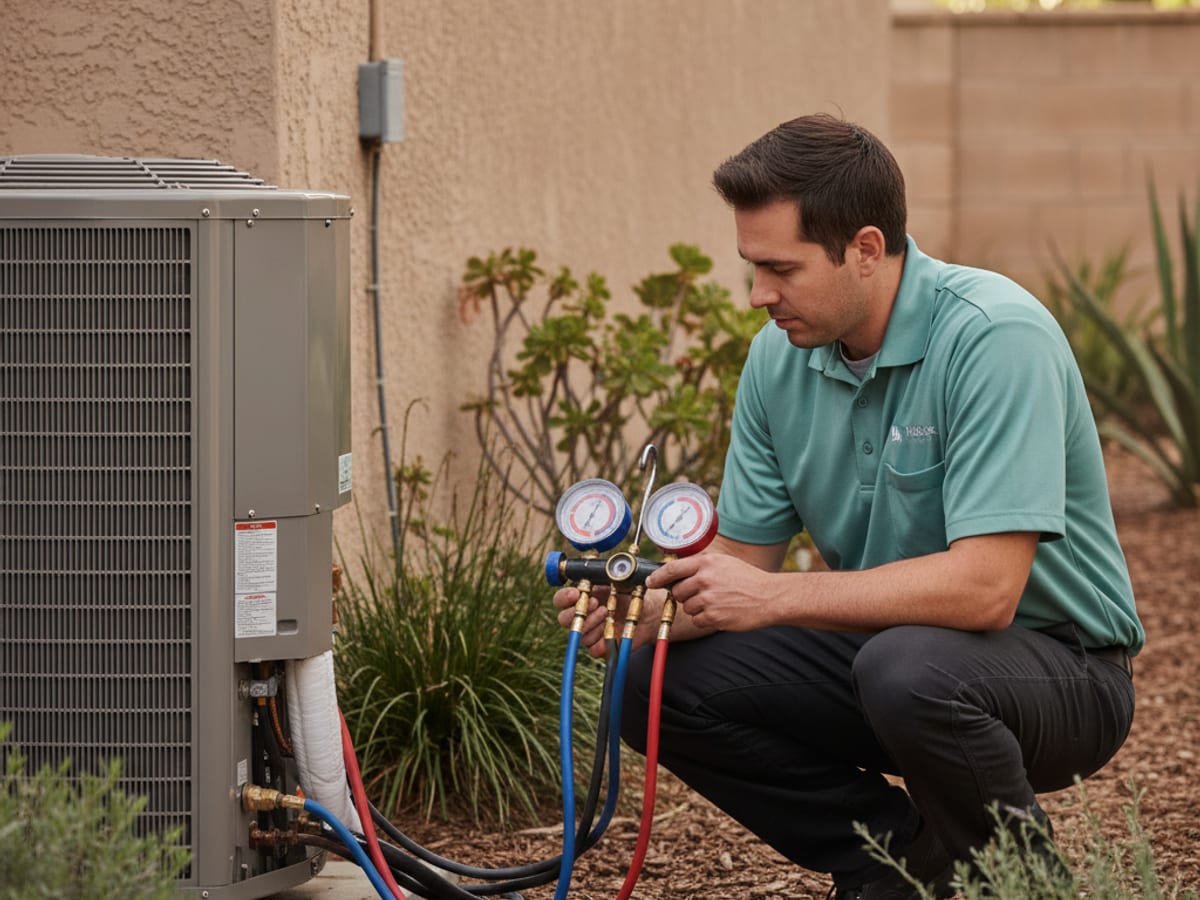
Refrigerant level check with gauges: slow leaks found here, not mid-summer
Capacitor microfarad test: the single most common failure mode in Fallbrook heat
Compressor and fan motor amp draw: high amps signal a unit working too hard
Condenser coil cleaning: removes avocado pollen and agricultural dust from fin stock
Heavy agricultural dust assessment: De Luz and grove-adjacent properties need closer attention
Evaporator coil inspection for buildup or early freeze indicators
Static pressure check to catch duct leaks pushing the system into high-load conditions
Condensate drain flush and float switch test
Contactor and electrical connection inspection
Thermostat calibration and cycle timing check
Temperature split measured across the air handler
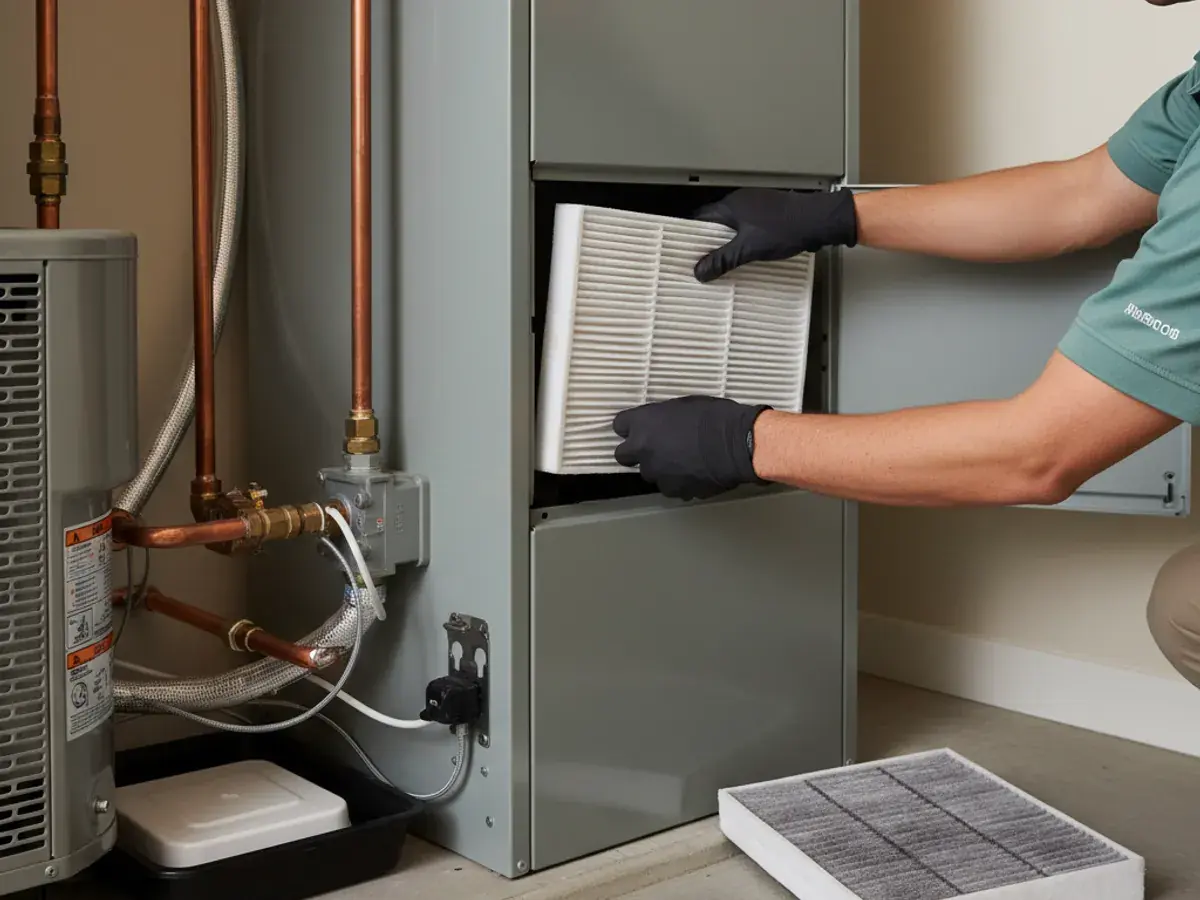
Filter condition check and replacement if needed (filter priced separately)
Propane system component check for homes not on natural gas
Wildfire smoke and ash deposit assessment on coil and filter
Full written summary with any findings and recommended action items
HVAC maintenance cost in Fallbrook
The company you are matched with quotes the visit in writing before starting. Ask whether they offer a single appointment or a plan, what they inspect, and which fees are extra.
Repair
Typical range
Notes
Single tune-up visit
Quoted by the matched company
Ask what they inspect and whether coil cleaning is included
Annual maintenance plan, if the company offers one
Quoted by the matched company
Ask how many visits they include and what each visit covers
Filter replacement
Priced by filter type and MERV rating
Depends on filter type and MERV rating; check more often during smoke season
Heavy agricultural coil cleaning, if billed separately
Quoted after inspection
For grove-adjacent and De Luz properties with dense pollen and dust buildup
Refrigerant top-off (R-410A)
Priced by how much charge is needed
If low charge is found during inspection; quoted separately before adding
Refrigerant top-off (R-22)
Priced by supply availability and charge needed
R-22 supply is limited; persistent leaks on older systems point toward replacement
Capacitor replacement
Priced by part and labor
If the microfarad test fails during the tune-up
Condensate drain line clear (severe blockage)
Priced by severity of the blockage
If the drain is fully blocked and requires more than a basic flush
Pricing is set by the company you are matched with. Ask how they price De Luz, Live Oak Park, and rural equestrian addresses, and whether heavy agricultural coil cleaning is extra. If the inspection turns up something that warrants a repair, that gets quoted separately and you decide whether to proceed.
What maintenance prevents in Fallbrook
A yearly tune-up is mostly about catching small problems before they become expensive ones. Fallbrook's rural agricultural environment and hot inland summers create a specific set of failure patterns that show up predictably and preventably with consistent service.
Condenser coil packing from agricultural dust
Avocado groves produce a combination of pollen, organic dust, and fine particulate that moves with the Fallbrook winds and deposits heavily into outdoor condenser coils. On grove-adjacent properties, this is not an annual problem: it is a six-month problem. A coil that is fully packed cannot reject heat efficiently, which forces the compressor into sustained high-amp operation trying to overcome the thermal load. Heat builds inside the unit, refrigerant pressure rises, and the compressor eventually trips on high pressure or overheats.
Ask whether coil cleaning is included. Properties in De Luz and along avocado grove corridors often need extended cleaning. Ask whether that is extra. That conversation is cheaper than a compressor replacement.
Capacitor failure during the first heat wave
Fallbrook's temperatures climb fast in late May and stay high through September. Run capacitors degrade with heat cycles, and a capacitor that is at 70 or 80 percent of rated microfarads in April is likely to fail by June under sustained peak-summer conditions. Ask whether they measure capacitor microfarads. That catches a weak one. A failing capacitor replaced in April is a scheduled part-and-labor cost. The same failure on a peak-summer afternoon in July is an emergency call with a wait.
Wildfire smoke infiltration and filter overload
Fallbrook sits in one of the more active wildfire zones in San Diego County. Late summer and fall smoke events can load a residential air filter in days rather than months. A filter that is 80 percent loaded restricts airflow enough to cause the evaporator coil to ice over, which stops cooling entirely and causes the compressor to run against a frozen coil. During smoke season, filters should be checked every one to two weeks.
The fall tune-up includes a smoke and ash deposit assessment on both the filter and the condenser coil. Ash deposits on condenser fins are different from pollen and dust and require different cleaning technique. Findings get noted and the cleaning adjusted accordingly.
Propane systems and different maintenance requirements
Many Fallbrook properties, particularly in De Luz and the rural eastern areas, run on propane rather than natural gas. Propane furnaces and combination systems require specific inspection points that differ from gas systems: propane valve condition, regulator function, and combustion chamber inspection for propane-specific carbon buildup patterns. A technician familiar only with urban gas systems may miss these checks.
Propane system presence gets noted in the inspection summary and the propane-specific findings documented separately. If the furnace heat exchanger shows stress or the propane valve is showing wear, that gets flagged before the heating season rather than after.
Older housing stock and deferred maintenance catch-up
Fallbrook has a significant stock of older homes, many of which have seen extended periods without professional HVAC service. Systems that have run without maintenance for three to five years often have multiple small problems that individually would not cause failure but together create a system on the edge. Loaded coils, degraded capacitors, a refrigerant charge that is slightly low, and filters that have been in place too long all interact.
A first tune-up on a long-neglected system typically surfaces more findings than subsequent annual visits. Everything gets documented, priorities are set for what needs attention now versus what to watch, and you get a clear picture of where the system stands.
Local angle
HVAC maintenance built for Fallbrook homes
Why Fallbrook is hard on HVAC equipment
Fallbrook sits inland at around 700 feet elevation in northern San Diego County. It gets almost no marine layer influence. Temperatures climb into the 90s through much of the summer and regularly push to 100 to 105 in July and August. That sustained heat means HVAC systems log significantly more run hours per year than coastal equipment.
The agricultural environment adds a dust load that urban systems simply do not face. Avocado groves cover much of the Fallbrook area, and grove pollen combined with orchard dust and wind-blown grit from unpaved roads creates a coil-packing environment unlike anything in the city. Wildfire risk in the surrounding hills adds a smoke-and-ash variable from August through November that changes the filter replacement math dramatically.
De Luz and rural property challenges
De Luz is Fallbrook's most rural zone: larger parcels, more tree cover, more agricultural activity, and roads that generate significant dust in dry conditions. Condenser units on De Luz properties typically show heavier coil buildup than anywhere else in the Fallbrook service area. Properties with avocado groves immediately adjacent to the HVAC equipment may need coil inspection and cleaning more than once a year.
Equestrian properties throughout Fallbrook have an additional dust source: arena soil and hay particulate that moves with afternoon winds. These properties benefit from condenser placement assessments that look at prevailing wind direction relative to the corral or arena.
Live Oak Park and older housing
Live Oak Park and surrounding established neighborhoods have a range of housing ages from the 1960s through the 1990s. Original or early-replacement HVAC systems in these homes are often running at or past their expected service life. A system that has been maintained through its life often has several years of useful life remaining. A system that has been neglected typically shows wear across multiple components simultaneously.
The inspection gives an honest assessment of where a system stands. If a 20-year-old unit has a sound compressor, clean electrical connections, and good refrigerant charge, that gets reported and you keep running it. If multiple warning signs show up at once, everything is documented clearly so you can make an informed decision before the next summer.
Propane infrastructure in rural Fallbrook
A meaningful portion of Fallbrook properties, particularly those outside the SDG&E gas main coverage area, run on propane. Propane tank systems require coordination for any work involving gas components: tank level and valve condition get verified as part of the heating system check on propane-equipped homes. Propane furnaces also run slightly different combustion characteristics than natural gas, which affects the carbon deposit pattern checked during heat exchanger inspection.
Wildfire risk and HVAC season planning
Fallbrook is within the San Diego County designated high fire hazard severity zone. SDG&E Public Safety Power Shutoffs happen in this area during red flag conditions. When power returns after a shutoff, an air conditioner compressor experiences a hard start: full voltage applied to a hot, pressurized system. A weak capacitor is most likely to fail at that moment.
The tune-up includes capacitor testing specifically because of this. Hard-start kits reduce the startup amp surge and extend compressor life for homes in PSPS-affected areas. This gets noted in the written summary for any Fallbrook property in PSPS territory.
Pre-summer timing in Fallbrook
Fallbrook has a shorter buffer before true heat than most of San Diego County. By May temperatures are already into the high 80s and low 90s, and the schedule fills fast. March or April is the right window for the pre-summer visit. If you book a second visit, October is a common window, when wildfire smoke season is tapering and the first cool nights in Fallbrook can actually drop below 50 degrees at elevation.
What else is hvac maintenance in Fallbrook called?
Homeowners search for this a few different ways. In Fallbrook it also goes by HVAC tune-up in Fallbrook , seasonal HVAC tune-up in Fallbrook , preventive HVAC maintenance in Fallbrook , HVAC inspection in Fallbrook , furnace maintenance in Fallbrook , and AC maintenance in Fallbrook . They all reach the same licensed local pros, and the operator who answers will
sort out which one your job actually is.
Fallbrook maintenance questions
How much does HVAC maintenance cost in Fallbrook?
The company you are matched with quotes the visit in writing. Ask whether they offer a single appointment or a plan, what they inspect, and which fees are extra. Climate Pros SD does not sell a branded maintenance plan or inspection protocol. Filter replacement is priced separately by filter type. Ask whether heavy agricultural coil cleaning is extra when the buildup needs more than a rinse.
How often should I service my HVAC in Fallbrook?
Twice a year. A pre-summer visit in March or April and a fall visit in October. The combination of peak-summer-degree summers, agricultural dust, and wildfire smoke makes Fallbrook one of the harder environments for HVAC equipment in the county. One visit a year is not enough to stay ahead of the coil packing and filter loading this environment creates.
What should I ask the matched company to inspect?
Refrigerant level check with gauges, capacitor microfarad test, compressor and motor amp draw, condenser coil cleaning, evaporator coil inspection, static pressure measurement, condensate drain flush and float switch test, contactor and electrical connection check, thermostat calibration and cycle timing, temperature split measurement, filter condition check, and blower wheel inspection. For propane homes, propane valve condition and combustion chamber deposits also get checked. Every visit ends with a written summary of everything found.
Why does my Fallbrook AC coil get dirty so fast?
Avocado grove pollen, agricultural dust, and wind-blown grit from unpaved roads combine into one of the heaviest coil-packing environments in the county. Properties adjacent to active groves can see significant buildup in six months. A packed coil forces the compressor to work harder to reject heat, which drives amp draw up and compressor life down. Ask whether coil cleaning is included. That is the right question in this climate.
How does wildfire smoke affect my HVAC in Fallbrook?
Smoke loads the air filter in days during an active smoke event. A filter at 80 percent capacity chokes airflow enough to cause the evaporator coil to ice, which stops cooling and stresses the compressor. During smoke season, check the filter every one to two weeks. After smoke clears, rinse the condenser fins with a garden hose to remove ash deposits. The fall tune-up includes smoke and ash assessment on both the filter and the outdoor coil.
My Fallbrook home runs on propane. Does that change what maintenance involves?
Yes. Propane systems have different inspection points than natural gas systems: propane valve condition, regulator function, and combustion chamber carbon deposit patterns specific to propane combustion. Propane-specific findings get documented separately in the inspection report. If the propane valve or heat exchanger shows wear, you know before the heating season rather than during it.
What is a run capacitor and why does it fail in Fallbrook heat?
A run capacitor stores charge and helps compressor and fan motors start and maintain speed. Heat degrades capacitors over time. Fallbrook's sustained peak-summer-degree summers accelerate that degradation faster than in coastal cities. A capacitor at 70 percent of rated microfarads in April will often fail by June. That catches a weak one. Replacing a failing one in spring is a scheduled cost. Missing it until July means an emergency premium and a wait.
When is the right time to schedule HVAC service in Fallbrook?
March or April for the pre-summer visit. Fallbrook heats up earlier than most of the county, so contractor calendars tighten as the heat arrives. October is a common window if you book a second visit.
Do you service De Luz and rural equestrian properties?
Yes. Pros in our network cover all Fallbrook addresses including De Luz, Live Oak Park, Rainbow, and rural equestrian properties throughout the area. Ask the matched company how they price a remote address and whether heavy agricultural coil cleaning is extra. Get both in writing.
I have an older system. Is maintenance worth it?
Yes, with an honest caveat. A well-maintained older system often has years of life remaining. What matters is what the inspection shows. If the compressor is running within amp spec, electrical connections are clean, and the refrigerant charge is holding, that gets reported and you keep running it. If there's a compressor running hot, connections showing heat damage, and a charge that needs repeated attention, that gets documented clearly so the decision to replace is informed rather than forced by a July failure.
What happens if I skip annual maintenance in Fallbrook?
The condenser coil packs with agricultural dust and pollen, forcing the compressor into sustained high-amp operation. A capacitor drifts to failure without anyone measuring it. Wildfire smoke loads the filter and nobody changes it during the event, causing an evaporator freeze. Refrigerant drifts low over two to three seasons and the system can't hold temperature on the first peak-summer day. Any one of these is a repair call. All of them together is a system that dies five years earlier than it should.
How long does a tune-up take?
Most appointments run 60 to 90 minutes. Properties with heavy agricultural buildup on the condenser coil or propane systems requiring additional inspection points run closer to 90 minutes.