Your outdoor unit hums, buzzes, and tries to start, but the fan never spins. That sound often points to the AC capacitor, a small metal can that stores a jolt of energy for the compressor and condenser fan. When it fails, cooling stops.
Climate Pros SD matches you with licensed HVAC companies. We do not replace capacitors, own trucks, or set repair prices.
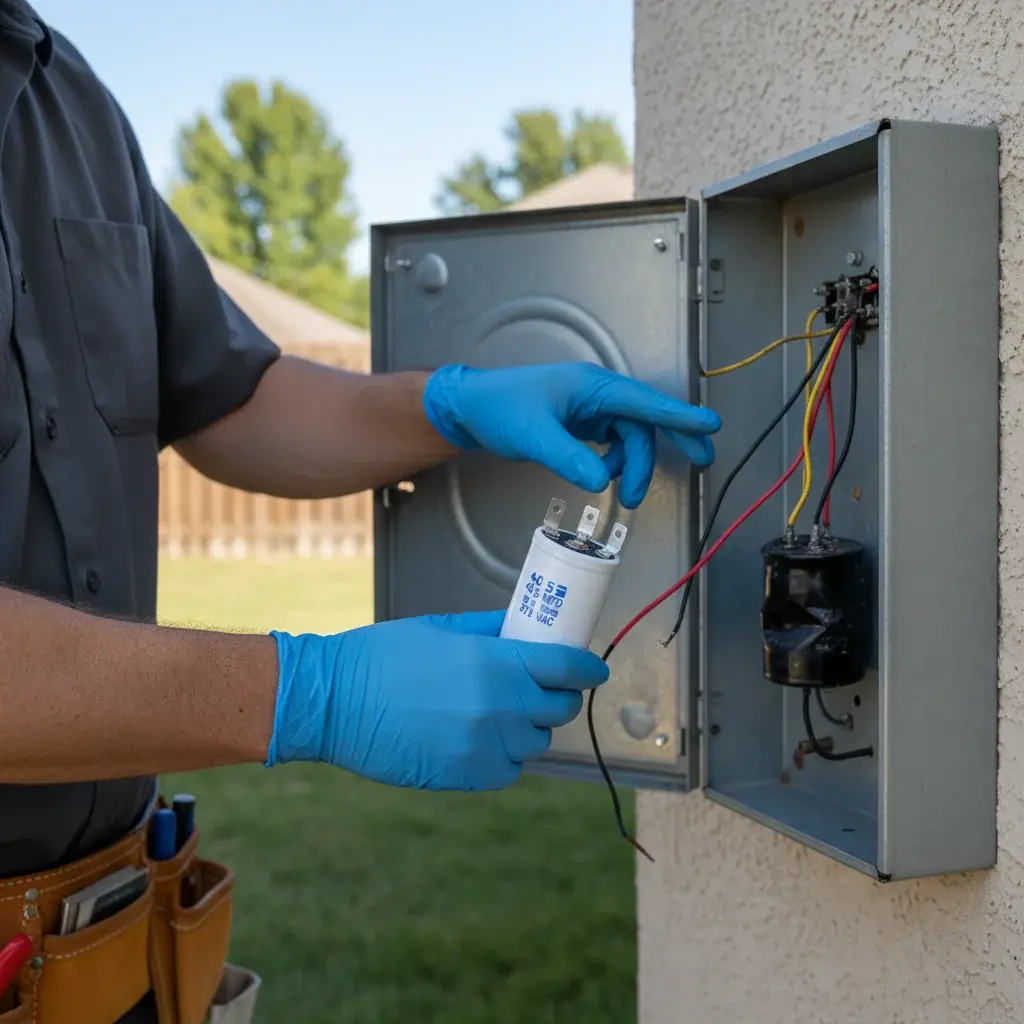
What an AC capacitor actually does
A capacitor stores charge and releases it so motors can start. The outdoor unit has two big motors: the compressor (refrigerant) and the condenser fan (rejects heat). Those motors need a larger kick than a household circuit provides by itself.
Most modern residential units use a dual-run capacitor that serves both motors: a start jolt, then a smaller run assist. When it fails, one or both motors will not start and the house warms up.
Symptoms of a failing or failed capacitor
A trained technician confirms this with a meter. Homeowners often notice:
- Humming or buzzing: Power is at the motors, but they cannot start. A stalled motor hums.
- Outdoor fan not spinning: Compressor may hum while the top fan stays still.
- Start-then-stop: Thermostat calls, the unit hums, then it shuts down. Safety circuits are protecting the motors.
- Warm or only slightly cool air: A weak capacitor may start the fan but not the compressor, so you get circulation without real cooling.
Rule out a tripped breaker and a packed filter first: AC not cooling checklist. If those are fine, a capacitor is a common next suspect, not a certainty.
Why San Diego heat is hard on capacitors
Heat ages the dielectric inside the can. The outdoor cabinet already runs hot; inland sun on metal makes it worse. El Cajon, Santee, and Escondido see hotter afternoons than the beach, so these parts show up often in cooling season. Lifespan still varies by brand, shade, and how hard the motors are pulling. A company should not sell you a replacement date from a blog.
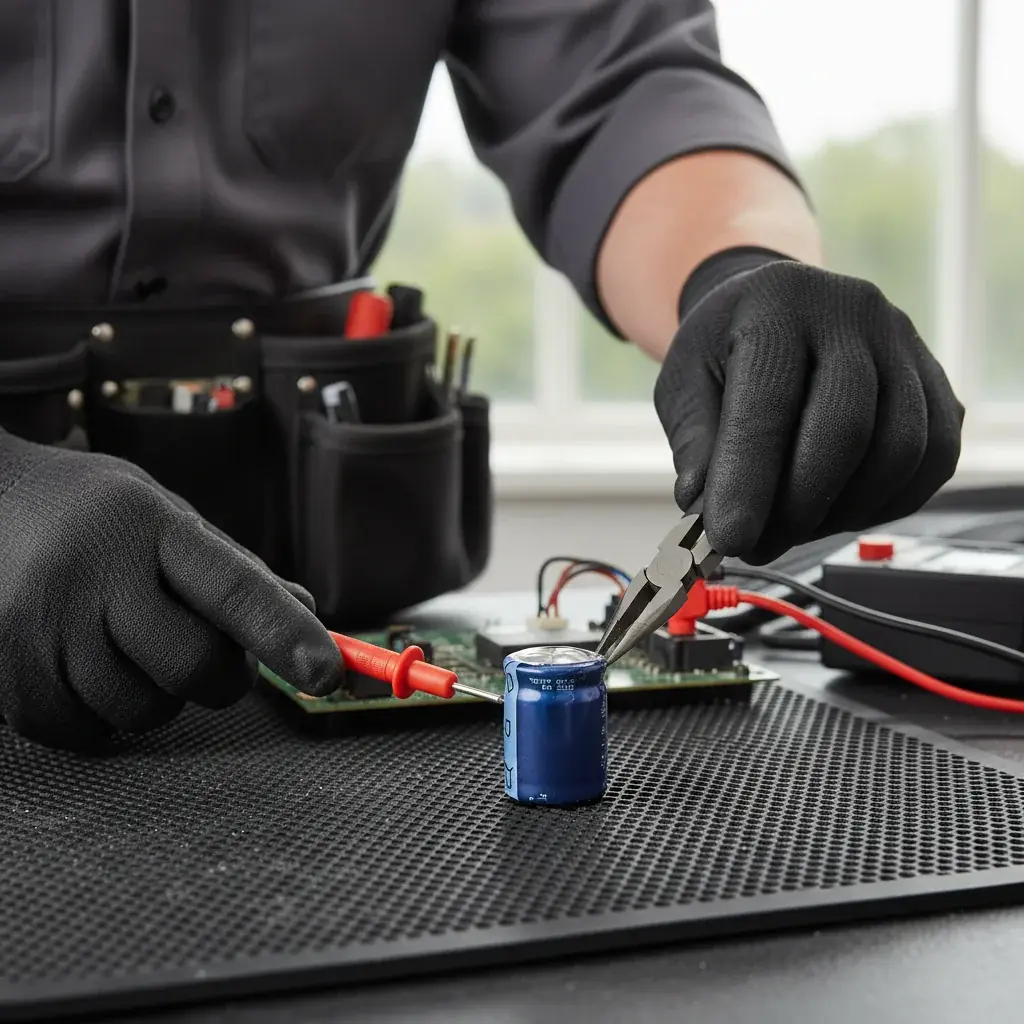
What to ask before you approve a capacitor job
The part is inexpensive at retail. The visit is diagnosis, safe high-voltage work, a correct microfarad rating and voltage, and a test of the motors afterward. Climate Pros SD does not publish a fair-price range.
Ask the matched company:
- What is the diagnostic or trip fee, as a dollar figure, and does it apply toward repair if you proceed? Each company sets its own policy.
- What microfarad and voltage rating are they installing, and does it match the failed part and the nameplate?
- After the swap, will they measure compressor and fan amp draw against the manufacturer’s spec?
- What do they warrant on the part and on the labor, in writing?
If the quote is a round number with no diagnosis, ask for a breakdown. Verify the C-20 on the CSLB site. For broader repair-scope questions, AC repair cost in San Diego (that page should also be read as a quote checklist, not a price list).
When the capacitor is the symptom, not the problem
Aging fan motors and compressors can draw extra current. That extra load cooks capacitors. A swap without an amp check can put you on a cycle of repeat failures.
A thorough tech measures amp draw after the new capacitor is in. High readings mean the motor may be next. That is the conversation you want before you only buy another can.
Related: AC repair, HVAC maintenance, AC installation.
When to call us
Capacitors hold a charge even with the disconnect off. DIY shock is a real risk. If you suspect a bad capacitor, call (442) 777-6440. Climate Pros SD matches you with a licensed pro who can diagnose, check the motors, and quote the repair. Ask whether a tech is available today, yes or no. This brand does not promise same-day arrival.