A San Diego pool house is small, detached, and almost always needs its own HVAC. Extending the main house system across the yard means a long refrigerant run, a buried duct, or an ugly aboveground trunk. A single-zone ductless mini-split is the usual answer. The part many quotes skip is humidity from wet towels, swimsuits, and the pool next door.
Climate Pros SD connects you with licensed local HVAC pros. We do not install equipment. Verify the matched contractor at cslb.ca.gov.
Why are mini-splits the default for pool houses?
Pool houses share the problem set of garage conversions and ADUs: small footprint, often built without ducts, used as a guest room, gym, office, or changing room.
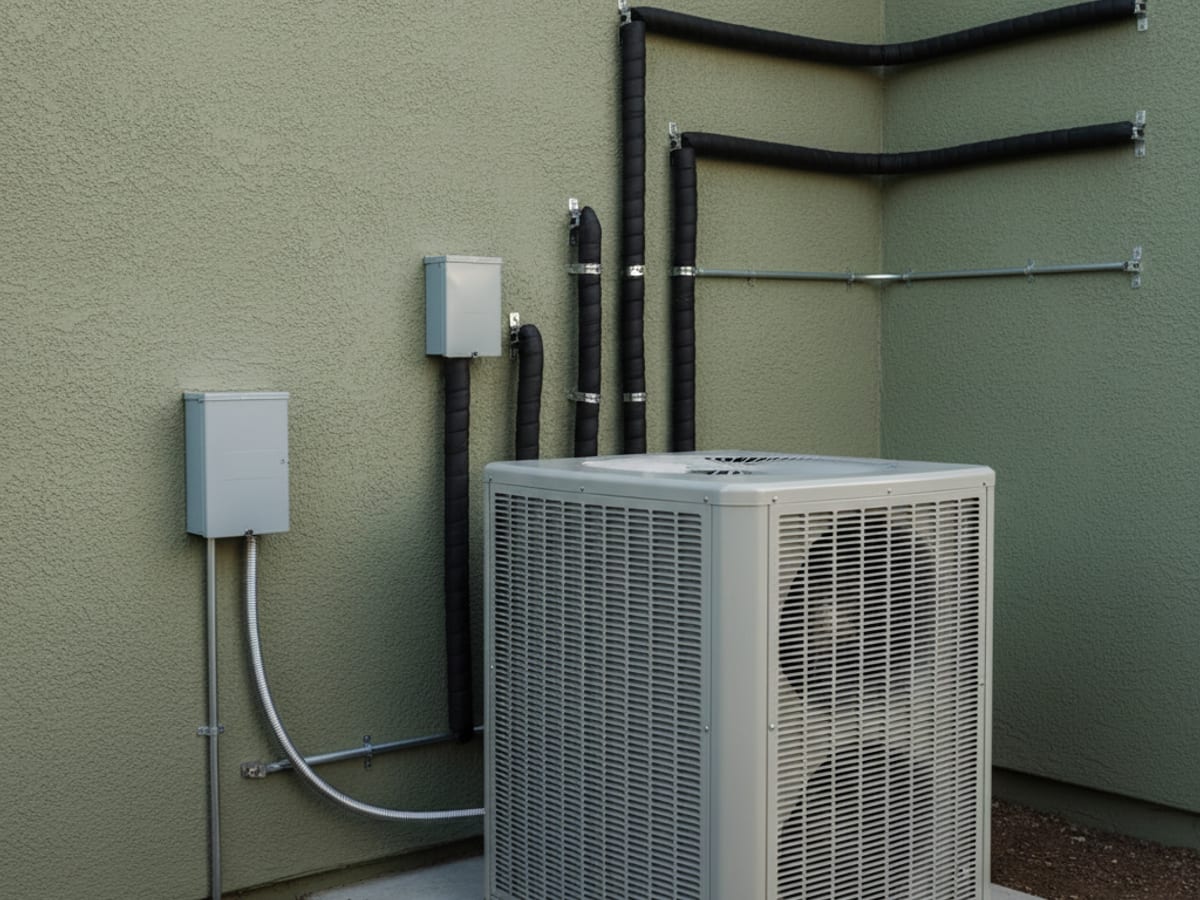
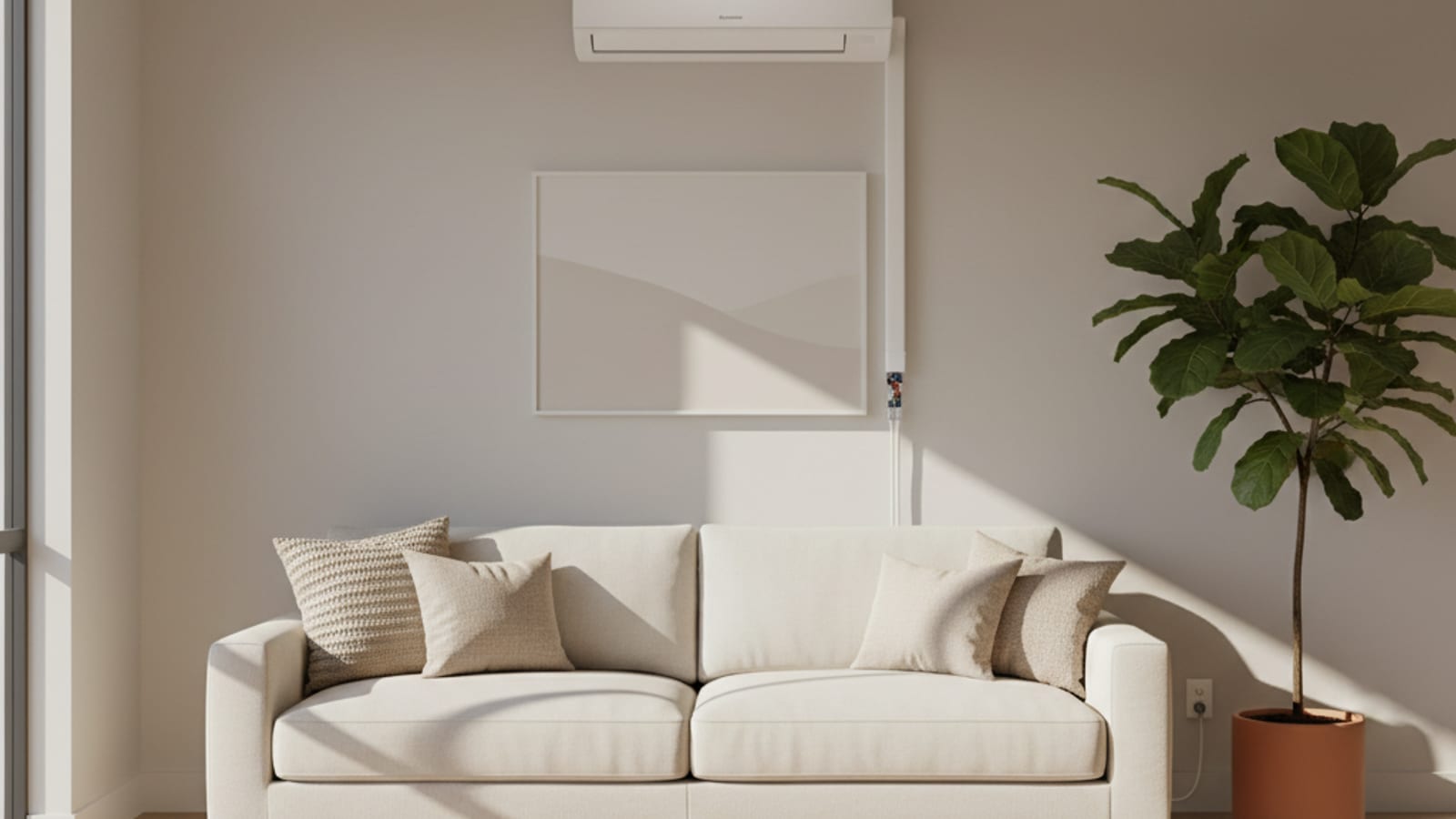
A single outdoor condenser on a pad, one indoor head high on a wall, and a short line set through the wall is a complete system. Inverter heat pumps cool in summer and heat after sundown, which matters because a glassy or high-ceiling pool house dumps heat fast once the sun drops.
Typical San Diego pool houses in the 120 to 300 square foot range often land on a 9,000 to 12,000 BTU head. Larger rooms with a kitchenette or full bath may need 15,000 to 18,000 BTU. Coastal pool houses in Del Mar, Solana Beach, La Jolla, and Encinitas often size toward the low end. Inland pool houses in Rancho Santa Fe, Poway, Escondido, and Bonsall often size up because afternoon load is higher. A Manual J still beats a rule of thumb, especially if the walls are mostly glass.
See mini-split installation for matching.
When does a through-wall PTAC still make sense?
Packaged terminal units (hotel-style through-wall boxes) are not the first choice for most pool houses. They fit a few cases:
- An older pool house that already has a PTAC sleeve framed in
- An HOA that fights outdoor condensers
- A rarely used changing room where the owner accepts louder operation and lower efficiency
PTACs are louder than a ductless head and typically do not last as long. Window units look worse, drain constantly, and barely heat on winter evenings. They are a stopgap, not a permitted habitable-space system.
How do you handle pool-house humidity?
A standard mini-split removes moisture as a byproduct of cooling. On a mild San Diego day it barely runs, and humidity climbs. That is when beadboard smells musty and towels never dry.
Three practical moves:
- A dehumidifier sized for the room, portable or ducted, for daily-use pool houses
- Dry mode on the mini-split, which can overcool the room while it wrings moisture
- Envelope and exhaust: tile or sealed concrete instead of carpet, a humidistat exhaust fan in the changing area, weatherstripped doors
For a changing room used in bursts, a mini-split plus an exhaust fan is often enough. For a guest suite used overnight, plan dedicated dehumidification. The matched pro should say which, after they see how you actually use the room.
Why is electrical usually the hidden scope?
Many pool houses were wired for a light and two outlets on a 15 or 20 amp circuit from the house. A heat pump mini-split wants a dedicated 20 or 30 amp circuit.
Three situations:
- The main panel has room and conduit can be run
- The main panel is full, so you are in panel or load-center work
- The pool house already has a sub-panel
Saltwater pools add a placement rule. Keep the outdoor condenser away from the deck spray, ideally upwind of prevailing wind. Salt and chlorinated mist eat coils. Coastal coil coating is worth specifying on Del Mar and La Jolla yards even when the pool is inland of the bluff.
How should you decide among the options?
Daily use, overnight guests, or a workout room: heat pump mini-split sized to the room, plus dehumidification if the space stays damp.
Changing area used briefly: a smaller mini-split or a PTAC, plus exhaust.
Dead PTAC in an existing sleeve: replace in kind if you accept the noise and efficiency.
No real electrical service: price the circuit or sub-panel before you fall in love with a head.
Rarely used mild-coastal cabana: a portable unit is a stopgap. It does not count as installed HVAC if you later rent the space as an ADU.
FAQ
Do I need a permit for pool house HVAC in San Diego County?
Yes. Fixed HVAC needs mechanical and electrical permits. If the pool house is habitable (guest suite or ADU), Title 24 documentation applies to the conversion of use.
Can I extend the house AC into the pool house?
Almost never. Line-set length, outdoor ducts, and stealing capacity from the house all work against it. A dedicated mini-split is the usual fix.
What size mini-split does a pool house need?
Many 120 to 250 square foot rooms with 8 to 10 foot ceilings land on 9,000 to 12,000 BTU. Kitchenettes and guest beds go up. Glass-heavy rooms need a Manual J.
Will a mini-split handle pool humidity?
For light use, dry mode often covers it. Heavy daily use or a guest suite usually needs a dehumidifier or at least a changing-room exhaust fan.
Are pool house mini-splits eligible for rebates?
The federal 25C credit expired for systems installed after December 31, 2025. TECH Clean California and SDG&E offers change and reserve. Confirm at quote time. Do not plan a 2026 project on a 2025 credit.
Should the condenser sit far from the pool?
Yes. Keep it off the deck spray. Specify coil coating on coastal and saltwater sites.
Call (442) 777-6440 and we will match you with a local pro. Related reading: mini-split HVAC for San Diego ADUs, ductless mini-split cost in San Diego, ductless mini-split vs central AC. Service pages: AC repair and AC installation.