For most San Diego homes, a real HVAC maintenance visit is worth scheduling. The case is warranty records, catching weak parts before a heat wave, and keeping coils and drains from working against you. The case collapses if the visit is a sales call with a vacuum and a filter.
Climate Pros SD matches homeowners with licensed independent HVAC companies. We do not run maintenance programs, set plan prices, or promise a payback multiple.
What does “worth it” actually mean here?
It is not a 15-year spreadsheet this brand can certify. Homes differ. Some never see a capacitor fail. Others see several. Maintenance shifts odds. It does not write a warranty from Climate Pros SD.
With documented annual service: you have a paper trail manufacturers often ask for, you get measured values you can compare year to year, and you are less likely to learn about a weak capacitor on the first 95F inland afternoon.
Without it: the system can still run for years while efficiency drifts, drains clog, and a compressor is asked to start on a tired capacitor. Coastal salt and inland heat change how fast that happens. They do not produce a universal dollar ROI.
Lifespan ranges you will hear (AC, furnace, heat pump, air handler) are industry typical, not a clock on your serial number. Salt air along Encinitas, Carlsbad, Del Mar, and Oceanside tends to punish outdoor metal faster than inland valleys. Heat pumps run year-round, so wear is not “cooling season only.”
What should real maintenance include?
A real visit measures. It does not only wipe.
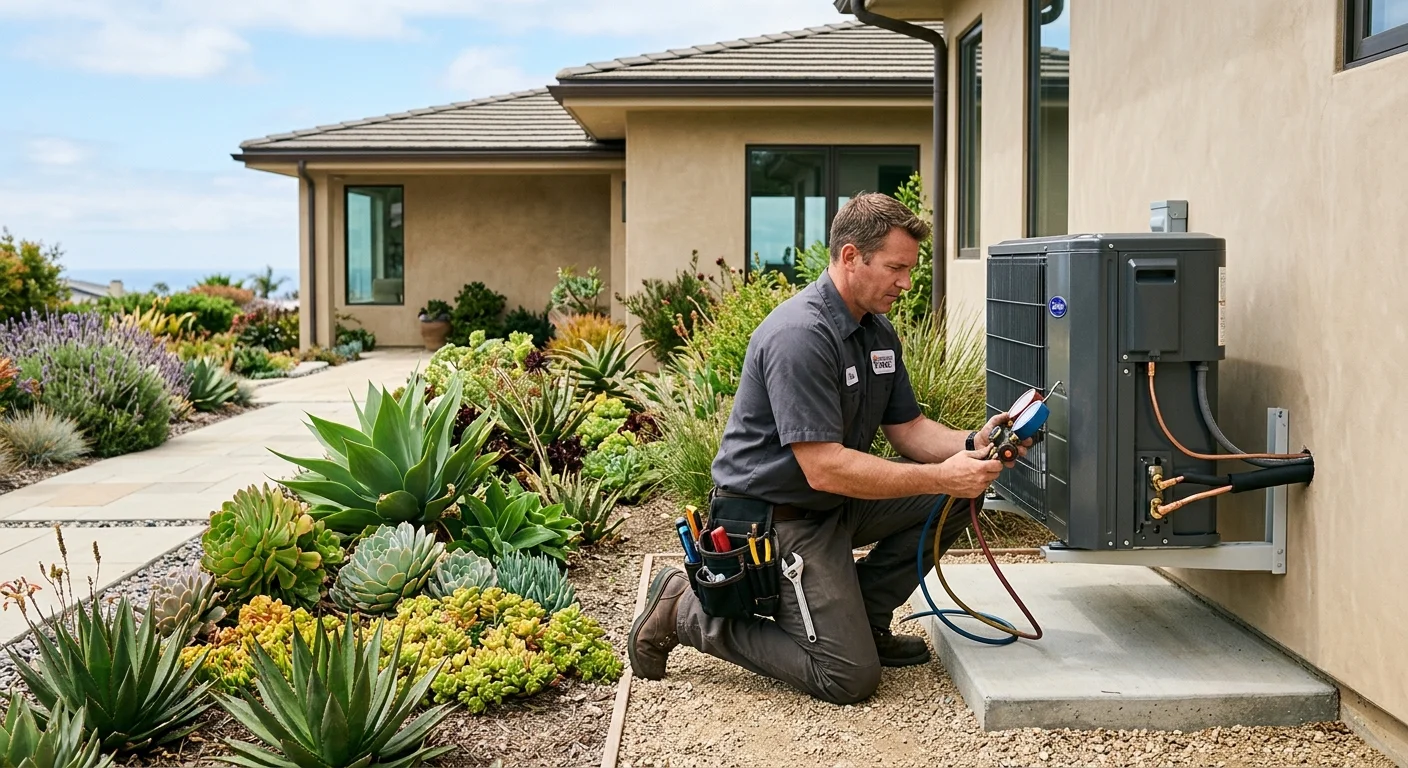
Refrigerant by superheat and subcooling (or the method the manufacturer specifies), not “pressures look OK.”
Capacitor microfarads. Capacitors weaken before they open. Replacing one from a reading is a different job than replacing a compressor after a failed start.
Static pressure across the air handler when the company claims a full visit. Many houses run outside design airflow. ENERGY STAR says typical U.S. duct systems lose about 20-30% of the air moving through them. That is national typical, not your measured El Cajon house.
Temperature split across the coil.
Amp draw on compressor and fans.
Electrical connections. Loose lugs and burned terminals are common on older gear.
Drain line and pan, float switch tested.
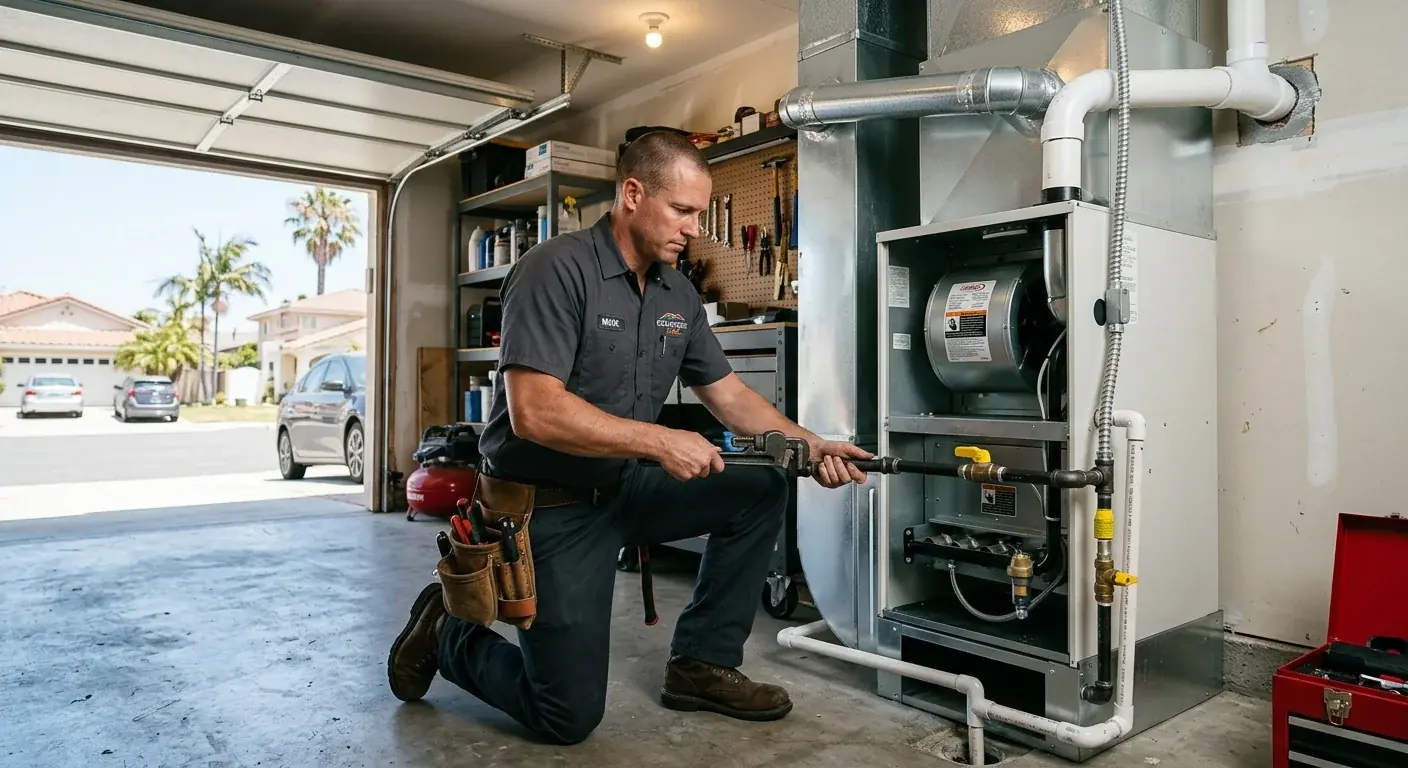
Gas furnace: combustion analysis, flame, gas pressure, heat-exchanger look (borescope when the tech says they checked for cracks). Carbon monoxide from a cracked exchanger is a safety issue, not a “wait until winter” preference.
A visit that skips most of this is not the visit the warranty letter is talking about. See HVAC maintenance.
Do manufacturers really ask for maintenance records?
Carrier, Trane, Lennox, American Standard, Goodman, Rheem, and others commonly require documented professional service to honor parts coverage on major components. If you file a compressor claim, they often ask for records first. No records, coverage arguments get harder. Save invoices with measurements, not a handwritten “tuned up.”
How does this show up on an SDG&E bill?
San Diego electric rates are high relative to much of the country, so dirty coils and restricted airflow waste money. That is directionally true. This page does not publish cents per kWh or a percent bill cut.
SDG&E residential time-of-use plans currently list a 4-9 p.m. on-peak period. Confirm your plan at SDG&E pricing plans. Pre-cooling before that window is conservation guidance from SDG&E’s heat-wave page, health permitting, not a savings forecast from Climate Pros SD.
Title 24 requires charge and airflow verification when you install or alter a system. A maintenance visit that actually measures charge is in the same spirit as that verification, even when no permit is pulled for a rinse-and-check.
More on usage habits: lowering your AC bill in summer.
What is different on the coast versus inland?
The marine layer is salt-laden. Coastal condensers see fin corrosion, pitted contactors, and cabinet rust earlier. Twice-yearly outdoor attention is a common recommendation for those addresses. A pitted contactor caught at a visit is a parts quote. Missed, it is a no-start on the first hot day.
Humidity also feeds growth on a dirty evaporator and in a clogged pan. Drain treatment and coil inspection are indoor-air work as much as comfort work. If IAQ is the household issue, see indoor air quality in San Diego and the MERV guide.
Inland, Santa Ana heat and valley highs in Escondido, El Cajon, and Santee push weak capacitors and low charge into failure on the same afternoon. Spring service east of I-5 is timing, not a 24/7 promise.
When is a full tune-up a weaker spend?
The system is already in its last seasons and you are collecting replacement quotes. A filter, visual safety check, and drain clear may be enough while you decide.
You already do filters, outdoor rinses, and drain checks well. That is not a substitute for refrigerant and electrical measurements.
The visit you were sold is fake. Twenty minutes, no numbers, replacement pitch. Change companies. Do not skip maintenance forever.
How can you tell real maintenance from fake?
- Written values: charge method, microfarads, split, amps.
- Time on site that matches the checklist they handed you. A 21-point claim in 15 minutes is marketing.
- Repairs that match the reading: “24 microfarads on a 35-rated part,” not “it might fail.”
Cadence: how often HVAC should be serviced. Plans vs one-off: maintenance contracts.
FAQs
Is HVAC maintenance worth the money?
For most occupied San Diego houses, a measured visit is worth it for warranty paper and for catching electrical and drain problems. Climate Pros SD does not publish a 3-7x ROI.
What is included in HVAC maintenance?
Charge method, capacitor reading, electrical, drain, coils, blower, and combustion plus heat exchanger on gas. Ask for that list in writing.
How much does HVAC maintenance cost in San Diego?
Each company sets it. Compare checklist and visit count. We do not publish 2026 plan bands.
Do I really need an annual tune-up?
Most manufacturer warranties and most San Diego use patterns point to at least annual. Light-use, newer, inland-of-the-salt but still mild houses sometimes stretch slightly. Skipping years is how records go missing.
What happens if I never get HVAC serviced?
Efficiency drifts, drains clog, and failures cluster on hot days. Warranty claims get harder.
Can I do HVAC maintenance myself?
Filters, outdoor coil rinse (power off, fins not bent), and drain checks, yes. Refrigerant, capacitors, and combustion, no.
Are HVAC maintenance plans worth it?
They can be when two visits, a real checklist, a cancelable term, and a parts discount are cheaper than two honest a la carte visits. They are a waste when they are a locked sales funnel. Read contracts.
How long does an HVAC system last with regular maintenance?
Often longer than a neglected one. Coastal salt shortens outdoor gear regardless. No brand on this site will assign your serial number a year.
Does HVAC maintenance lower my energy bill?
Clean coils and correct airflow help. We do not invent a percent. Watch 4-9 p.m. use on TOU.
Do coastal San Diego homes need more maintenance?
Outdoor corrosion checks, yes, more often than a dry inland house.
Related service: AC repair.
When to call
If you have not had a measured visit in over a year, call (442) 777-6440 before cooling season. Climate Pros SD matches you with a licensed independent HVAC company. Ask for values on paper.