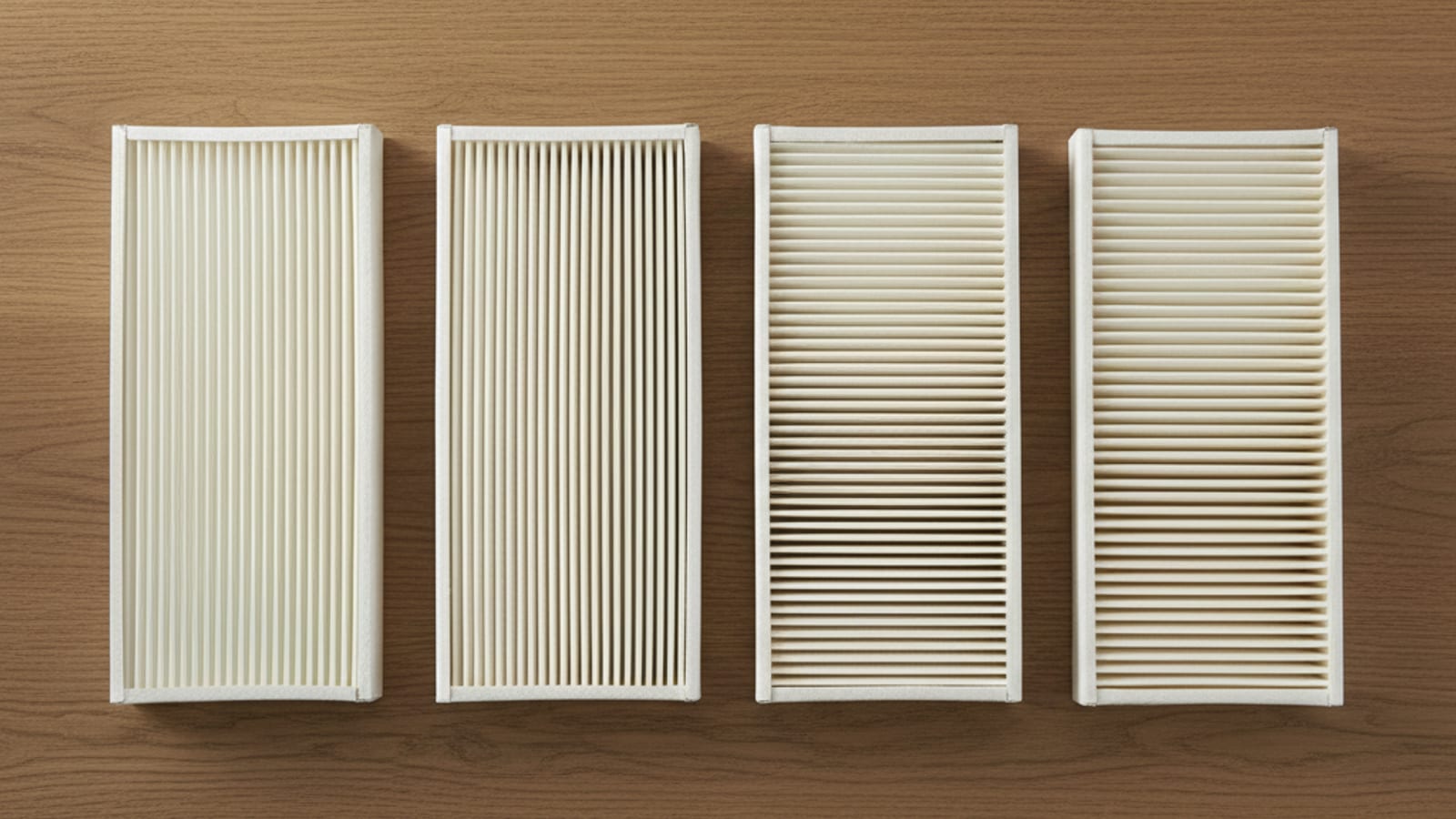
A clean filter is the cheapest HVAC habit you control. A packed filter starves the coil, can freeze it, and makes the blower work against a wall of dust. Climate Pros SD matches you with licensed HVAC professionals when you need a deeper cabinet, a static-pressure check, or indoor air quality equipment. We do not install filters on a route.
How often should you change the filter?
1-inch pleated: every couple of months in a typical house. Sooner with pets, construction next door, or inland dust.
4-inch or 5-inch media: often two to four times a year, sometimes once if the house is gentle and you inspect it.
If you cannot remember the last change, change it.
San Diego is not one dust climate. NWS: milder coast, hotter inland valleys, Santa Ana and wildfire weeks that load fibers fast. Check more often in Escondido, El Cajon, and East County than in a quiet coastal winter.
How do you know it is done?
Pull it. Hold it to a light. If the pleats are a uniform gray sheet, it is done. Mild dust is not a crisis. A furry mat is.
We will not invent an electricity savings percent for a clean filter. The honest claim is airflow and coil protection.
What does MERV mean?
MERV is Minimum Efficiency Reporting Value. Higher numbers generally catch smaller particles and add more resistance.
| MERV band | Typical particles discussed | Typical residential use |
|---|---|---|
| 4 to 6 | Large dust, lint | Weak. Skip the blue fiberglass pad. |
| 7 to 8 | Pollen, pet hair, spores (larger) | Basic |
| 9 to 11 | Finer pollen, some smoke and dust | Common 1-inch sweet spot |
| 12 to 13 | Smaller smoke and many allergy particles | Better in a thick cabinet |
| 14+ | Fine medical-adjacent | Often too much for a 1-inch slot |
These bands are industry reporting categories, not a lab result from your living room.
Can a high-MERV filter hurt the AC?
Yes, in a thin 1-inch slot. The blower cannot push enough air, static pressure rises, the coil can ice, rooms starve. A 4-inch or 5-inch cabinet has more surface area, so MERV 13 is often workable after a tech confirms static pressure.
Do not drop a hospital filter into a return that was built for MERV 8.
A licensed electrician may be needed if a whole-home cleaner needs a new circuit. Climate Pros SD does not pull that permit. The HVAC pro coordinates.
What is in San Diego air, by area?
Coast (Encinitas, Carlsbad, La Jolla): salt, marine moisture, pollen. Moderate MERV in a fitting size is usually enough.
Inland (San Marcos, Escondido, Poway): more dust, pollen, occasional smoke. Cabinet plus MERV 13 is a frequent conversation.
East County (La Mesa, Santee): similar dust and seasonal smoke.
Mountains (Julian, Alpine, Ramona): pollen, wood smoke in fire season. Thicker filtration plus portable HEPA in bedrooms during smoke weeks.
What should you do in wildfire smoke?
Close windows. Recirculate. If you have a fresh-air ventilator, shut it. Use the highest MERV the system can actually move. Add a portable HEPA in the bedroom. After AirNow recovers, look at the filter. One event can look like months of dust.
Keep spare filters before fire weather. We will not price that kit.
What mistakes show up constantly?
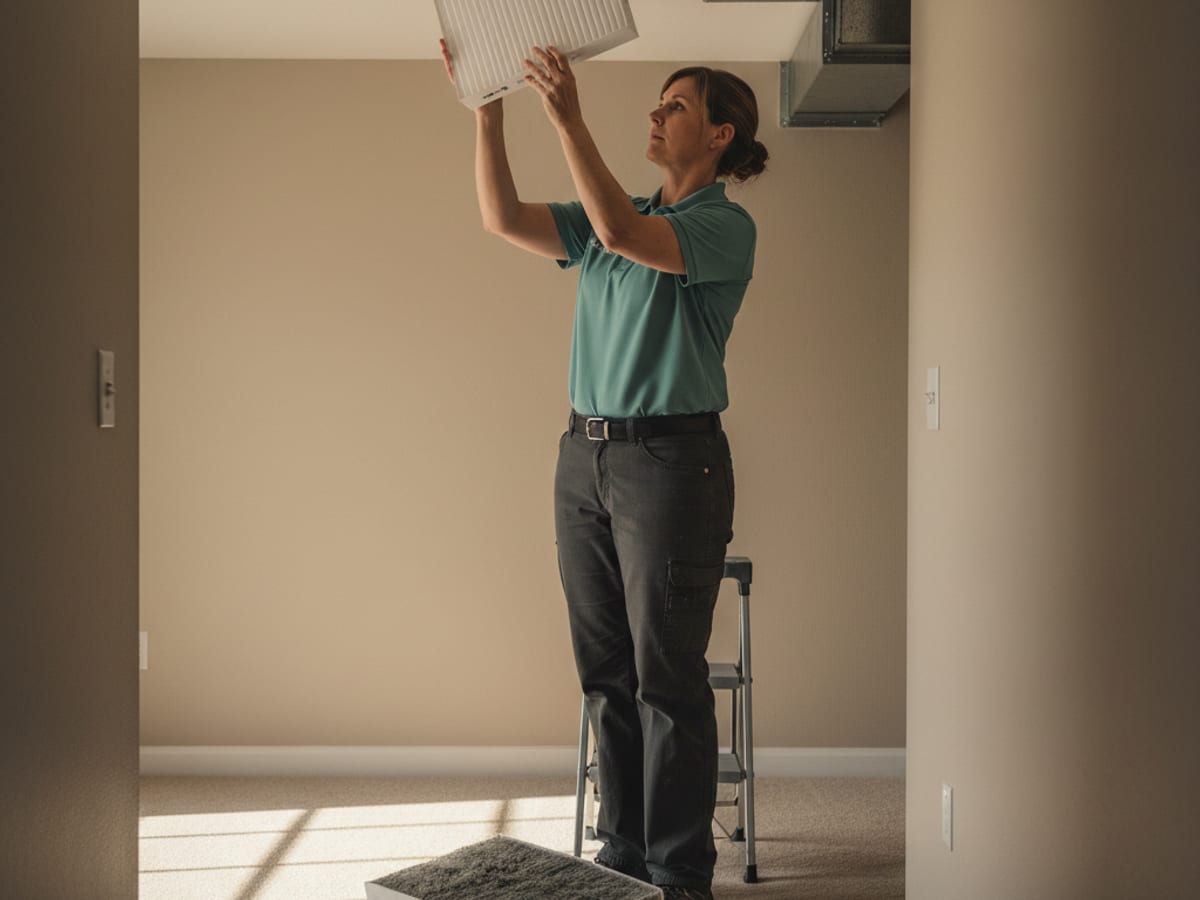
Wrong size. Stamp on the old filter wins. Nominal 16x25x1 is not a tape measure of the slot.
Backwards. Arrow toward the equipment.
Fiberglass throwaways. They catch lint. That is about it.
Ignoring the thermostat reminder. Dismissing the beep without a swap wastes the reminder.
EPA: do not schedule duct cleaning by the calendar. Clean when contamination is actually there. Sealing leaky ducts (ENERGY STAR typical 20% to 30% air loss in a leaky forced-air house) is a different job. Pair a cabinet with duct work only when the conditions fit.
Is there a set-and-forget filter?
A media cabinet is the closest thing. Longer life, more area, still needs inspection. Ask the matched pro to add it on a maintenance visit if the return can accept it. Climate Pros SD does not publish an installed price.
25C, TECH, and HEEHRA do not buy filters. 25C is not for property placed in service after December 31, 2025. TECH single-family heat pump HVAC reservations stopped November 14, 2025. HEEHRA single-family closed to new income verification February 24, 2026.
Frequently asked questions
What MERV should a San Diego home use?
Often MERV 8 to 11 in a 1-inch slot. Allergies or smoke: thicker cabinet and MERV 13 after a static check. Do not exceed what the blower can move.
Can a dirty filter damage the AC?
Yes. Ice, then compressor risk. The matched tech explains the failure, not a fabricated replacement invoice.
How often with pets?
Inspect monthly on 1-inch pleats. Upgrade cabinet if you are tired of monthly changes.
Are washable filters worth it?
Usually low MERV, and they must dry fully. A disposable pleat is simpler for most houses.
Will high MERV stop wildfire smoke?
It helps if airflow remains legal for the equipment. A stuffed 1-inch MERV 13 can freeze the coil. Recirculate, cabinet if needed, portable HEPA for sleep.
Where do I find the size?
Printed on the old filter. Common nominal sizes locally include 16x20x1, 16x25x1, 20x25x1, 20x20x1.
Questions on sizing or a media cabinet: call (442) 777-6440.