Indoor air quality (IAQ) is how the air inside your home affects comfort and health. It is not one number. It is particles, gases, humidity, and biological debris moving through rooms and, on many San Diego houses, through the HVAC system.
Climate Pros SD is a referral service. We match you with licensed, independent HVAC professionals. They assess filtration, moisture, and equipment. They do not diagnose medical conditions. Talk with a clinician about asthma, allergies, or chemical sensitivity.
What does indoor air quality actually measure?
Five categories show up in almost every home:
Particulate matter. Dust, pollen, cooking smoke, and wildfire smoke. Smaller particles travel farther into the lungs. Filters and sealed windows change how much of that load stays inside.
Carbon monoxide (CO). Colorless and odorless. Sources include gas appliances with damaged heat exchangers, idling cars in attached garages, and blocked flues. CO needs dedicated alarms, not a general IAQ gadget.
Volatile organic compounds (VOCs). Gases from paint, cleaners, new furniture, and some building materials. Ventilation and source control matter more than a fancier filter.
Humidity. Too dry irritates airways. Too damp favors mold and dust mites. Coastal marine layer and inland dryness pull San Diego homes in different directions.
Biological contaminants. Mold spores, pet dander, pollen, and bacteria. Visible mold means a moisture problem first. Cleaning air without fixing water is incomplete.
What is different about indoor air in San Diego?
National Weather Service San Diego describes ocean moderation near the coast and warmer summer days in nearby valleys. Hot easterly winds can still push heat and dust toward coastal neighborhoods. Those patterns change how long windows stay open and how hard the HVAC fan runs.
Practical local pressures, without invented readings:
- Wildfire smoke. Regional fires can load indoor air even with windows closed if the house leaks or the HVAC pulls outdoor air.
- Marine layer. Coastal homes (Coronado, La Jolla, Encinitas, Carlsbad, Oceanside) hold more moisture on May-Gray and June-Gloom mornings.
- Inland dust. Escondido, El Cajon, Santee, and Lakeside see dry-season dust that loads filters faster than a coastal house.
- Pollen seasons. Trees and grasses still put allergens inside if return air is unfiltered.
- Traffic corridors. Homes near I-5, I-805, or I-15 pull more outdoor exhaust through leaks.
None of that is a reason to invent indoor AQI scores. Check outdoor air on AirNow, then watch what happens inside after you close up.
How does poor indoor air quality show up?
Most people spend most of their hours indoors. Symptoms that ease when you leave a room (irritated eyes, headache, musty smell, worse congestion) are a clue to check the space, not a diagnosis.
Children, older adults, and people with asthma are more sensitive. The CDC advises older adults to stay in air-conditioned buildings in very hot weather and not to rely on a fan as the main cooling source when it is very hot. That is heat-safety guidance, not an IAQ thermostat setting.
What actually improves indoor air quality?
Ranked by how often it helps a typical San Diego house, not by marketing:
1. The right filter, changed on a real schedule. A pleated filter that fits the slot and that the blower can push through beats a high MERV stuffed into a thin grille. See our MERV guide. During smoke events, inspect weekly.
2. Source control. Exhaust cooking and showers. Store chemicals sealed. Fix leaks before they become mold.
3. Ventilation when outdoor air is cleaner than indoor air. Open windows when AirNow looks good. Skip that during smoke. Bathroom and kitchen fans still dump moisture even when windows stay shut.
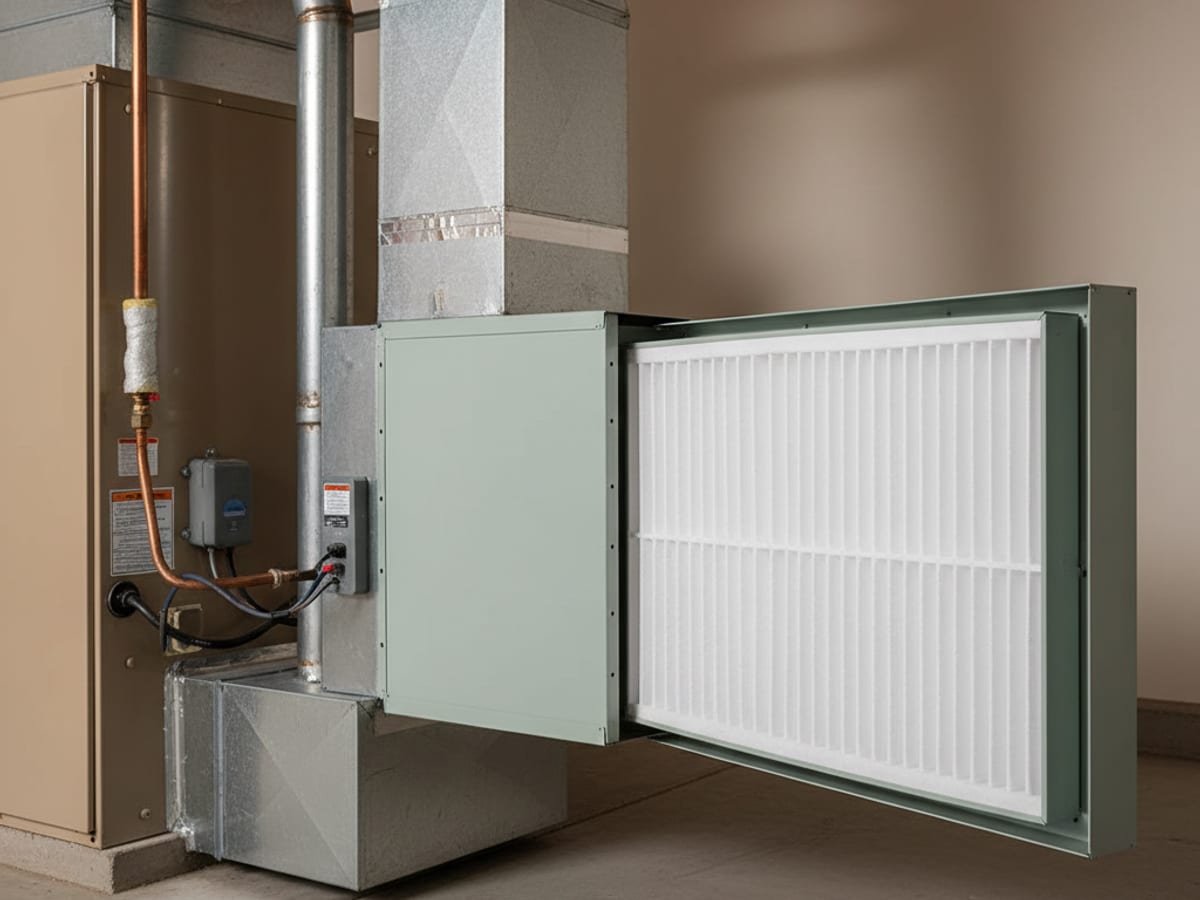
4. Equipment the matched pro can size to your ductwork. Media cabinets, UV at the coil for biofilm, or a dedicated ventilator only after someone measures airflow. Climate Pros SD does not install that gear. Licensed C-20 contractors do.
5. Ducts only when the condition fits. ENERGY STAR says a typical forced-air house can lose about 20% to 30% of the air moving through ducts because of leaks, holes, and poorly connected ducts. That is a national typical-house statement, not a measurement of your attic. EPA does not recommend routine duct cleaning on a fixed calendar. It recommends cleaning as needed when there is substantial visible mold, vermin, excessive dust or debris, or particles coming from supply registers. EPA also says duct cleaning has never been shown to prevent health problems, and cleaning ducts alone has little evidence of improving efficiency. Sealing addresses leakage. Cleaning addresses contamination when those conditions exist. Neither guarantees a bill, health, or comfort outcome. Read more on duct cleaning.
Skip ozone-generating ionizers and unnamed “purifiers” with no filter rating.
How can you measure indoor air quality without buying a story?
Look and smell. Dust that returns in a day, musty closets, and pet odor visitors mention are real signals.
A consumer monitor. Devices that log PM2.5, humidity, CO2, and VOCs help you see patterns (cooking spikes, overnight CO2 in a tight bedroom). Treat them as trend tools, not lab certificates.
A targeted professional test. Useful after water damage or when a specific contaminant is suspected. Not a monthly subscription.
CO alarms on every floor, especially outside bedrooms, in any home with fuel-burning appliances. Replace units on the maker’s schedule. If an alarm sounds, leave, call 911 or SDG&E at 800-411-7343, and stay out until the source is identified. Our carbon monoxide guide covers household sources.
Ask the matched pro to include combustion and heat-exchanger inspection on furnace service. That is equipment safety, not a medical screen.
What setup fits which household?
No respiratory issues: a well-fitted pleated filter on a written change interval, plus annual maintenance by a licensed pro.
Coastal moisture: filtration plus humidity control the pro can justify after measuring, not a catalog add-on.
Asthma or allergies: confirm the blower can handle a thicker media filter before jumping MERV. See HVAC for asthma and allergies.
Fire-prone East County or backcountry: portable HEPA in bedrooms during smoke, plus HVAC recirculation, is a practical layer. It is not a substitute for leaving if officials say so.
Details on what referred contractors typically quote live on the indoor air quality service page.
Federal heat-pump credits, TECH, and HEEHRA do not change a filter. They apply to qualifying equipment and dates. Section 25C does not apply to property placed in service after December 31, 2025. TECH single-family heat pump HVAC incentives stopped new reservations on November 14, 2025. HEEHRA single-family rebates were fully reserved statewide as of February 24, 2026, with no new single-family income-verification applications. Recheck those programs before anyone treats them as money on a 2026 job.
Frequently asked questions
What is indoor air quality (IAQ)?
It is the particles, gases, humidity, and biological material in indoor air, and how that mix affects the people in the space. It is not a single outdoor AQI number copied onto your living room.
Why can indoor air feel worse than outdoor air?
Indoor sources accumulate in a closed box: cooking, cleaners, furnishings, and combustion appliances. Tight newer houses trap that mix. Leaky older San Diego houses pull in outdoor smoke, pollen, and dust instead.
How can I test the air in my home?
Start with smell, dust, and humidity. Add a consumer monitor if you want trends. Use a lab test when you have a specific suspicion (mold after a leak, unexplained illness). Ask a licensed HVAC pro to inspect filtration and moisture in the equipment.
What MERV rating should I use?
Most 1-inch slots do better with a moderate pleated MERV that the system can move air through. Higher MERV belongs in a deeper cabinet after a static-pressure check. Details: filter guide.
How often should I change the HVAC filter in San Diego?
Check it. Inland dust and smoke weeks load filters faster than a coastal winter. A 1-inch pleat often needs months, not a year. A 4-inch media filter lasts longer. After a smoke event, look at it the next day.
When should I call an HVAC professional about indoor air quality?
Call when filters are current and you still have musty air, dust storms from the registers, ice on the indoor coil, or humidity the house cannot shake. Climate Pros SD matches you with a licensed pro. Call (442) 777-6440.
When to call
If allergies, moisture, or wildfire smoke have you staring at the return grille, we will connect you with a licensed local HVAC professional. Call (442) 777-6440 or start on the indoor air quality service page.