A vague air conditioner service request sends the wrong person to the wrong unit. Property managers and homeowners in San Diego County get a clearer visit when the write-up names the equipment, the rooms, and how to get in. That packet is the maintenance request. It is not the work order the contractor writes later.
What is a maintenance request?
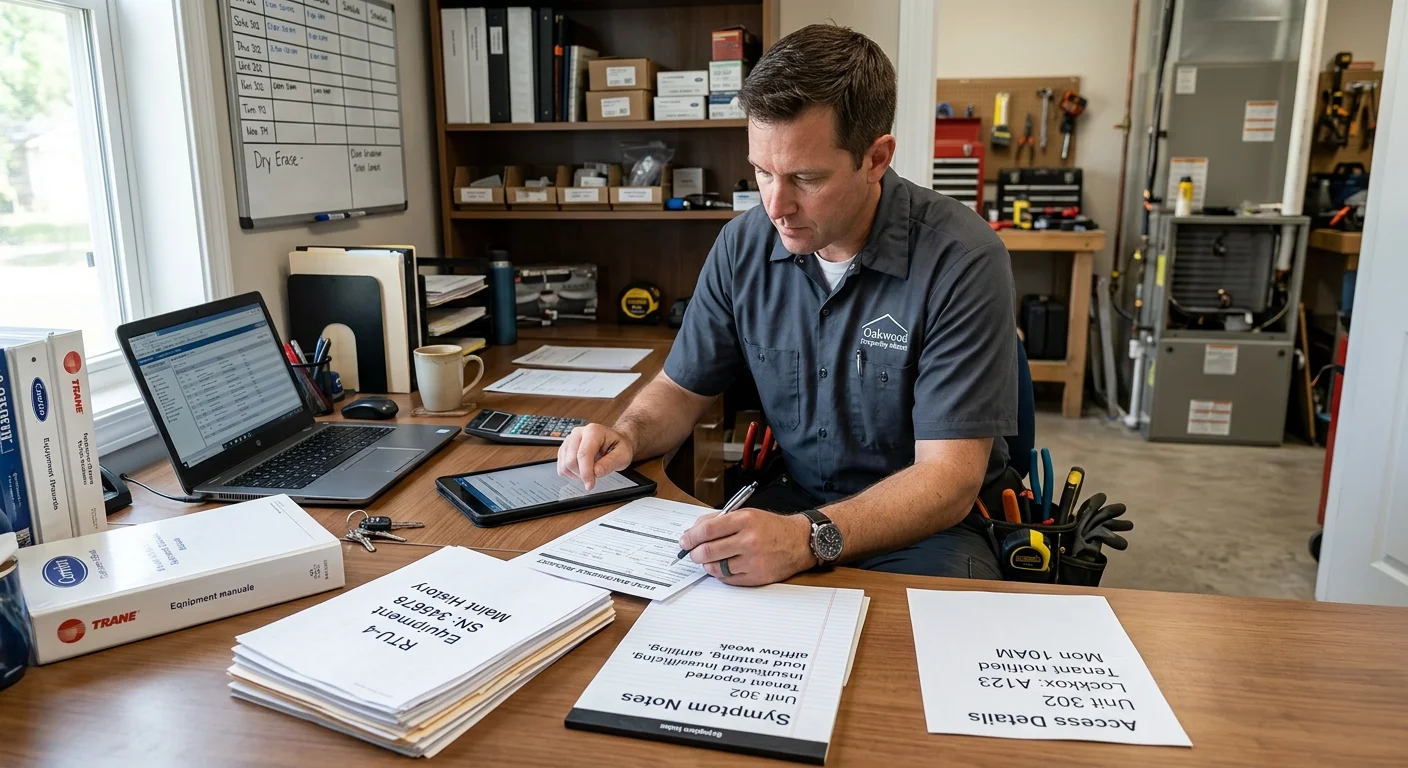
A maintenance request is a dated, written notice that heating or cooling needs attention. Tenants, owners, and office staff submit it. A manager or the matched contractor then turns an approved request into a work order with a real scope.
Keep that split in mind. The request reports the problem. It does not authorize extra repairs, parts, or a changeout. You still review the written scope before paid work starts.
Campus portals and apartment apps in this county often split life-safety calls from routine tickets. This page is not those phone trees. It is the HVAC packet you send before a licensed C-20 contractor walks the site. The California Contractors State License Board defines C-20 work as fabricating, installing, maintaining, servicing, and repairing warm-air heating, ventilating, and air-conditioning systems. Climate Pros SD does not hold that license. We match you with independent pros who do.
Write one issue per ticket when you can. A noisy condenser and a warm upstairs suite are two requests. Mixed tickets get scoped against the wrong unit.
How to ask: put it in writing, date it, and keep a copy. A portal confirmation, an email, or a signed paper all count. Hallway notes disappear. If people are in immediate danger, call 911 first, then follow with the written HVAC request.
California does not publish one countywide clock, confirmed in our claims ledger, for how long a landlord has to fulfill every request. Your lease, your city, and current housing law control notice and habitability. Confirm those rules with the owner, the management company, or a housing counselor. A portal “priority” flag is not a legal deadline.
What equipment details belong in the request?
Start with the site, then the machine. Name the city and the building type, because a Mission Valley condo stack is not an El Cajon two-story with a backyard condenser. NOAA’s 1991-2020 normals put San Diego International Airport’s August high near 77°F and El Cajon’s near 89°F. The same “not keeping up” note means different load inland.
Photograph the outdoor data plate in daylight. Copy brand, model, serial, and any refrigerant or electrical line that is actually printed there. If the sticker is faded, say so. Do not guess the refrigerant. Do not open the cabinet.
Add the indoor unit location: garage closet, attic, closet, or rooftop. For a commercial HVAC work request, use the asset tag if the building has one (RTU-3, AHU-2, Suite 210). Name the thermostat location and whether it is a simple wall control or a connected model.
If you still have last year’s invoice or a homeowner HVAC maintenance log, attach it. Last service date, last filter size, and any open repair notes save a second trip to identify the unit. If you have no history, write “history unknown” instead of inventing a schedule.
Leave efficiency bragging off the ticket. If the plate shows a seasonal rating, you can paste the number. ENERGY STAR explains how heating and cooling ratings are published. Actual bills still depend on the house, the ducts, and how you run the system.
City of San Diego mechanical rules require a permit when heating, ventilating, air conditioning, or refrigeration is installed, altered, replaced, or repaired. A written request is not that permit. If the visit turns into repair or replacement, the matched licensed contractor pulls it in that city. Do not assume the same wording for unincorporated county areas. Confirm the jurisdiction on the address.
Which occupant reports should you summarize?
Occupant notes tell the contractor who feels what, and where. Quote people in plain words. “Bedroom two never cools after 3 p.m.” is useful. “The AC is broken” is not.
Name the rooms, the floor, and the time of day. Coastal north county often sits in marine layer until late morning, then warms. Inland north county and East County heat earlier. NWS San Diego describes ocean moderation near the coast and warmer summer days in nearby valleys. Hot easterly winds can still push heat onto the coast. Put that timing in the request so the pro is not chasing a morning complaint with an afternoon pattern.
Flag who is in the building. The CDC advises older adults to stay in air-conditioned space in hot weather and not treat a fan as the main cooling source when it is very hot. That is public health guidance, not a thermostat law. If an older adult, a small child, or someone who uses cooling for a medical reason is on site, say so as occupancy context. Do not diagnose. Do not set a “required” temperature in the ticket.
For rentals, include the tenant’s best contact and any entry rules from the lease. For HOAs and condos, note shared condensers, locked roofs, and who holds the key. For offices, name the suite, the tenant company, and the property contact who can walk the roof.
SDG&E residential time-of-use plans commonly price on-peak power from 4 p.m. to 9 p.m. If occupants only notice the problem during that window, write that down. It helps the pro separate a weak system from a house that runs hard through the expensive hours. Confirm the current plan on the bill. We do not publish a savings figure.
Keep complaints about other trades off this ticket. Plumbing leaks next to an air handler belong on their own request, with a note that water is near HVAC equipment.
How should you describe recurring symptoms?
Describe what the system does, how often, and what you already tried. Short, dated facts beat adjectives.
Use this shape:
- What you feel or hear (warm supply air, weak upstairs flow, short cycles, water under the indoor unit, a rattle at start).
- Where (which vents, which rooms, indoor vs outdoor).
- When it started, and whether it comes and goes.
- What you already did (thermostat batteries, filter change, breaker reset). Do not open refrigerant ports or electrical panels.
A useful line looks like this: “Upstairs bedrooms in Encinitas stay warm after 3 p.m. Downstairs vents feel cooler. Outdoor fan runs. Filter changed March 12. No burning smell.” That is enough for an air conditioner service request without pretending you already know the failed part.
Say what is not happening too. “No ice on the copper lines that I can see from the yard” is a observation. “It needs a recharge” is a guess. Refrigerant work belongs to a licensed pro.
If the same symptom returns after a prior visit, say so and attach that invoice. Repeat failures change the conversation from a one-off tweak to deferred HVAC maintenance. Still let the contractor name the cause.
For wording, write as if a stranger will read it at the curb:
Subject: HVAC maintenance request, 2-story, El Cajon, south-yard condenser Site and access: [street], side gate, dog in yard, street parking Equipment: brand/model/serial from the outdoor plate; furnace in garage closet; thermostat in upstairs hall Occupants: two people, one older adult on the main floor, tenant on site after 5 p.m. Symptoms: weak air upstairs, unit runs through the 4-9 p.m. window, started after the last heat spell Ask: inspect cooling on both floors and report findings before extra work
Do not stack five unrelated fixes into that paragraph. Split them.
What access information helps a contractor prepare?
Access notes prevent a wasted walk-up. They are not a promise that someone will arrive on your clock. Each company sets its own timing. Ask the matched pro whether a tech is available, yes or no.
Include:
- Gate, parking, and HOA rules. Many coastal condos ban ladder work in guest stalls.
- How to reach the outdoor unit. Side yard, roof hatch, locked mechanical room, or alley.
- Pets, alarms, and who will be on site. Do not paste alarm codes into a group email. Share them with the assigned pro by phone, then change them later if your policy requires it.
- Tenant notice. Who must be told, and how, before entry.
- For commercial HVAC sites: loading dock hours, roof access, and whether the unit serves one suite or a whole floor.
Clear a path. Boxes stacked on the furnace, cars blocking the condenser, and locked back gates all stop the visit. The U.S. Department of Energy notes that outdoor units need airflow. You do not need a lecture in the ticket. You do need “condenser is behind the trash enclosure, latch sticks.”
If the building is in the City of San Diego and you already know it is a designated historic property, say that. City pages split simple no-plan mechanical permits from plan-required work on historic sites. The contractor confirms what applies. You are only flagging a known constraint.
After-hours building access is a site fact, not an emergency dispatch claim. Write the window the property will unlock the roof. Do not ask Climate Pros SD for a timed arrival. We do not dispatch crews.
How can you compare the resulting scopes?
Send the same written request to each contractor you are considering. Then compare the scopes they send back, not the friendliness of the first email.
Line the replies up against the same list:
- Which equipment they intend to inspect (outdoor unit, indoor coil, furnace or air handler, condensate, thermostat, visible duct connections).
- What is visual only versus what needs gauges, electrical testing, or a follow-up visit.
- Whether they expect to repair on the same trip or report first.
- Filter size they will bring, if any, versus a filter you already stock.
- Permit language, if the work may become a repair or replacement in the City of San Diego.
- License status on CSLB’s license check. Every HVAC pro in the Climate Pros SD network is licensed and insured. Still check the card they hand you.
Ask what the diagnostic covers and whether it applies toward repair. Each company sets its own policy. We set none.
Do not treat a short scope as a bargain. “Tune-up” on one page can mean a filter glance. On another it can mean coil cleaning, electrical checks, and a written deficiency list. Our HVAC maintenance service guide walks through what a thorough visit can include so you can spot a thin proposal. Pair that with HVAC maintenance when you are ready to match with a local pro.
If two scopes disagree, ask each contractor to mark the same symptom list: confirmed, not found, or needs more testing. That keeps the comparison on the house you described, not on a generic checklist.
Keep the original request with the invoices. Next season’s ticket is easier when this year’s facts are already in the file.
When to call us
Call when you have a written HVAC maintenance request and you need a licensed local contractor to inspect, service, or repair the system. That includes homes, rentals, and small commercial buildings across San Diego County. Call us at (442) 777-6440 and we will match you with a licensed local pro.