Some San Diego homes can stay comfortable much of the year without central AC, but a coastal address alone is not a reliable cooling plan. Decide from how your home behaves during hot weather, who needs cooling and which rooms become uncomfortable. An inland home may face a different cooling load from a beach home; two homes on the same street can also have different needs.
If you already know you need cooling and are comparing equipment, start with our AC installation service page. This guide helps answer the earlier question: what cooling do you actually need?
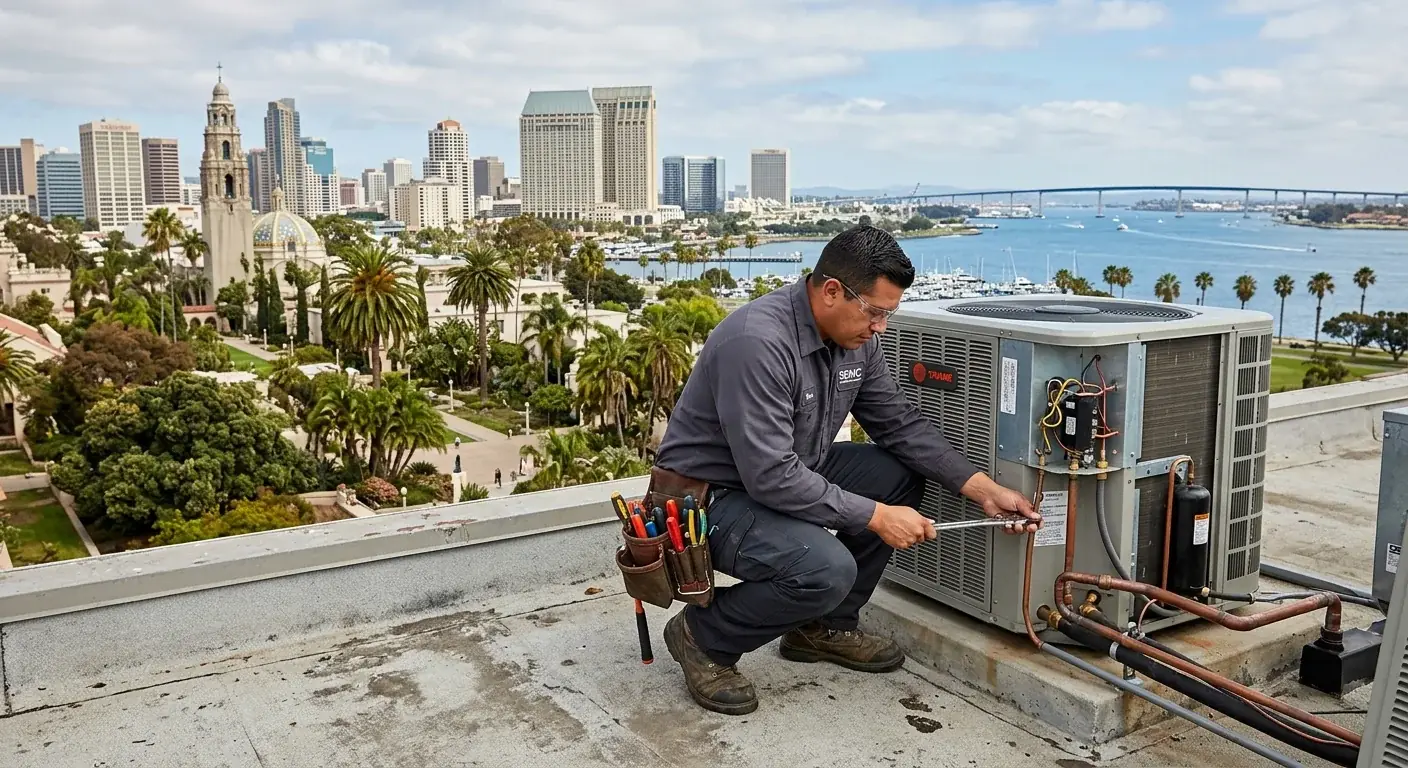
What your neighborhood can tell you
The National Weather Service describes San Diego’s ocean-moderated coastal climate and much warmer summer days in nearby valleys. It also describes hot easterly winds that can bring heat to the coastal region. That supports a coast-versus-inland distinction, but it does not supply a fixed number of AC days for your home. NWS San Diego climate background.
Use location as the first question, then inspect the actual building:
| Home setting | What to check before choosing cooling |
|---|---|
| Coastal home in La Jolla, Encinitas or Carlsbad | Does the breeze reach the rooms you use? Can the bedroom cool down overnight? What happens when windows must stay closed? |
| Inland home in El Cajon, Escondido or Poway | Which rooms remain hot into the evening? Is cooling needed in one occupied room or throughout the home? |
| Upstairs apartment or sun-exposed room | How do indoor conditions differ from the outdoor forecast or the shaded side of the building? |
| Older home without ducts | Compare room cooling and ductless options with the work required for a ducted system. |
| Mountain or backcountry home | Use the forecast and building conditions for that location rather than coastal San Diego averages. Include heating needs in the equipment discussion. |
Make a cooling decision from your home
Before requesting equipment quotes, write down:
- The rooms and times that are uncomfortable. A bedroom problem and a whole-house problem may call for different options.
- How the home recovers overnight. Record indoor conditions rather than relying only on the day’s outdoor high.
- Who will be there during hot weather. Include people who cannot easily leave for a cooler place.
- Whether opening windows is practical. Consider security, noise and current outdoor conditions.
- What equipment and infrastructure already exist. Note heating equipment, ducts, available installation space and any known electrical constraints for a contractor to inspect.
This record gives an installer a more useful starting point than square footage alone. Ask the contractor to explain the sizing method and assumptions in the proposal. Our AC sizing guide lists questions to bring to that discussion.
Have a plan for hot days before installation
The CDC advises older adults to spend time in air-conditioned buildings during hot weather and says not to rely on a fan as the main cooling source when it is very hot. If adequate cooling is unavailable at home, identify a cooled place you can reach. Ask a clinician about precautions for individual health needs. CDC guidance for older adults.
SDG&E’s heat-wave resource page links to local Cool Zones and current safety resources. Check a location’s hours and access before relying on it. Buying equipment is not an immediate substitute for a workable heat-day plan.
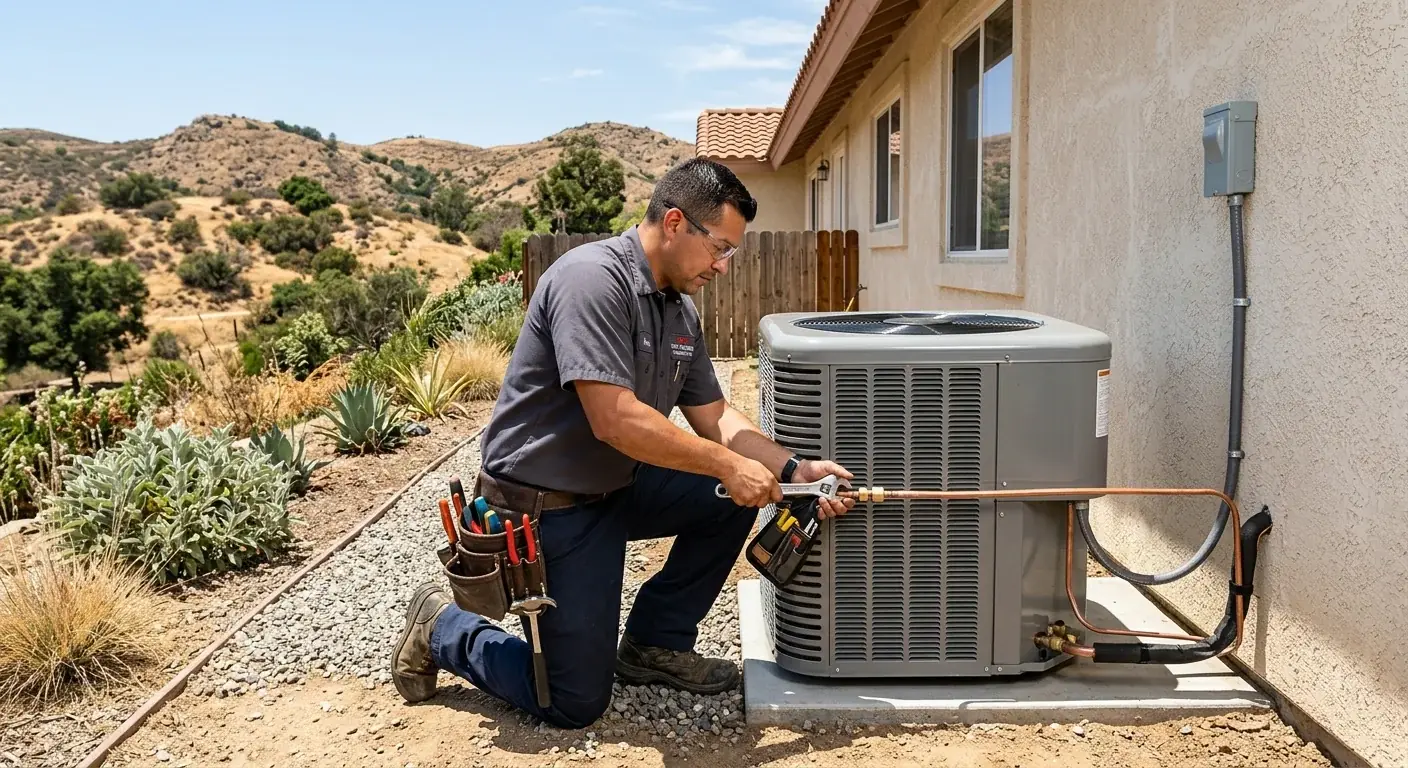
Compare options for the space you need to cool
Ask for proposals that address the same rooms and comfort needs so you can compare them fairly.
- A room air conditioner: Ask whether a suitable unit can serve the specific room and whether its installation fits the window or approved location and electrical requirements. Check landlord or association restrictions where applicable.
- A ductless system: Ask about the indoor-unit locations, rooms served, outdoor-unit placement and electrical work. Do not assume that a single indoor unit will solve every closed bedroom’s cooling needs.
- A central system: Ask the contractor to assess existing ducts, distribution and installation requirements. A home with ducts still needs an evaluation of whether they are suitable for the proposed system.
- A heat pump: Include heating as well as cooling requirements in the comparison. Ask how the proposed equipment would work with or replace the current heating system.
There is no universal best choice for all coastal homes, pre-1970 homes or homes with solar. Compare the specific proposal, installation work and expected operation. See ductless versus central AC and heat pump service for related questions.
Budget with a quote and your actual electricity plan
Request an itemized quote identifying equipment, labor, electrical or duct changes, permits, disposal and exclusions as applicable. Confirm who is responsible for each part of the job. A price without a defined scope is difficult to compare.
For running costs, use the proposed equipment’s relevant power information, expected operation and your current electricity plan. Our AC running-cost guide explains the calculation and its limits. Cooling one room and cooling an entire house are different uses; a generic monthly dollar figure does not answer both.
Check incentives before including them in your budget. Programs can close, exhaust funds or require approval before work begins. Section 25C does not cover a 2026 in-service date. TECH single-family HVAC reservations stopped November 14, 2025. HEEHRA single-family was reserved February 24, 2026. The SDG&E rebate guide links to program sources; confirm current eligibility and reservations directly with the administrator before purchasing.
Common questions
Can I live near the beach without central AC?
Possibly, if the home meets your comfort needs and you have access to adequate cooling during hot periods. Evaluate the actual rooms and occupants. Distance from the beach does not settle the decision by itself.
Does every inland home need central AC?
The need is for adequate cooling where people live and sleep. Central AC is one way to provide it. Ask a contractor to compare options for your layout and the rooms that need cooling.
Will AC increase my home’s resale value enough to pay for itself?
Do not assume a fixed resale premium will cover the installation. If resale value is central to the decision, request current comparable-market advice from a local real-estate professional and compare that with actual installation quotes.
Should I wait for a heat wave to get a quote?
If the home already struggles in hot weather, start evaluating options before you need them urgently. Confirm availability and scheduling with the contractor; a particular month does not guarantee a discount or installation date.
Get help comparing the options
Climate Pros SD connects homeowners with vetted local HVAC contractors. Describe the rooms, existing equipment and comfort problem when you call. The matched company can confirm whether it serves your project and explain assessment fees, availability and quote terms.
Call (442) 777-6440, or visit AC installation to plan the next step.