The best AC brand for San Diego depends on your ZIP code, not on a national reliability ranking. Within 30 miles, you can move from salt-air corrosion that eats cheap coils in five years to inland heat soak that bakes compressors. The brands that win each environment aren’t the same. Here’s how a licensed contractor should pick in 2026, broken down by where you actually live. Climate Pros SD is a referral service. It does not install equipment or publish an installed-price menu.
Why San Diego breaks the national “best brand” lists
Most “best AC brand” articles rank Carrier, Trane, Lennox, Goodman, and Rheem on a single national scorecard. That math doesn’t survive the drive from La Jolla to Ramona. A condenser parked in Coronado breathes chloride-laden marine air every night. The same unit in Escondido sees far hotter surface temperatures in August. The failure modes are different, so the picks should be different.
San Diego splits cleanly into three install environments, and each one rewards a different brand strategy:
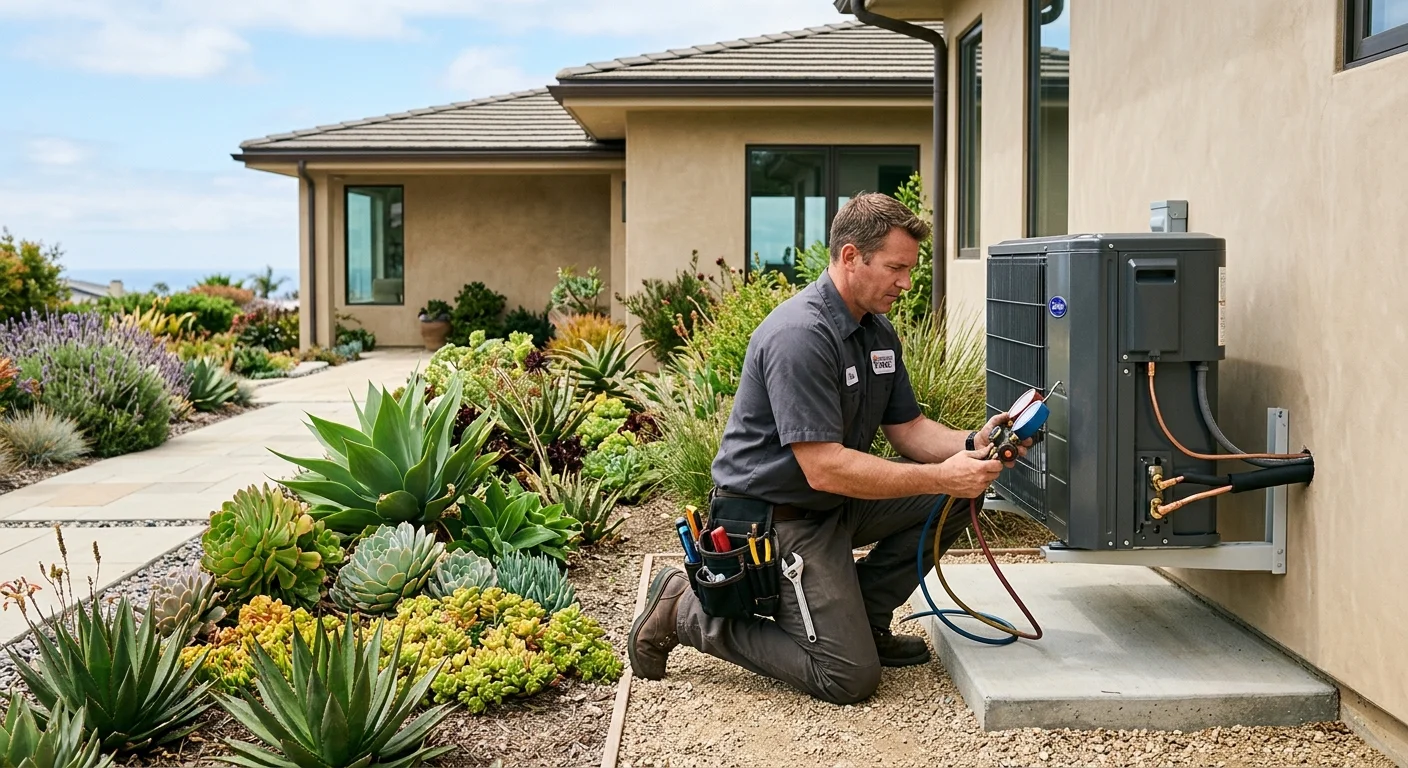
- Coastal (Carlsbad, Encinitas, Solana Beach, La Jolla, Coronado, Imperial Beach, Ocean Beach, Pacific Beach): salt-air corrosion is the dominant failure mode. Coil coatings and aluminum construction matter more than top-end efficiency.
- Inland and East County (Escondido, San Marcos, Poway, El Cajon, Santee, Lakeside, Ramona): heat soak and long compressor run times dominate. Compressor durability and inverter modulation matter more than coil coatings.
- Central and South Bay urban (Mission Valley, Kearny Mesa, Chula Vista, National City, parts of San Diego proper): mixed loads, shorter runs, more rentals and shorter holds. Value brands often pencil out.
Pick the brand that matches the environment, not the one that ranked first on a Consumer Reports table written for the whole country.
Coastal SD: pick brands with real corrosion engineering
Within roughly five miles of the coast, salt and chloride deposits attack copper-aluminum coil interfaces. Standard residential condensers from any major brand can show galvanic pitting in two to four years. Salt-resistant or fully aluminum coil designs typically last 10 to 15 years in the same environment. That’s a real difference, and it’s brand-specific.
Coastal equipment worth asking about by name, not by a blog price:
- Carrier Infinity series with WeatherArmor / coastal coil package. Carrier’s Infinity 24VNA6 and 26VNA0 lines offer factory coastal coil coatings and inverter compressors. Confirm current model numbers, coil package, and registration window on the quote. A 10-year parts and compressor warranty is typically tied to timely registration, not to Climate Pros SD.
- Trane XV-series with WeatherGuard II and Spine Fin coil. Trane’s all-aluminum Spine Fin coil holds up well in salt air because there’s no copper-aluminum junction to corrode. The XV20i variable-speed model is the durability play. Climatuff compressors have a long coastal service record when they are maintained.
- Lennox Signature SL-series. Aluminum coil, factory-coated. Often the quietest of the three. Parts availability in San Diego is sometimes thinner than Carrier or Trane, which matters if a part ever needs to be sourced in a hurry.
Skip builder-grade tiers with a standard copper-aluminum coil at a true coastal address (Carrier Comfort 14, Trane XR13/XR14, Lennox Merit). The up-front savings disappear if the coil pits in salt air. Don’t buy a cheap coil two blocks from the ocean. See our Encinitas coastal AC install guide and Coronado coastal AC repair notes for what matched companies report on those service calls.
Inland and East County: pick brands built for heat soak
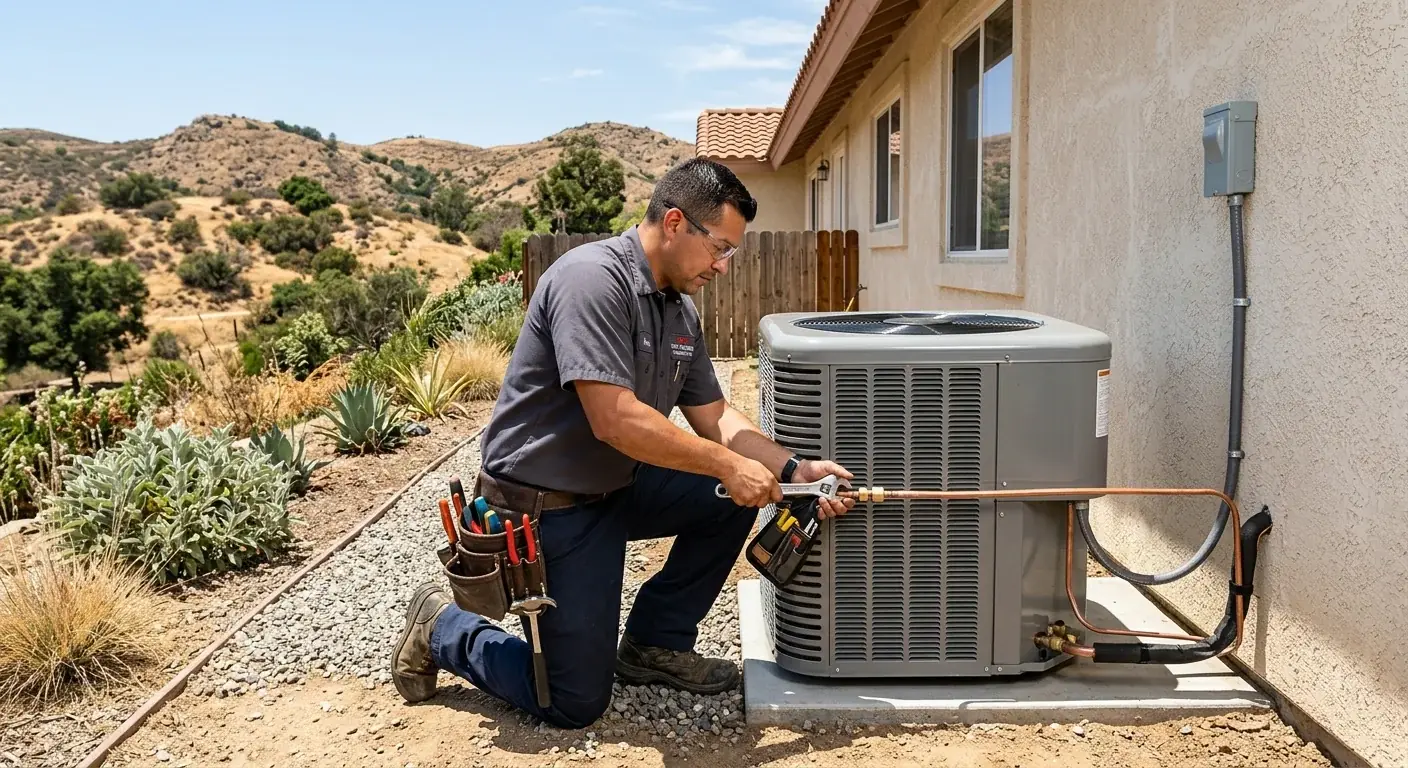
Out past the 15 freeway, the failure mode flips. Salt air is a non-issue. Heat soak is the killer. Inland yards run far hotter on July and August afternoons in July through September. Cheap compressors run hot, lose oil viscosity, and short-cycle into early failure. Top-tier compressors with inverter modulation run longer, cooler, and quieter, and they last.
Inland 2026 equipment worth comparing on a written bid:
- Trane XR/XL or XV-series. The Climatuff scroll compressor is the inland durability play. Trane condensers from the early 2000s still show up running in Escondido. The XV20i with ComfortLink II adds variable-speed modulation that matters when run times are long. The matched company quotes after load, ducts, and access.
- American Standard Platinum series. Same Climatuff compressor as Trane (American Standard and Trane are sister brands under Trane Technologies). Often a slightly lower brand premium if the contractor stocks it.
- Daikin Fit and Daikin VRV (full-system or ducted mini-split). Daikin’s inverter compressor handles inland heat better than a conventional single-stage scroll. The Fit line is the more accessible Daikin path. Confirm the registered parts and compressor warranty on the paperwork.
- Mitsubishi Electric ductless mini-split (for additions, ADUs, or zoned retrofits). Inland’s the right environment for mini-splits because long run times reward inverter efficiency. Hyper-heat units cover Santa Ana heat and rare inland cold snaps. Quote is per zone, after line-set length and electrical work.
Avoid lowest-tier Goodman GSX13 and lowest-tier Rheem RA14 with single-stage scroll compressors on a poorly shaded inland pad. They cool for a few years, then short-cycle and run hot. See our Escondido inland heat AC install guide for what makes a difference in those yards.
Central, urban, and short-hold homes: value brands earn the spot
Not every San Diego home calls for a premium-tier AC. If you’re in a rental, flipping a property, planning to sell inside five years, or your existing ductwork can’t support a high-end variable-speed system anyway, mid-market brands make real sense.
The 2026 value picks:
- Goodman GSXC18 / GSZC18. Goodman is owned by Daikin now, which has lifted the quality floor since 2020. The two-stage 18 SEER2 model with a lifetime compressor warranty (when registered) is a common short-hold play. Ask the matched company for the installed total after ducts and permits.
- Rheem Endeavor Prestige. Inverter-driven, communicating thermostat, 10-year parts warranty. Compare it on scope, not a blog band.
- Bryant (Carrier’s value sister brand). Same compressors as Carrier mid-tier, slightly less paint and trim.
Do not put a Goodman or Rheem at a coastal address without a coated coil upgrade. Warranty math on these brands also depends on the installing contractor still being around to honor labor later. Verify the license on the CSLB lookup.
Quick decision framework
Use this in the order written:
- Where do you live? Within 5 miles of the coast: prioritize coil construction and coating. Inland past the 15: prioritize compressor durability and inverter modulation. Urban / mixed: any tier works, optimize for price.
- How long will you own this home? Less than 5 years: value brand (Goodman, Rheem, Bryant). 5 to 12 years: solid mid-tier (Carrier Performance, Trane XL, Lennox Elite). 12+ years or “forever home”: top tier (Carrier Infinity, Trane XV, Lennox Signature, Daikin Fit).
- What’s your SDG&E plan? TOU-DR1 with high peak rates makes inverter compressors with low part-load draw more valuable than they are on a flat-ish plan. Do not use a blog payback year. Ask the matched company to model your actual tariff.
- Is your ductwork up to it? Variable-speed and inverter systems only deliver their rated efficiency through tight, properly-sized duct. Old leaky duct plus premium AC wastes the premium. ENERGY STAR cites typical national savings of 20 to 30 percent when leaky ducts are sealed, not a San Diego job price. Quote sealing separately. See our central AC installation cost breakdown.
- Who installs it matters more than the brand badge. A poorly installed Carrier Infinity will underperform a well-installed Goodman. Ask any contractor for permit records, Manual J load calc, and refrigerant charge verification on prior installs.
What the national reviews get wrong about San Diego
Three things national lists consistently miss:
- Marine layer changes the install math. Coastal homes often run less hours per year than the national average because the marine layer cools nights. That shifts payback period on high-SEER2 systems. The top tier is sometimes overkill on the coast and exactly right inland.
- No-heat days inland. East County has real cold snaps in January and February. A heat pump (not a straight AC) often makes more sense than a separate furnace plus AC. Do not subtract a closed incentive. Section 25C does not cover property placed in service after December 31, 2025. The IRS $2,000 figure is the 2025 qualified heat-pump cap, not a 2026 bid. TECH single-family HVAC reservations stopped November 14, 2025. HEEHRA single-family design caps of $8,000 / $4,000 are program design, not live money for a new application (reserved statewide February 24, 2026). Confirm SDG&E on the live rebate page. Status detail: California HVAC rebates 2026.
- SDG&E rates change the brand calculus. TOU-DR1 peak rates make inverter compressors with low part-load draw more valuable here than in most US markets. That is a rate-plan argument, not a license to invent a brand-premium dollar figure.
FAQs
What’s the most reliable AC brand in San Diego?
For coastal homes within 5 miles of the ocean, Trane’s all-aluminum Spine Fin coil and Carrier Infinity’s factory coastal package show the best 10-15 year track records. For inland homes, Trane and American Standard (same Climatuff compressor) and Daikin’s inverter platform are the durability leaders.
Is Carrier or Trane better for San Diego?
For coastal installs, it is effectively a tie. Let parts availability and the contractor’s stock decide. For inland, Trane has a slight edge from the Climatuff compressor’s heat-soak record. Carrier is often easier to source locally.
What’s the best budget AC brand for San Diego?
Goodman GSXC18 and Rheem Endeavor are the strongest 2026 value picks, especially for homes more than 5 miles inland from the coast. Do not put either at a coastal address without a coated coil upgrade and a short hold, not a forever-home plan.
How long does an AC last in San Diego?
Coastal: 7-10 years for cheap coils, 12-18 years for coated/aluminum coils with annual rinsing. Inland: 10-15 years for value brands, 15-20+ years for top-tier compressors with annual maintenance. East County and Imperial Beach are the two harshest sub-environments in the county.
Are mini-splits a better choice than central AC in San Diego?
For additions, ADUs, garage conversions, or single-zone retrofits in coastal homes with no existing ductwork: yes. For whole-home cooling in a home that already has working ducts: central is usually still the better install. Mitsubishi and Daikin lead the mini-split market for SD installs.
What SEER2 rating should I buy in San Diego?
Coastal: 16-18 SEER2 is the sweet spot, the marine layer caps payback on higher tiers. Inland and East County: 18-22 SEER2 with inverter modulation, especially on SDG&E TOU-DR1. Going above 22 SEER2 rarely pays back inside the system’s life.
Get a real estimate, not a brand pitch
Brand matters less than installer skill and right-sizing. The best AC brand for your San Diego address is the one that’s correctly sized, permitted, and matched to your real run hours and ductwork. Climate Pros SD does not perform Manual J, does not quote installed prices, and does not send a truck. Call (442) 777-6440 and we will match you with a licensed local company. Ask that company for Manual J, itemized 2026 pricing, and a brand recommendation based on your ZIP, not a national leaderboard.
Related services: AC installation and AC repair.