Julian, Cuyamaca, Mount Laguna, Palomar, Ranchita, and Warner Springs sit thousands of feet above the coastal plain. That changes HVAC. Winters freeze. Most streets have no natural gas main. Standard air-source heat pumps lose capacity in the cold. Access and permits add labor that an Escondido swap never sees.
Climate Pros SD refers mountain jobs. We do not promise snow-day arrival. Verify the matched contractor at cslb.ca.gov.
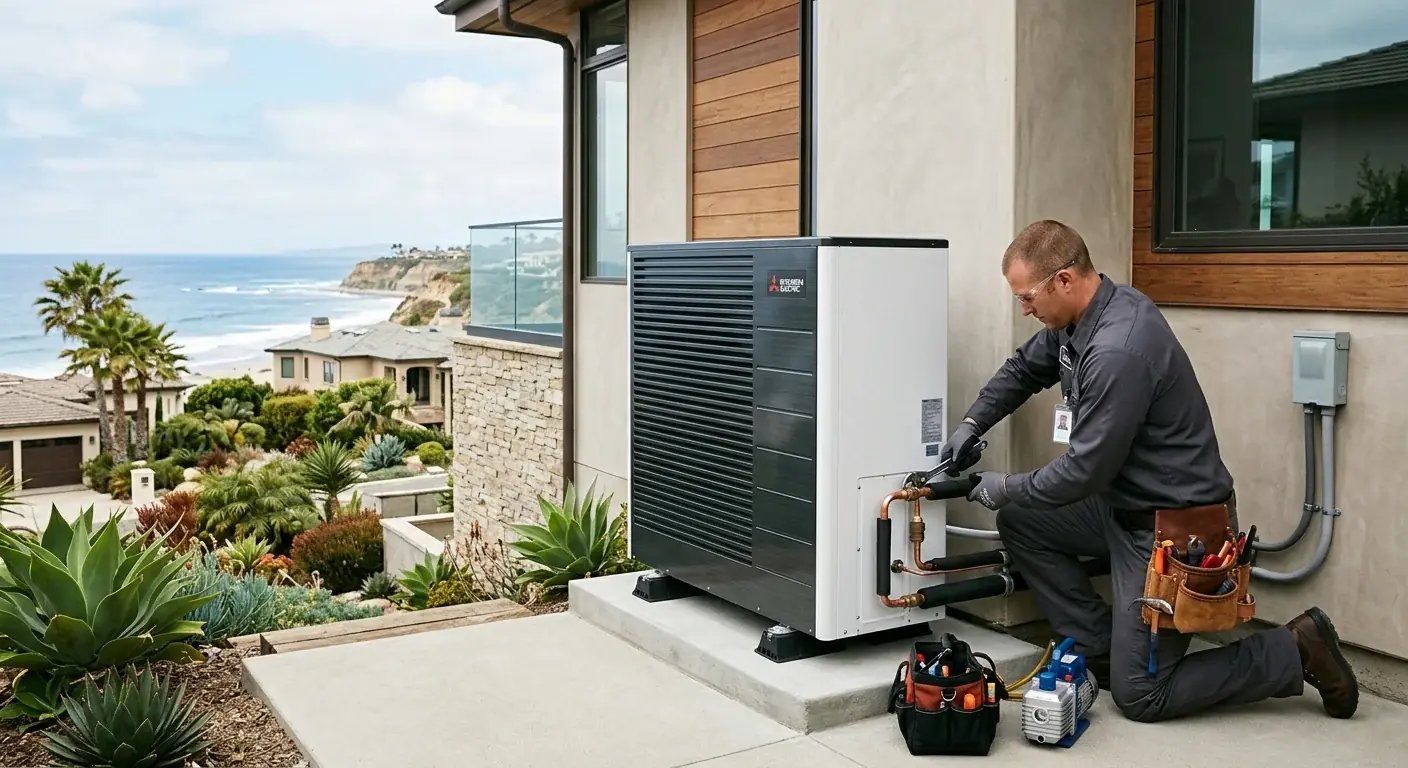
How is mountain climate different from valley San Diego?
Most San Diego HVAC writing assumes coastal or inland valley weather: winters rarely below 40°F, summers 75 to 95°F. The backcountry is another climate.
Julian sits near 4,200 feet. NOAA 1991-2020 normals at Julian CDF show July and August highs around 85 to 86°F and a January normal low around 39°F. Annual snowfall normal is about 6.4 inches. Individual winters in the last decade have run from no snow to nearly 27 inches. Overnight freezes are routine.
Mount Laguna and Palomar sit higher, with more snow. Palomar Mountain Observatory’s annual snow normal is about 26 inches. Cuyamaca’s is about 20 inches. Those are NOAA station numbers, not folklore.
CEC climate zones for these communities are typically 14 or 16, not Zone 7 (coast) or Zone 10 (inland valley). Equipment sized for Escondido will short on a 25°F Julian morning.
| Place | What changes the HVAC math |
|---|---|
| Coastal San Diego | Mild winters, natural gas common |
| Inland valley | Hot summers, gas usually available |
| Julian / Pine Hills / Wynola | About 4,200 ft, propane, real freeze nights |
| Mount Laguna | Higher, more snow, longer cold |
| Palomar Mountain | High, heavy snow years, propane |
What heating options exist without a gas main?
Propane furnace. The common existing setup. Delivery costs more than valley propane because of distance. The per-gallon price is the delivery company’s, not ours. Tank size is often 250 to 500 gallons.
Cold-climate heat pump. Standard heat pumps lose a large share of rated capacity below freezing. Cold-climate models (Mitsubishi Hyper-Heat / H2i, Carrier Greenspeed, Daikin Aurora, LGRED, and peers) are built to hold capacity down toward 5°F. They still need a Manual J at your elevation, not a valley rule of thumb.
Wood or pellet stove. Common as primary or backup. EPA-certified units and chimney work are a separate trade. San Diego County burn rules apply in fire season. Verify before you rely on wood as only heat.
Electric resistance. Cheap to hang, expensive to run at SDG&E rates. Backup strips, not a primary plan for a full-time house.
The federal 25C credit expired for systems placed in service after December 31, 2025. SDG&E rebates still appear and reserve. Confirm at quote time. See SDG&E heat pump rebates and the heat pump rebate stack.
How much capacity does a heat pump lose in the cold and at altitude?
Cold ambient is the documented hit. A nominal 3-ton unit rated at 47°F outdoor will not deliver that BTU at 17°F. Cold-climate models hold more of their rating. Standard models do not.
Elevation reduces air density. At 5,000 feet a fan moves less mass per cubic foot than at sea level. Some manufacturers publish derate tables. Ask the installer to show capacity at your elevation, not sea-level AHRI only.
A 3-ton that is fine in Escondido can be short in Julian on a 25°F morning. The usual answers are a cold-climate larger unit, or propane (or wood) for the coldest hours.
What freeze problems show up on mountain HVAC?
Condensate lines. High-efficiency furnaces and heat pumps make water. Lines in unconditioned attics freeze. Water backs into equipment.
Line-set insulation. UV and altitude chew foam. Bare suction line does not freeze (no water) but it wastes heat.
Defrost. Outdoor coils ice below about 40°F in humid weather. Defrost drains must not freeze into a mound under the unit.
Vacation cabins left stone-cold invite pipe damage. A 45°F freeze-protection setpoint is a common cabin strategy. Heat pumps left unpowered for months can have refrigerant migration issues. If you use a heat pump on a cabin, standby is safer than dead off.
Why do mountain installs cost more labor?
Drive time via SR-78 from Escondido or SR-79 from Pine Valley. Unincorporated county permits. Fire-zone placement rules. Steep drives and snow that block a boom truck. Supply houses are not around the corner.
Expect a labor premium versus identical equipment in Vista. The matched pro should show it, not hide it.
How should a full-time home, cabin, or new build choose?
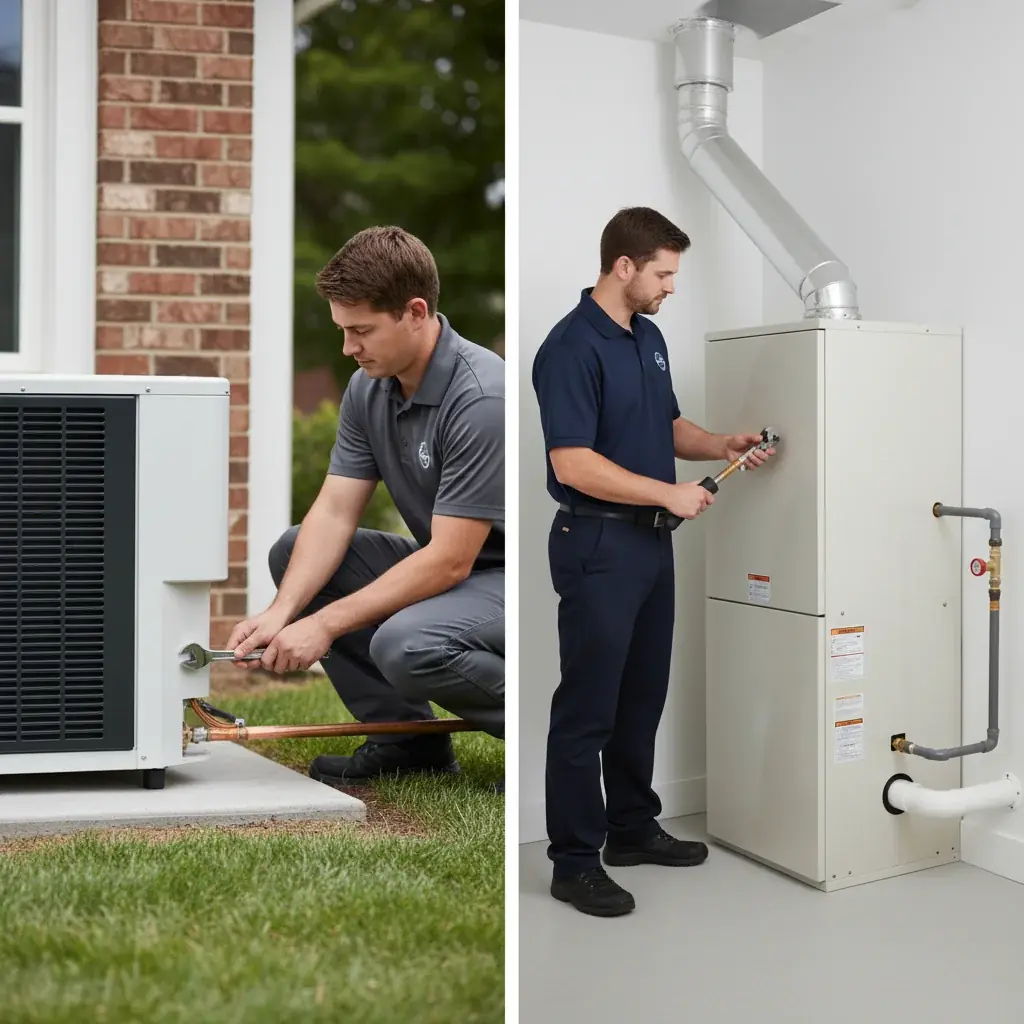
Full-time residents: cold-climate heat pump plus propane or wood for snaps is a common pair. The heat pump covers most of the year. Confirm rebates at quote time.
Vacation cabins: propane plus freeze-protection is often simpler than a heat pump that sits idle.
New construction: all-electric with a cold-climate heat pump avoids new propane infrastructure. Title 24 on a 2026 permit already pushes that direction. See HVAC for new construction and Title 24.
Skip: electric resistance as the only heat in a full-time house.
What should you ask a mountain HVAC contractor?
- How often do you actually service Julian, Mount Laguna, or Palomar?
- Will you size to climate zone 14 or 16, not zone 10?
- What is travel policy for this address, including winter?
- Have you installed cold-climate heat pumps, which brands?
- How do you handle snow-day reschedules?
- Who pulls unincorporated county permits?
See how to choose an HVAC contractor.
FAQ
Do Julian and Mount Laguna have natural gas?
No. Propane delivery. Some newer Julian pockets have co-op tanks. Most homes have a private tank.
Will a standard heat pump work in Julian?
It will run. It will lose capacity below 30°F. Full-time homes usually want a cold-climate model. Standard units can still handle summer cooling and shoulder-season heat.
How much does it cost to heat a Julian home?
Propane use depends on insulation, leakage, and the delivery price that year. A cold-climate heat pump typically cuts operating cost versus propane on a per-BTU basis. Neither number belongs as a fake range on this page. Ask for a load calc and a utility comparison from the matched pro.
Does Julian get snow?
Yes. The NOAA annual normal is about 6 inches. Some winters are bare. Some dump more than two feet. Mount Laguna and Palomar see more. Road closures can delay service. Plan projects around that.
Does the federal heat pump credit apply at altitude in 2026?
Not for a 2026 install. The 25C credit ended for equipment placed in service after December 31, 2025.
Can I put a heat pump on a cabin I barely use?
You can. Propane is often simpler for intermittent use. If you go heat pump, leave low-temperature standby rather than powered off for months.
Related: heat pump service, AC repair, AC installation.
When to call
If you are in Julian, Cuyamaca, Mount Laguna, Palomar, Pine Hills, or Wynola and need sizing that matches altitude, see HVAC service in Julian. Call (442) 777-6440. The pro confirms timing and any diagnostic fee. We do not promise same-day backcountry dispatch.