A blog cannot publish a county-wide installed price for furnace replacement. Cabinet size, AFUE, venting path, gas-line work, attic access, and whether you keep gas or switch to a heat pump all move the number. The matched HVAC company quotes after it sees the home.
Climate Pros SD matches San Diego County homeowners with licensed independent HVAC companies. We do not install furnaces, set prices, or warrant equipment. Permits are pulled by the matched contractor in the city where the work happens.
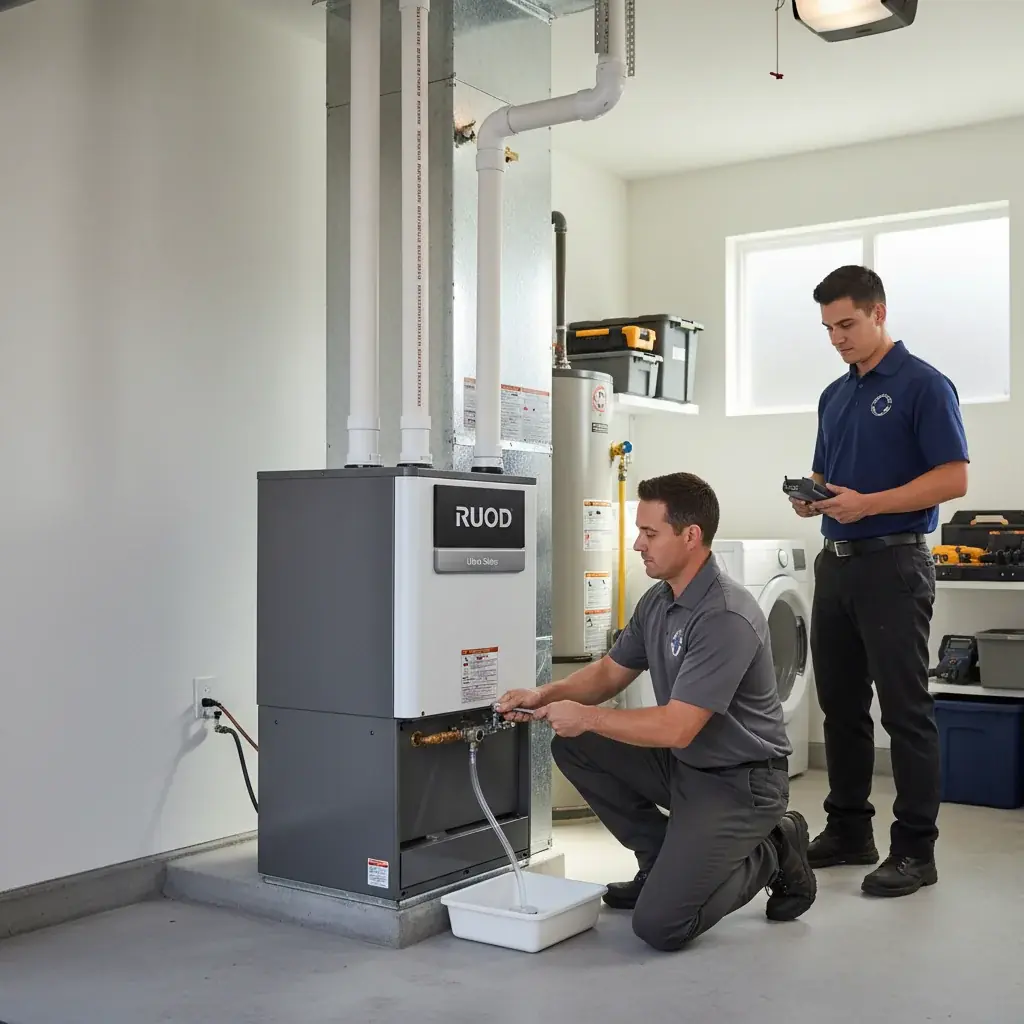
What belongs on a furnace replacement quote?
Ask for line items, not one round number:
| Line to insist on | Why it matters |
|---|---|
| Equipment, with AFUE and output | An 80% B-vent furnace is a different job than a 96% condensing unit |
| Manual J or equivalent load calc | Square footage rules of thumb oversize many San Diego homes |
| Venting and condensate | 96% AFUE usually needs PVC and a drain, not a reuse of old metal flue |
| Gas line and shutoff work | Undersized iron pipe shows up after the cabinet is already chosen |
| Electrical, thermostat, and disposal | Heat-pump conversions add more of this than a like-for-like gas swap |
| Permit, inspection, and HERS if triggered | The contractor pulls these; skipping them is your risk at resale |
| What is excluded | Panel upgrade, full duct replacement, and asbestos around old wrap |
If your current furnace still runs, read furnace repair first. A cracked heat exchanger is a safety conversation, not a coupon repair. A flame sensor or ignitor on a younger unit is often a repair visit, not a full swap.
How do 80% and 96% AFUE furnaces differ here?
AFUE, Annual Fuel Utilization Efficiency, is the share of gas heat that stays in the house instead of leaving in the flue. An 80% unit uses a conventional metal B-vent, often the same path as the old furnace. A 96% condensing furnace pulls so much heat from the exhaust that the leftover gases can vent through PVC, usually out a side wall, and it needs a condensate drain.
San Diego winters are mild. Coastal and many inland nights sit in a range where you heat far fewer hours than a Midwest house. That does not make a 96% unit “free” over time. It also does not make an 80% unit the only rational pick. Stay-or-sell horizon, existing vent path, and whether the AC is also dying matter more than a payback table this brand cannot certify.
Variable-speed blowers sit at the top of many 96% lines. They pair better with modern thermostats and zoning. If you are already planning a thermostat change, say so before the furnace is ordered so the indoor blower and control board match.
Bigger is not better. An oversized furnace short-cycles, wears parts, and leaves rooms uneven. Coastal homes with ocean air often need less heating output than inland homes in El Cajon or Santee that see colder overnight lows. Manual J sizes to the house, not a national chart.
Why do gas-line and venting details change the quote?
The cabinet is only part of the job.
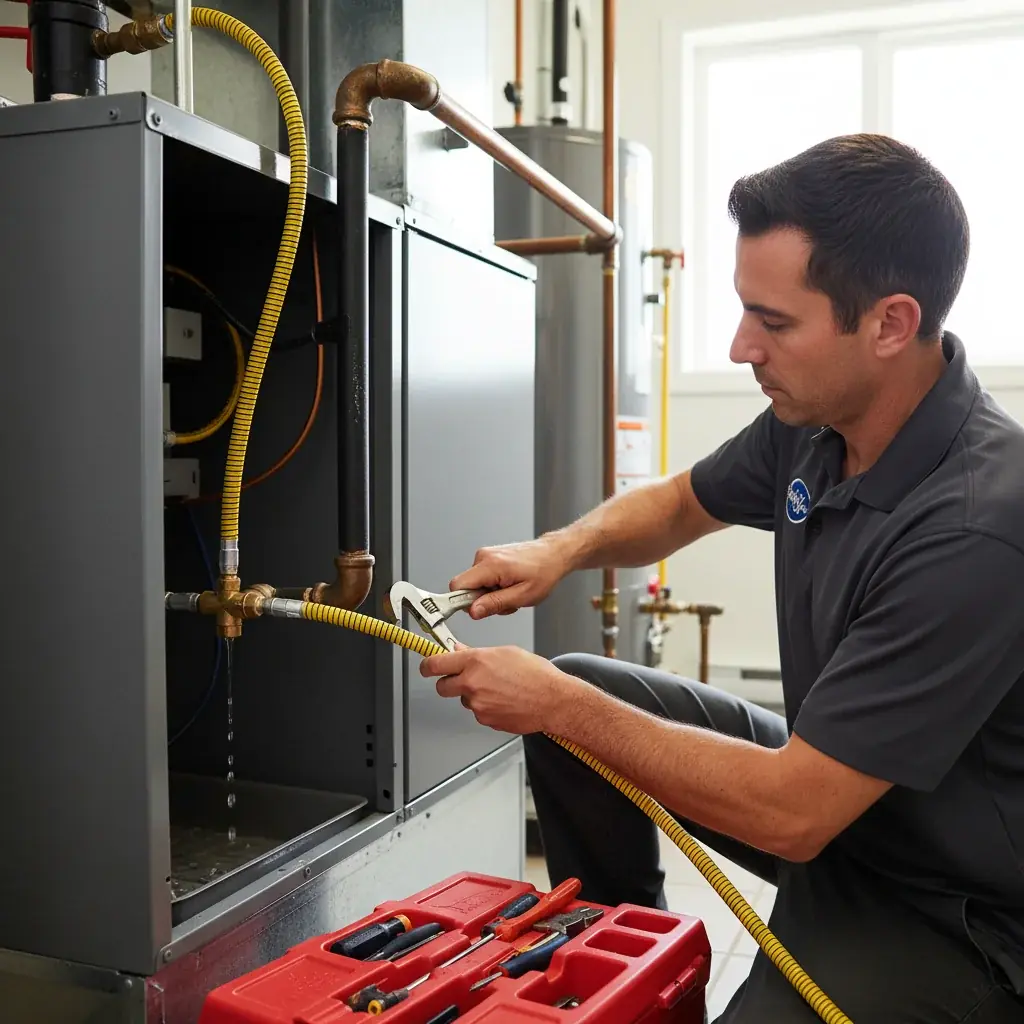
Gas line. Older homes sometimes have 1/2-inch black iron that cannot feed a larger modern burner. If you are also adding a tankless water heater or a gas range, upsizing once is cleaner than two visits.
Venting. Switching from 80% to 96% means leaving the metal flue (or keeping it for a water heater) and running PVC. That is straightforward on a single-story house with an exterior wall near the furnace. A two-story house with a central closet is a longer pull. If you stay at 80% AFUE, confirm the existing B-vent still meets current California code. Old flexible aluminum venting sometimes has to come out.
Access. A garage or utility closet with a clear front is the easy case. A tight attic or crawlspace adds labor. Some San Diego homes have attic furnaces behind hatches that barely fit a cabinet. That conversation belongs in the estimate, not after the truck is loaded.
Permits. The City of San Diego and most county cities require a mechanical permit for furnace replacement. Verify the contractor’s C-20 on the CSLB lookup and confirm they, not you, pull the permit.
When does a heat pump beat a new gas furnace?
San Diego winters are the reason this is a real choice. Heat pumps work well when outdoor air stays well above deep-freeze. That covers almost all county winter days outside the mountains.
A heat pump heats and cools in one outdoor unit plus an indoor air handler. Compare it to gas furnace plus a separate AC, not to a furnace alone, unless you truly have no cooling.
Heat pumps move heat. Even on a cool San Diego morning, a modern unit can deliver more heat energy than the electricity it uses. A gas furnace cannot beat 100% AFUE. That is physics, not a bill forecast.
Electrical. If the house only has gas heat and little spare panel capacity, converting can mean a panel or circuit upgrade. Ask the matched contractor to say so in writing before you treat the heat pump as a drop-in.
For the side-by-side, see heat pump vs. furnace in San Diego and heat pump vs gas furnace cost.
What 2026 incentives actually apply?
Do not budget a 2026 furnace or heat pump on last year’s internet stack.
Federal 25C. The IRS Energy Efficient Home Improvement Credit applies to qualifying property placed in service through December 31, 2025. It does not apply to property placed in service after that date. For qualifying 2025 heat pumps, the IRS design cap was $2,000 per year. A 2026 install does not get 25C.
TECH Clean California. TECH stopped new single-family HVAC reservations on November 14, 2025. Enrollment of a contractor is not a reservation for your address.
HEEHRA single-family. Fully reserved statewide as of February 24, 2026. New income-verification applications are not being accepted at that status. Confirm on the California Energy Commission rebate pages.
Do not stack TECH and HEEHRA as of July 15, 2025, even if both were theoretically eligible.
SDG&E. Golden State retail offerings ended. Confirm anything on a quote at sdge.com/rebates. Do not treat an old product table on that page as a live coupon.
Manufacturer or dealer financing is the installing company’s offer, not a Climate Pros SD product.
Furnace replacement cost FAQ
How much does it cost to replace a furnace in San Diego?
It depends on size, AFUE, venting, access, and whether you stay on gas. Climate Pros SD does not publish installed bands. Get a written quote with the lines in the table above.
Is an 80% or 96% AFUE furnace worth it in San Diego?
96% needs PVC and condensate and costs more to install. You heat fewer hours here than in a cold state, so payback is a household math problem, not a network-wide table. Ask for both options itemized.
Should I repair or replace my furnace?
A common homeowner test is whether a major repair is a large share of a new unit’s quote, plus age and heat-exchanger condition. Climate Pros SD does not set a dollar cutoff. A cracked exchanger on an old unit is a replace-and-safety issue.
How long does a furnace last in San Diego?
Many gas furnaces run 15-20 years. County units often cycle less than cold-climate furnaces. Once you are past about 15 years and facing a major repair, replacement is usually on the table.
Should I switch to a heat pump instead of replacing the furnace?
Often worth quoting when the AC is also old. San Diego winters rarely punish heat-pump efficiency the way a Midwest winter does. Do not subtract 25C, TECH, or HEEHRA from a 2026 bid unless the official program still has a documented reservation for that job.
Do I need a permit to replace a furnace in San Diego?
Yes in the City of San Diego and in most county cities. The matched contractor pulls it. Confirm that in the contract.
When to call
If the furnace is 15 or more years old, the heat exchanger is in question, or you want a gas quote next to a heat-pump quote, call (442) 777-6440. Climate Pros SD matches you with a licensed independent HVAC company. Ask for the load calc, venting path, and permit on the written estimate.