San Diego fall can stay mild in the afternoon, then ask the furnace or heat pump to run on a cold inland morning. The National Weather Service describes ocean moderation near the coast and different inland conditions. Use that as context, not a published first-cold-morning date.
This checklist is for homeowners. Climate Pros SD matches you with licensed independent HVAC professionals. It does not set prices or promise a visit window. See the spring AC tune-up checklist for cooling-side work.
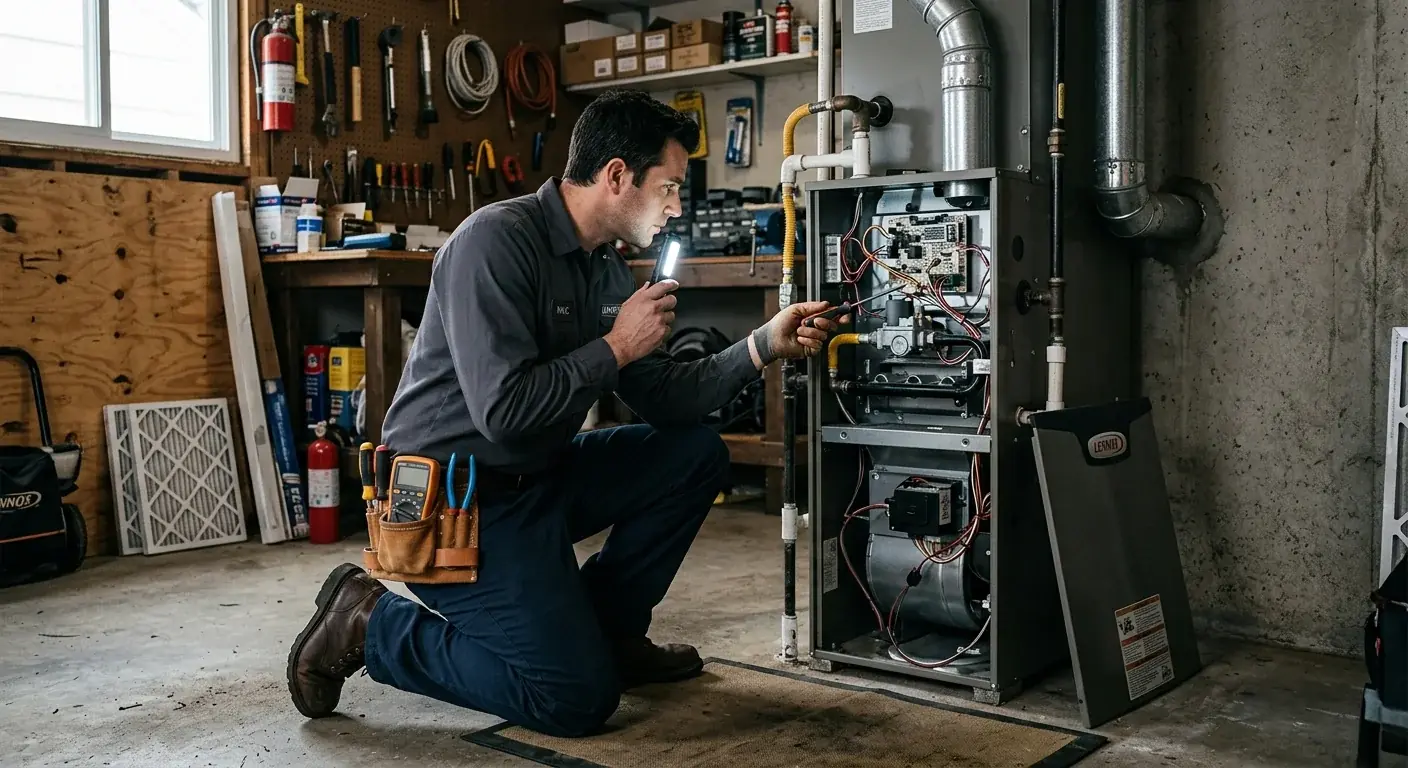
Why run a fall check here?
Heating may have sat unused for months. Dust, nesting, and dried gaskets show up on the first real heat call. Dry wind can load outdoor coils with debris. Smoke events, when they occur, change how you run fans and filters. This page does not publish wildfire-season statistics or a percent of no-heat calls.
What is on the fall HVAC checklist?
1. Run heat for a short test
On a cool morning, set heat several degrees above room temperature. Stay home. You want warm air at registers, no lasting burning smell after a brief dust burn-off, and no grinding or breaker trip. A heat pump should not need auxiliary heat on a mild morning. If anything fails, stop and call. Smell of gas means leave and use emergency services first.
2. Change the air filter
Summer cooling loads the filter. Start heating with a clean one. See the MERV guide for product questions, not a guaranteed bill cut.
3. Test CO and smoke alarms
If the house has gas appliances, test detectors per the manufacturer. Replace units past sensor life. Placement and sources: what causes carbon monoxide.
4. Ask for a heating-mode visit
A cooling-season visit does not automatically test combustion, a reversing valve, or defrost. Ask the matched company, in writing, what the heating visit includes: heat-exchanger inspection and combustion readings on gas furnaces, reversing and defrost on heat pumps, condensate on high-efficiency furnaces, electrical checks, and a copy of readings. Ask for fees in dollars.
5. Look at attic insulation from the hatch
On a cool morning, look for thin, displaced, or pest-damaged insulation and crushed ducts. Do not walk unboarded joists. A licensed insulator speaks to adding material. This page does not publish Title 24 R-values or a yearly dollar savings.
6. Ask whether ducts should be tested
ENERGY STAR says typical forced-air ducts can lose about 20 to 30 percent of moving air to leaks. That is a national typical-house statement. ENERGY STAR. EPA treats duct cleaning as as-needed, not a fall ritual. EPA. See duct leak repair for questions to ask, not a price list copied here.
7. Write a smoke-day HVAC plan
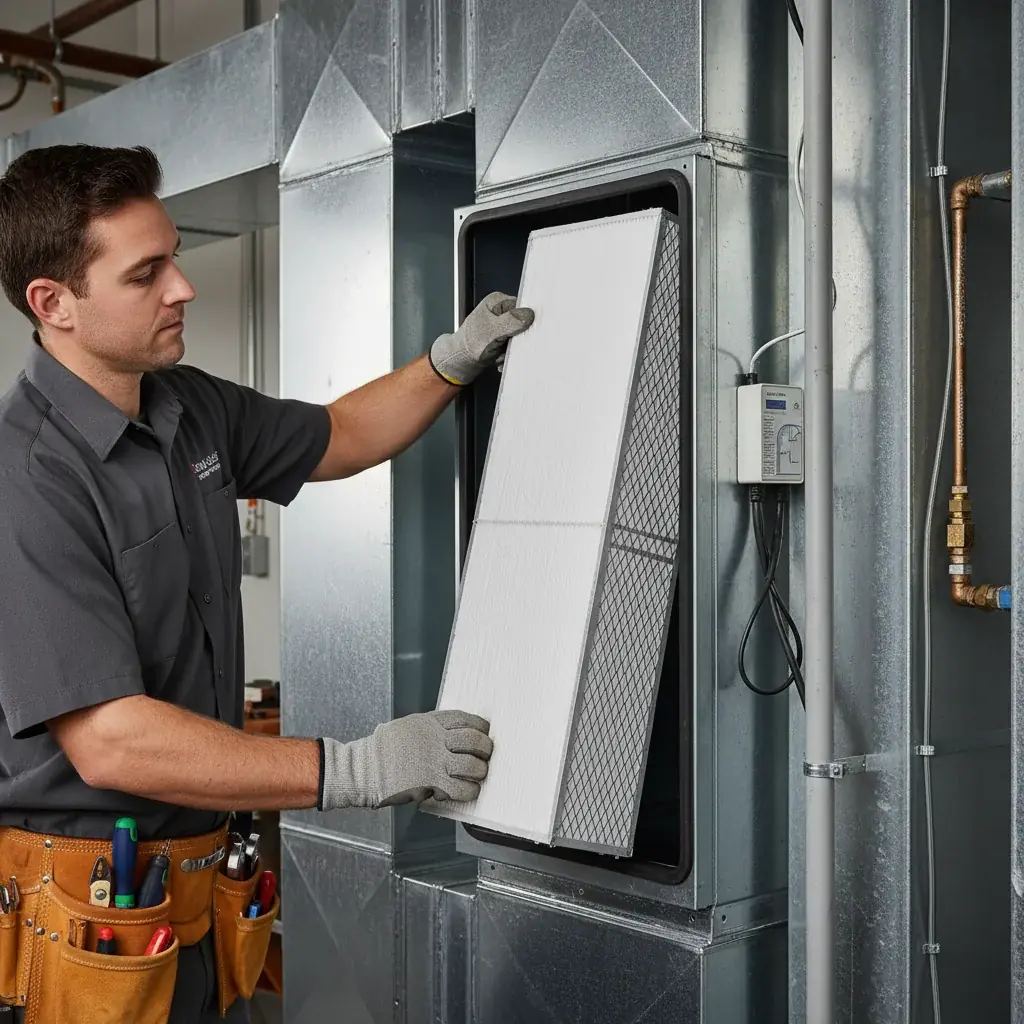
When outdoor air is smoky: close windows and doors, avoid pulling outdoor air through exhaust fans unless needed for safety, and follow your filter’s rating and change interval. Recirculate indoor air only in ways the equipment instructions allow. Details: wildfire indoor air.
8. Clear the outdoor unit again
Heat pumps still run outdoors in winter. Pull vines, leaves, and stored gear off the cabinet.
9. Reset the thermostat for heating
Use occupied settings people will actually keep. This site does not publish a 2 to 3 percent savings per degree. On SDG&E time-of-use plans, listed on-peak hours are 4 p.m. to 9 p.m. Plans. CCA customers pay delivery plus generation.
Homeowner vs technician items
| Item | Who usually does it |
|---|---|
| Heat test, filter, alarms, outdoor clearance, thermostat, smoke plan | Household |
| Heating-mode inspection, combustion or heat-pump tests, duct leakage test | Licensed technician |
Ask for the visit fee in dollars. Do not use a blog table as the quote.
Frequently asked questions
When should I do a fall HVAC checkup in San Diego?
After cooling season and before you rely on overnight heat. Ask the company for the next open slot. This brand does not publish a booking deadline.
Is a fall visit needed if spring already happened?
If you have a furnace or a heat pump, heating parts may not have been tested in spring. Ask what was actually measured.
What is different about fall versus spring?
Fall is heating: combustion or reversing/defrost. Spring is cooling: coils, capacitors, refrigerant indications, airflow.
Do I need a CO detector with a heat pump?
If any gas appliance is in the house, follow detector instructions for the whole home, not only the HVAC.
How do I know if attic insulation looks thin?
If joists show and insulation looks sparse or missing, ask an insulator. A technician can also note crushed ducts.
Call (442) 777-6440. We serve Escondido, Poway, Carlsbad, El Cajon, Chula Vista, and San Diego County.
Related service: HVAC maintenance.