Spring is when many San Diego homes prove cooling before a hot stretch. Climate Pros SD matches you with licensed independent HVAC professionals. It does not sell a cheap advertised special, publish a brand tune-up price, or publish arrival times.
Ask the matched company what it will measure, how long it expects to be on site, and what the visit costs in dollars. Book through that company. This page is a homeowner checklist, not a dispatch calendar.
What should you ask a real cooling visit to include?
A useful visit records measurements. A walk-around with a hose is not the same job. The list below is a conversation guide. The company confirms what it actually performs.
Electrical
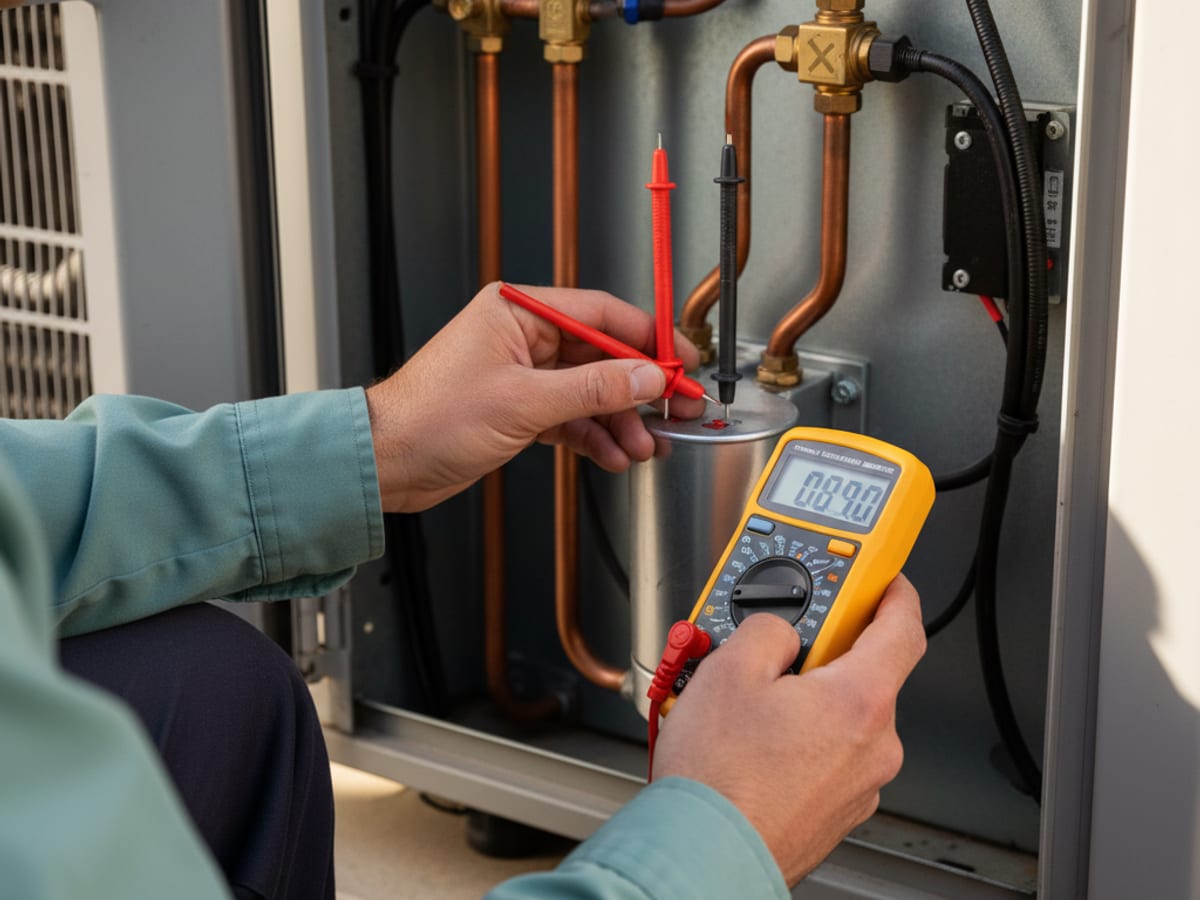
Ask whether they test run (and start, if equipped) capacitors against nameplate, inspect the contactor and relays, check tightness at equipment terminals, and look at the outdoor disconnect. Panel, conduit, or house wiring beyond the HVAC equipment is electrician scope.
Refrigerant-side
Ask whether they measure operating pressures and the related superheat and subcooling checks they use to judge charge. Only a technician licensed for that work should attach gauges. This page does not publish a required temperature split.
Airflow
Ask about static pressure, blower amp draw versus nameplate, and whether the blower wheel is loaded with dust. ENERGY STAR’s typical 20 to 30 percent duct leakage figure is a national typical-house statement, not your test. ENERGY STAR. EPA does not recommend cleaning ducts on a fixed spring calendar. EPA.
Cleaning and drains
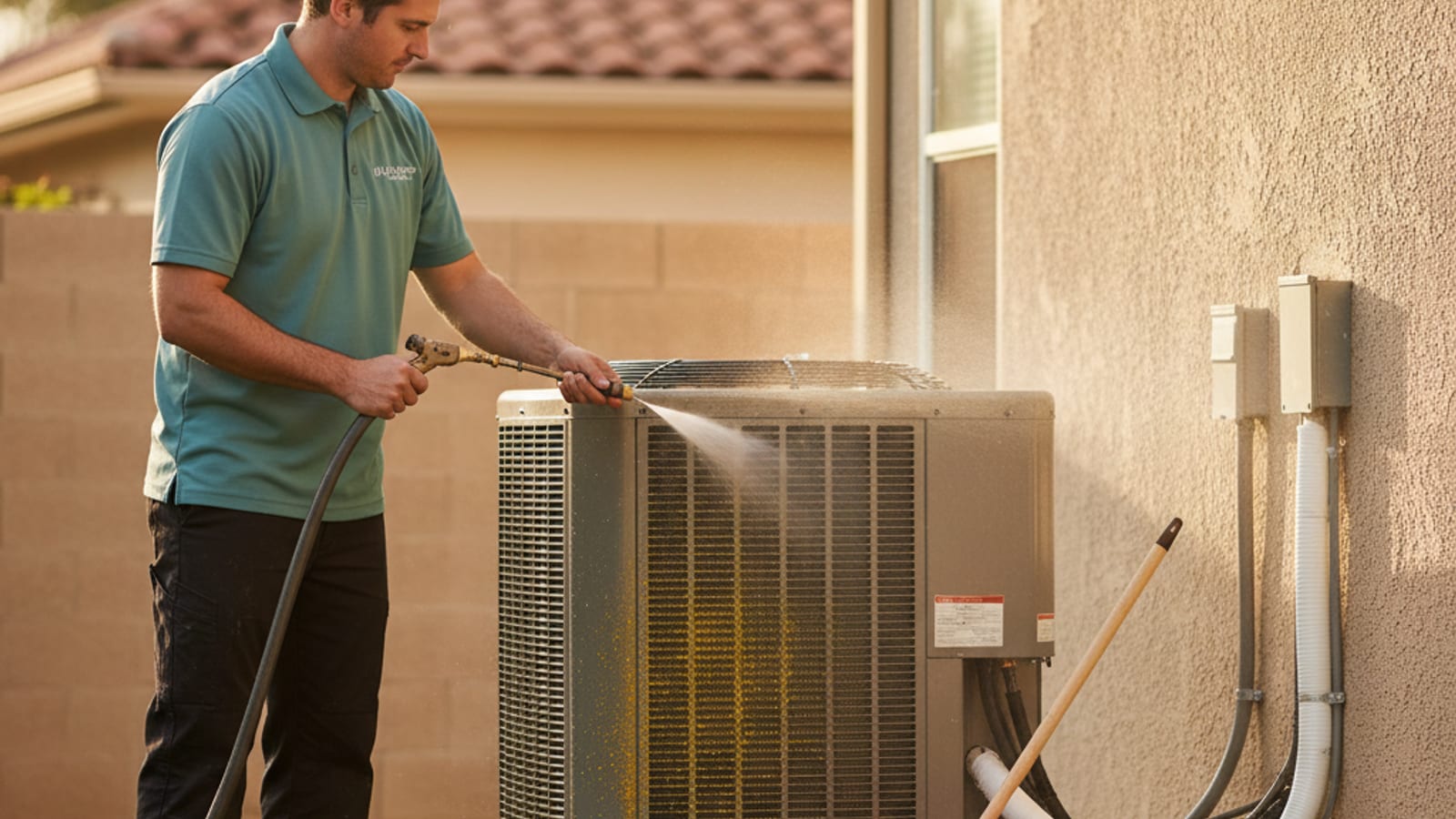
Ask whether the outdoor coil is washed at low pressure, whether the indoor coil is inspected, and whether the condensate drain and float switch are tested. Filters: see the MERV guide.
Controls
Ask them to compare the thermostat to a reference and to review the schedule against your SDG&E plan. Listed residential time-of-use plans use 4 p.m. to 9 p.m. on-peak. SDG&E heat-wave guidance suggests precooling, then 78°F or higher from 4 to 9 p.m., health permitting.
Ask for a written record of readings and findings. Recommendations should not be a brand warranty. Warranties belong to the manufacturer and the installing company.
How do advertised cheap visits differ?
Some advertised visits are short visual stops used to start a replacement conversation. Compare the written scope. If the company will not measure electrical or airflow items you care about, say so before they arrive. Ask for the diagnostic fee in dollars and whether it applies toward repair. Climate Pros SD does not set that policy.
A maintenance plan is that company’s product. Ask what two visits include. See HVAC maintenance schedule for calendar questions, not a network price.
What should you do before the technician arrives?
- Change the filter if you can, so the visit is not only a filter swap.
- Keep about two feet clear around the outdoor unit.
- Clear the indoor access panel.
- Confirm supplies are open and returns unblocked.
- Be ready to show outdoor unit, indoor unit, and thermostat.
When is a “tune-up” the wrong product?
If the system already cannot cool, ask for a diagnostic on the failure, not a seasonal checklist. If equipment is new and still under the installer’s startup visits, ask that installer what is already included. Age alone is not a published replacement rule. See AC installation when replacement is the actual question.
The National Weather Service notes milder coastal weather and warmer inland valleys. That affects how soon you need cooling. It is not a same-week booking promise.
Frequently asked questions
How much does an AC tune-up cost in San Diego?
Ask the matched company for the fee in dollars. This brand does not publish a price table.
What is included in a spring AC tune-up?
Whatever the company lists: typically electrical tests, coil and drain work, airflow checks, and a record of readings. Get that list in writing.
When should I schedule a spring AC check in San Diego?
Before you rely on cooling through a hot stretch. Ask the company for current openings. This page does not close a calendar on Memorial Day.
What can a visit catch early?
Weak electrical parts, dirty coils, blocked drains, and airflow limits often show in measurements before the house feels wrong. There is no guaranteed August-failure statistic on this site.
Do I need a visit if the AC still feels fine?
If you want documented readings before peak cooling, ask for that visit. Efficiency does not decline by a published percent per year on this page.
Should I wait until after the first heat wave?
Cooling that already failed is a repair call. Seasonal checks are easier to schedule before everyone needs maximum cooling. Availability is the company’s, not a brand ETA.
Call (442) 777-6440 to be matched with a licensed independent HVAC professional. We serve Escondido, Poway, Oceanside, Santee, Chula Vista, and San Diego County.
Related services: AC tune-ups and AC repair.