A heat pump that makes a new noise is usually telling you something specific. In San Diego the unit often runs for both cooling and mild winter heating, so the outdoor fan and reversing valve work more of the year than an AC-only condenser. Four sound groups cover most of what homeowners hear. One of them is normal. The others need a licensed tech.
Climate Pros SD matches you with licensed HVAC companies. We do not repair equipment, own trucks, or publish repair prices.
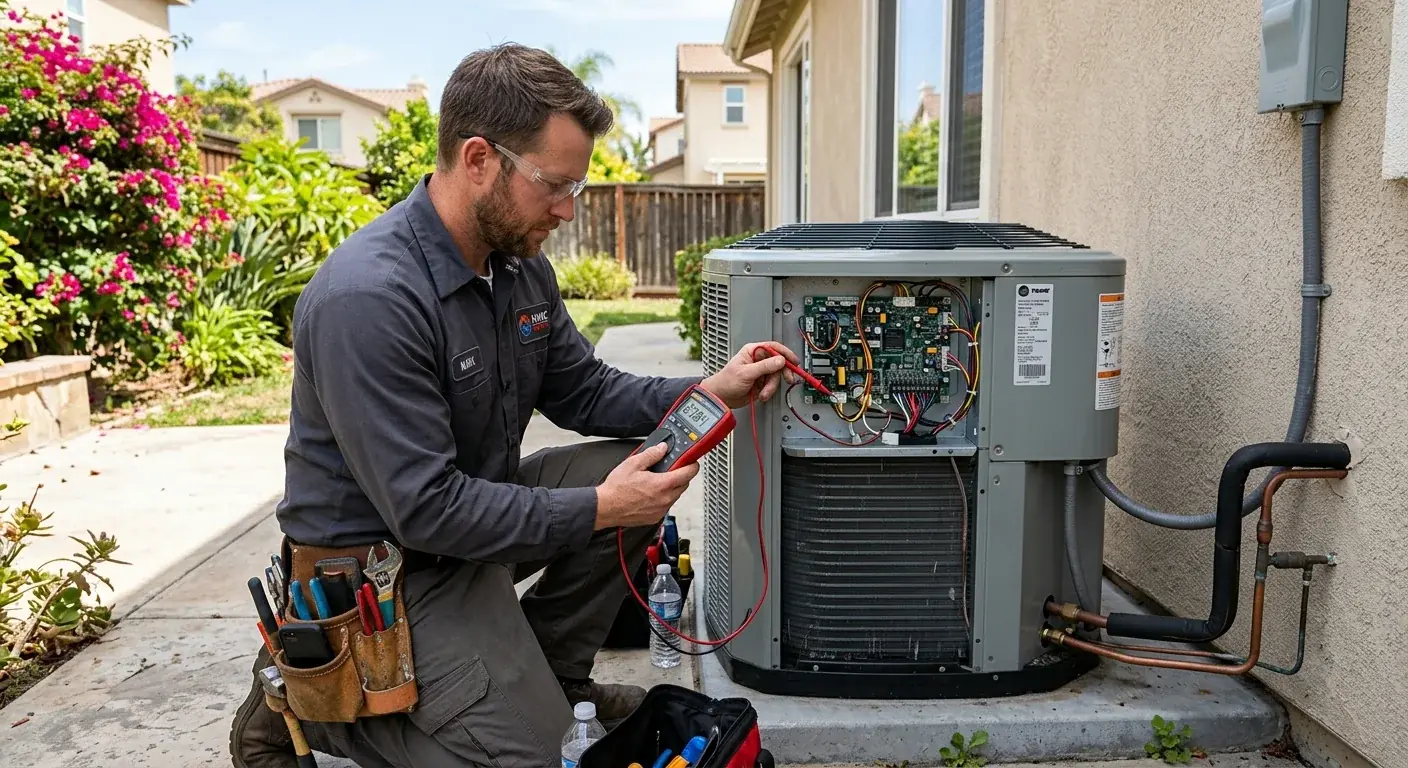
What does each sound mean?
| Sound | Likely cause | Shut it off? |
|---|---|---|
| Whoosh during mode change | Reversing valve switching, often normal | No, if heat returns after a short cycle |
| Loud bang at startup or shutdown | Compressor mount, slugging, or sticky valve | Yes |
| Grinding or rattling from the outdoor fan | Debris, loose blade, or bearings | Yes, shut off first |
| High-pitched squeal at startup | Motor bearings starting to fail | Schedule a tech |
| Constant electrical hum with no airflow | Failed capacitor, contactor, or seized motor | Yes |
| Hissing near refrigerant lines | Refrigerant leak | Yes, then call |
If the noise is loud, mechanical, and new, shut the system off at the thermostat until a tech can look. A loose fan blade can wreck a coil. That turns a small job into a coil or system conversation.
1. Is the whoosh during defrost normal?
Yes, when it is brief. In heating, the reversing valve can flip for a defrost cycle. That produces a sudden whoosh that lasts seconds, not a long grind. The indoor blower may pause. Steam off the outdoor unit can be normal.
Inland mornings in Escondido, San Marcos, Vista, El Cajon, and Santee use defrost more than Carlsbad, Encinitas, La Jolla, or Coronado, because those inland yards see colder mornings. NWS San Diego describes ocean moderation near the coast and warmer summer days in nearby valleys. That is qualitative, not a frost calendar for your pad.
When to worry. If the whoosh is followed by a long stretch of cool air and the system never returns to heat, defrost is stuck. That is a board or sensor job. See heat pump not heating.
2. What does a bang at startup or shutdown mean?
Usually one of three problems:
- Failing compressor mount. Rubber isolation feet harden or tear. The compressor strikes the cabinet. More common on older outdoor units, and salt air does not help coastal cabinets.
- Liquid slugging. Liquid refrigerant or oil hits the compressor on startup. Causes include low charge, a stuck expansion device, or a flooded start after a long off cycle.
- Failing reversing valve. A bang on the mode switch can mean the solenoid is sticking and the valve slams.
What to do. Do not let it keep banging. Repeated strikes can crack a line and dump the charge. Off at the thermostat, then call.
3. What causes grinding or rattling at the outdoor unit?
The outdoor fan sits close to the coil. Debris or a loose blade makes a hard mechanical noise.
Common San Diego debris: palm fronds, eucalyptus bark, jacaranda blossoms, bougainvillea. Santa Ana wind events dump more into inland yards.
- Debris in the blade
- Loose blade setscrew, blade strikes the shroud
- Failing fan motor bearings (steady grind that worsens as the motor heats)
What to do. Shut power at the breaker before you reach into the cabinet. Pull visible debris by hand with power off. If the noise returns at restart, the blade or motor is the problem.
4. What does a squeal at startup mean?
A short squeal at start that then quiets often means bearings are losing lubrication. A constant squeal means the bearing is further along. Letting it run to seizure can take out the capacitor and sometimes the contactor.
What to do. Schedule a licensed tech. Do not wait for a complete seize if you can help it.
5. What does an electrical hum with no airflow mean?
The compressor or fan is trying to start and cannot. A failed run capacitor is a common cause. A seized motor is another.
What to do. Off at the thermostat. A motor that hums without spinning overheats. See AC capacitor replacement for the capacitor family of symptoms. A heat pump uses the same outdoor electrical parts.
6. What does hissing at the refrigerant lines mean?
Refrigerant escaping. Coastal units see coil corrosion from salt air. Do not add refrigerant without finding the leak. The new charge will leave.
What to do. Call for leak detection. If the leak is in the coil, ask for repair versus replacement quotes on the same visit. R-22 production and import have been banned since January 1, 2020; existing systems may still be serviced with recycled or previously produced refrigerant (EPA Class II ODS phaseout).
Should you call now, this week, or monitor?
Shut off and call.
- New loud banging
- Grinding from the outdoor fan
- Constant electrical hum with no airflow
- Hissing near refrigerant lines
Schedule a visit.
- High-pitched squeal at startup
- New rattle that does not go away
- Any noise paired with weaker heating or cooling
Monitor.
- Brief whoosh during defrost
- Faint click at start or stop (contactor)
- Soft hum while running
Heat pumps here work more of the year than an AC that sits idle all winter. That is why bearing and reversing-valve complaints show up. If the unit is old and noises keep stacking, ask for a replacement number alongside the repair. Do not assume a 2026 Section 25C credit or an open TECH single-family reservation. See IRS 25C and TECH incentives. Related: heat pump rebate notes for 2026.
FAQs
Is it normal for my heat pump to make noise during defrost?
Yes. A whoosh, brief steam, and a short pause in warm air can all be normal. If cool air never ends, that is not normal.
Why does my heat pump bang when it turns on?
Failing compressor mount, liquid slugging, or a sticking reversing valve. None of those are safe to ignore.
What does a bad reversing valve sound like?
A hammer on the mode switch, a continuous hiss while it runs, or no sound at all with the system stuck in one mode.
Should I shut off my heat pump if it’s making a grinding noise?
Yes. Shut it off at the breaker before you inspect the outdoor unit. With power off, pull visible debris. If grinding returns, call a tech.
How long can I run a heat pump that’s squealing?
A startup-only squeal can last a while before seizure. A constant squeal during the run is more urgent. Schedule the visit either way.
Why is my heat pump noisier in winter than summer?
The reversing valve and defrost cycle run in heating. Those mode-change sounds do not happen in steady summer cooling.
Related services: AC repair, heat pump service, and HVAC maintenance.
Not sure this is your symptom? Our HVAC symptom finder matches what the system is doing to the likely cause.
When to call us
If the noise is mechanical, loud, and new, shut the system off and call. Ask the pro what their diagnostic fee is and whether it applies toward the repair. Call (442) 777-6440.