A hard start kit is a small electrical add-on that gives an AC or heat-pump compressor extra torque at startup. Homeowners usually hear about one when a tech suggests it as a cheap way to “save the compressor.” Sometimes that is honest. Sometimes it delays a leak, a dead run capacitor, or a compressor that is already done. This guide is the decision, not a price sheet.
Climate Pros SD matches you with licensed HVAC companies. We do not install kits, own trucks, or publish parts prices.
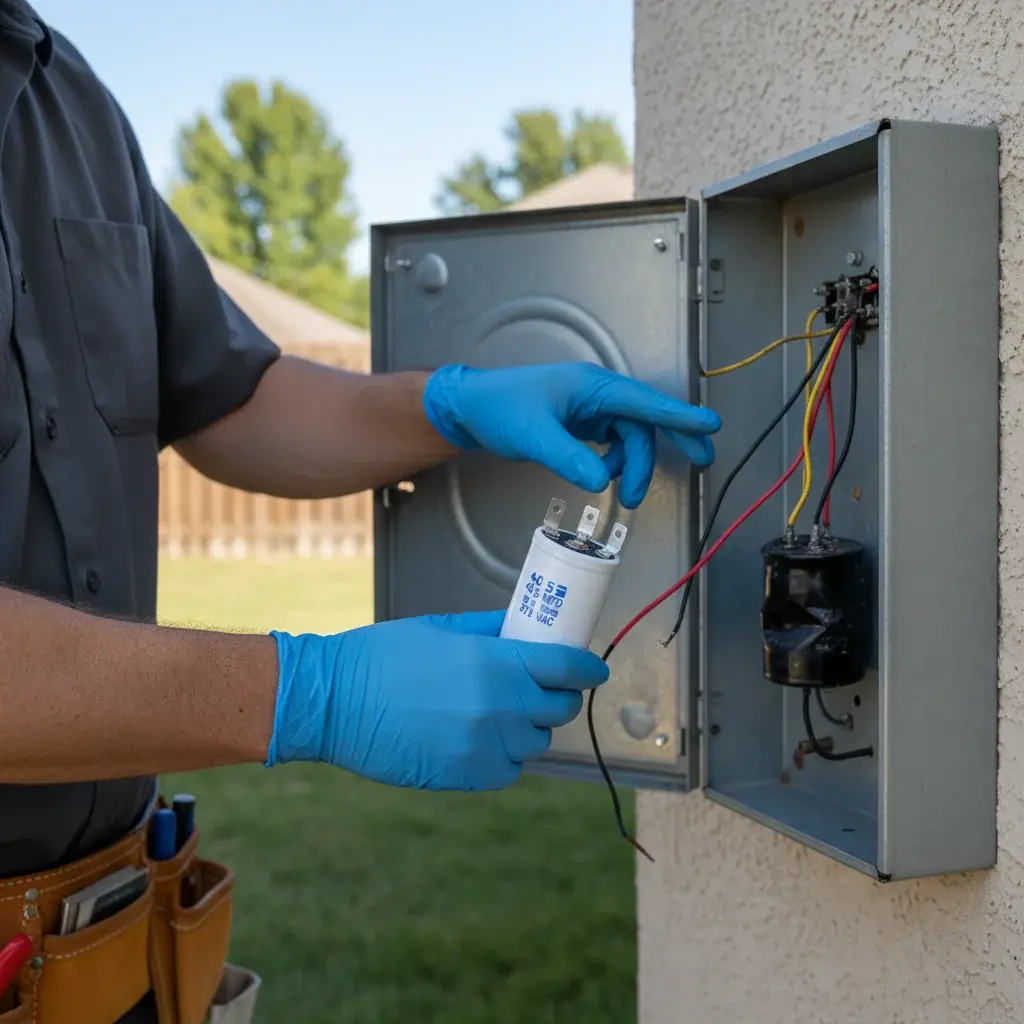
What does a hard start kit actually do?
The compressor draws much more current to start than it does to run. That inrush is why lights can dim when the outdoor unit kicks on. A hard start kit adds:
- A start capacitor that dumps extra energy into the windings at startup
- A potential relay (or a cheaper PTC device) that takes that capacitor back out of the circuit once the motor is up to speed
The compressor reaches running speed faster. Less heat in the windings, less mechanical stress, less voltage sag in the house. On paper that is a real benefit. The question is whether your system needs it, and whether something else is actually wrong.
When does a hard start kit genuinely help?
Older single-stage compressor with a slow, noisy start and no other faults. If the outdoor unit is not new, you hear a brief hum or grunt, then it starts, and charge, capacitor, and contactor already tested healthy, extra startup torque can be a fair bridge. The matched tech should say how many seasons they expect, not a blog.
Voltage sag on long feeders during heat. Inland neighborhoods on longer SDG&E lines, including Lakeside, Ramona, Alpine, Valley Center, and eastern El Cajon or Santee, can see the outdoor unit struggle when the whole block is in cooling. A kit cannot fix an undersized service or a loose neutral. It can help a healthy compressor start through a sag. The tech should measure voltage at the disconnect under load, not guess.
When does a hard start kit hide a bigger problem?
Low refrigerant. Incorrect pressures can look like weak torque. A kit may start the compressor while the leak keeps growing and the compressor runs hot. The honest path is leak search, then repair, then charge. See AC refrigerant leak signs.
Failing contactor or run capacitor. Pitted contacts or a weak run capacitor starve the compressor at start. A kit papers over it. Then the unit stops starting at all. A capacitor or contactor is usually the cheaper, correct first test. See AC capacitor replacement.
Compressor near end of life. Knocking, repeated breaker trips, or a burnt-insulation smell are not torque problems. A kit might get you through a few more days. The honest conversation is compressor versus system replacement.
What does a hard start kit cost in San Diego?
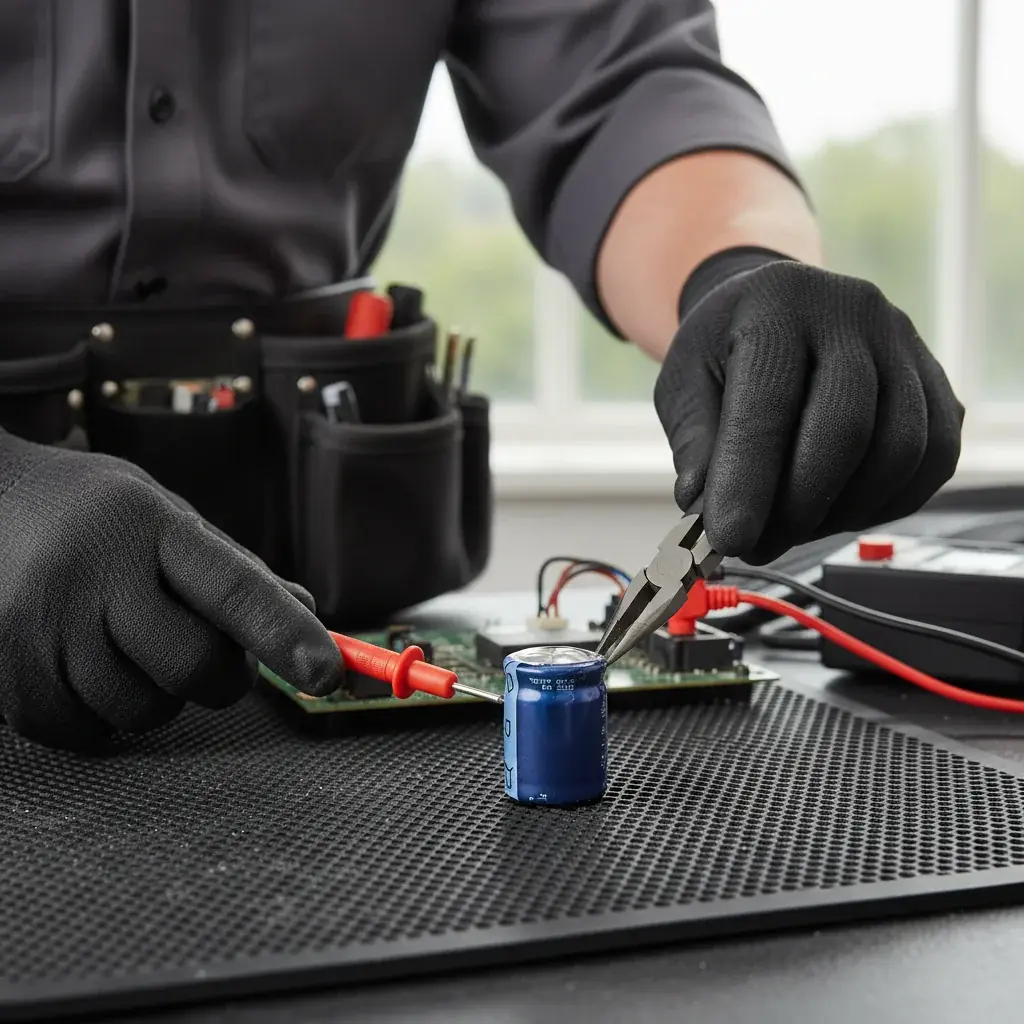
Retail parts are cheap. Installed work is licensed electrical work on a 240-volt circuit. This site does not publish installed prices. Ask for:
- Kit type (potential relay versus PTC)
- Whether a full diagnostic is included (amp draw, capacitor microfarads, contactor, line voltage)
- Whether the compressor is single-stage, two-stage, or variable speed
If the quote is only “add a kit” with no tests, get another company. Fair-pricing context: AC repair scams to avoid.
Should you install, replace the system, or do neither?
| Situation | Ask for this |
|---|---|
| System still new, starting issues | Confirm whether hard start is already built in. An extra kit can fight the factory board and may affect warranty. |
| Older single-stage, slow start only, tests otherwise clean | Kit can be a fair bridge. |
| Old system, slow start plus warm air plus climbing bills | Skip the kit. Price replacement. Recheck 2026 incentives; many single-family heat-pump programs are closed. |
| Breaker trips at start | Do not add a kit until amp draw, capacitor, and contactor are checked. |
| Compressor hums and never starts | Usually a dead run capacitor, not a torque add-on. |
| Symptom only in heat waves | Measure voltage at the disconnect under load. |
| Lights dim every startup, all year | Have an electrician check service and neutrals before HVAC parts. |
When is the kit already built in?
Many late-model two-stage and variable-speed systems manage startup in the control board. Adding an external kit can interfere and may void the manufacturer warranty. Before anyone adds parts they should confirm compressor type, existing start components, and the install manual.
Does any rebate cover a hard start kit?
No typical SDG&E or federal equipment credit is aimed at a start kit. SDG&E’s Golden State Rebates retail offerings have ended; do not generalize that to every SDG&E program (SDG&E rebates). Section 25C does not apply to 2026 placed-in-service heat pumps (IRS 25C). If a contractor claims a rebate for a hard start kit, treat that as a red flag and verify the program yourself.
FAQs
Does a hard start kit really extend compressor life?
On an aging single-stage compressor with a documented slow start and otherwise healthy tests, it can reduce startup stress. Life-extension percentages are marketing, not a CLAIMS fact. On a healthy new compressor it adds little.
Will a hard start kit fix an AC that won’t turn on?
Usually no. Won’t-start is more often capacitor, contactor, breaker, or thermostat.
Can I install a hard start kit myself?
It is 240-volt work on charged capacitors that can hold energy after disconnect. Miswiring can destroy the compressor. Use a licensed tech.
Will it lower my electric bill?
Startup lasts seconds. Do not install a kit to chase kWh. Install it, if at all, for compressor start quality after a real diagnosis.
Related services: AC repair, AC installation, and HVAC maintenance.
When to call a real technician
If you hear slow startup, see dim lights at kickoff, or a contractor already suggested a kit, get a diagnostic that includes startup amps, capacitor reading, contactor inspection, and voltage at the disconnect. Call (442) 777-6440. We match you with a vetted San Diego HVAC pro. They diagnose before they sell a part.