When winter truly settles in, especially after sunset, Escondido homes rely on their furnaces to keep things warm and comfortable. But when your heater struggles or stops working entirely, it’s more than just an inconvenience. Understanding what typically goes wrong and how to read a quote can help you prepare.
Climate Pros SD matches you with licensed HVAC companies. We do not repair equipment, own trucks, or publish repair prices.
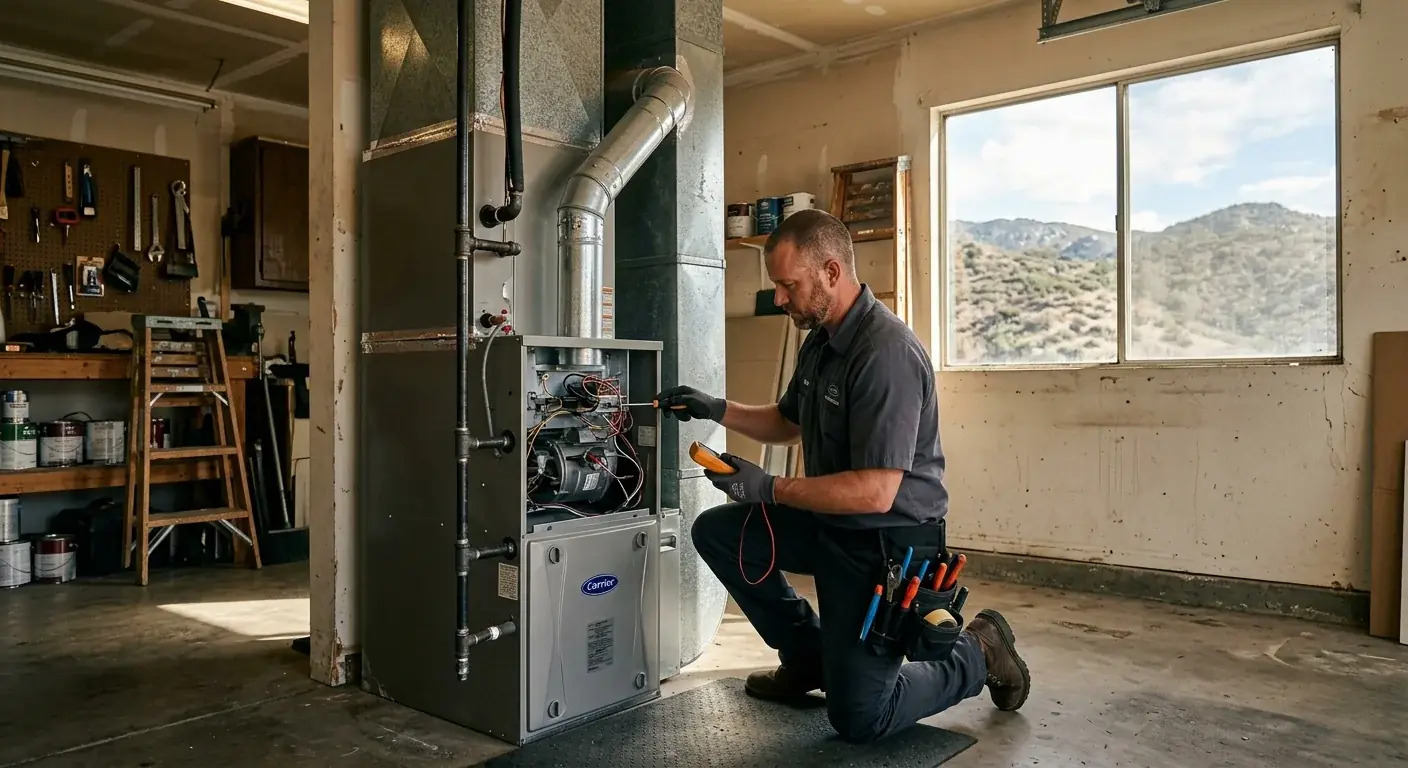
Why Escondido furnaces work harder than coastal San Diego homes
Escondido’s climate is distinct from the immediate coast. While San Diego is known for its mild winters, the inland valley experiences much wider temperature swings, particularly in areas like Hidden Meadows, Old Escondido, and Felicita. NOAA 1991-2020 January normal low at Escondido #2 is about 45F, with colder snaps. This difference means your furnace cycles on more frequently and runs for longer periods to maintain a comfortable indoor temperature.
This increased workload puts extra stress on your heating system. Coastal homes might only need their furnaces for a few hours in the evening, but an Escondido furnace often works through much of the night and into the early morning. This consistent, heavier demand leads to more wear and tear on components. Furnaces here simply log more operational hours, and that adds up over time. It’s why proactive maintenance is even more critical for homes further inland.
Most common furnace failures in 92025, 92026, 92027
Given the harder work Escondido furnaces do, specific problems tend to surface more often. The licensed contractors we match, who regularly serve neighborhoods throughout the 92025, 92026, and 92027 zip codes, frequently diagnose these common issues:
- Igniter failure: Because your furnace starts up more often, the igniter, which creates the spark or heat to ignite the gas, wears out faster. If your furnace is trying to start but you only hear a click before it stops, an igniter is often the culprit.
- Flame sensor problems: The flame sensor confirms that a flame is present in the burner. Over time, soot and debris can build up on the sensor, preventing it from detecting the flame correctly. This causes the furnace to shut down as a safety measure. You might notice your furnace starting, running for a short time, then shutting off.
- Blower motor strain: The blower motor is responsible for circulating heated air throughout your home. Longer run times, common in Escondido’s colder spells, can put continuous stress on this motor, leading to overheating or premature failure. You might hear grinding noises or feel weak airflow from your vents.
- Control board issues: The control board acts as the “brain” of your furnace, managing all its operations. Frequent startups, shutdowns, and the general stress of heavy use can sometimes lead to electrical or programming glitches on the board. This can manifest as erratic behavior, such as the furnace not turning on, not shutting off, or not responding to thermostat commands.
- Dirty air filters: While not a component failure, a clogged air filter significantly reduces airflow, forcing your furnace to work harder. This increases the likelihood of other components failing prematurely and is one of the easiest issues to prevent.
Addressing these issues promptly with professional furnace repair can help extend the life of your system and restore your home’s warmth.
Why Escondido furnaces fail after long off-seasons
San Diego County furnaces sit idle for roughly nine months. From late March through early November, most Escondido systems don’t fire a single burn cycle. That dormancy itself is the problem. Here are the four failure modes that show up most often in the first two weeks of furnace season:
- Thermal-stress heat exchanger cracks. Steel heat exchangers expand sharply during ignition and contract during cooldown. After months of zero cycling, that first October fire-up moves the metal through its widest stress band of the year. Older units (12 years and up) with existing micro-fractures often crack fully during this first restart. A cracked heat exchanger is the most dangerous furnace failure mode and the one to test for first.
- Blocked condensate lines on high-efficiency models. Any 90%-plus AFUE condensing furnace produces acidic water as a combustion byproduct. The PVC condensate line drains it. During the nine-month off-season, that line dries out and collects dust, spider webs, and sometimes mineral scale from the last cycle. When the furnace tries to fire in November, the safety switch detects the blocked drain and locks the system out. Common in Hidden Meadows and newer Felicita builds with 95% AFUE units.
- Dust-clogged burners and pilot orifices. Inland Escondido air carries more dust than coastal zones, especially in 92026 and 92027 where homes back to dry hillsides. Open burner ports collect that dust all summer. The first ignition either fails or burns dirty, which then fouls the flame sensor within hours of normal use.
- Pilot and hot-surface ignitor degradation. Standing pilots can drift out of adjustment during dormancy. Hot-surface ignitors, used in most furnaces installed since 2005, are brittle silicon carbide elements that crack from thermal shock when forced cold-to-hot after a long rest. An ignitor that worked fine last March often won’t survive its first November start.
The systems that limp through September are often the ones that fail the first cold night. The off-season does damage that doesn’t show up until ignition.
Pre-season furnace checklist for October
Run this list before the first cold Escondido night, ideally in early to mid-October. Each item takes a few minutes:
- Replace the air filter with a fresh one. If you can’t remember the last change, do it now.
- Pull the furnace cover and visually inspect the burner compartment for dust, rodent nesting, or insect debris.
- Locate the condensate drain line (white PVC, usually near the furnace base) and pour a cup of warm water down the cleanout to confirm it flows freely.
- Set the thermostat to heat mode and call for heat. Listen for ignition within 30 seconds. The first burn smell (dust burning off the heat exchanger) is normal and should clear in 10 minutes.
- Stand near the furnace during the first cycle. Listen for delayed ignition (a soft boom), short cycling (turns on and off quickly), or rumbling. Any of those means stop running it and book a tune-up.
- Test every carbon monoxide alarm in the house. Replace batteries. If any alarm is more than seven years old, replace the alarm itself.
- Check that supply and return vents inside the home are open and unblocked by furniture or rugs.
- Verify the area around the furnace is clear of stored items, paint cans, or anything flammable.
If anything in the first burn cycle looks wrong, call before it gets cold. October diagnostic visits are usually easier to schedule than December no-heat calls. The matched pro confirms timing; this brand does not.
What a furnace repair quote actually includes in Escondido
When your furnace stops working, one of the first questions you’ll have is about the repair cost. Prices vary based on the specific part needed, labor, and the complexity of the job. A technician will provide a precise quote after a diagnostic visit. Climate Pros SD does not publish 2026 ranges.
Typically, a service call includes a diagnostic fee, which covers the technician’s time to identify the problem. Ask for that fee in dollars and whether it applies toward repair if you approve the work. Common line items:
- Igniter replacement: part and labor after they confirm the reading.
- Flame sensor cleaning or replacement: cleaning is often enough; a pitted sensor needs replacement.
- Blower motor replacement: varies by motor type and furnace age. High-efficiency variable-speed motors sit on a different quote than a basic PSC motor.
- Control board replacement: varies with the furnace model and board complexity.
Repair vs. replace: when an older Escondido furnace isn’t worth fixing
Deciding whether to repair your furnace or replace it is a common dilemma for homeowners in Escondido, especially when facing a major repair.
The age of your furnace is a significant consideration. Most furnaces have a lifespan of 15 to 20 years. If your unit is approaching or has exceeded the 15-year mark, and you’re facing a major repair like a new heat exchanger or blower motor, replacement often makes more financial sense. An older furnace is more likely to break down again soon, leading to a cycle of repairs.
Another factor is the frequency and cost of previous repairs. If you’ve been calling for furnace service multiple times in the last year or two, and the cost of the current repair is more than 50% of the cost of a new furnace, replacement is usually the better long-term investment. Use the actual quotes. Modern furnaces are also more energy efficient. Upgrading can cut gas use; this page does not publish a percent savings. Do not budget a 2026 federal 25C credit, TECH reservation, or HEEHRA single-family rebate as currently open money. Confirm program status at quote time.
Beyond cost, consider your comfort and safety. Older furnaces might struggle to heat your home evenly, leaving cold spots. More importantly, components like a cracked heat exchanger can pose serious carbon monoxide risks. When you replace an older furnace, you also get the benefit of a new warranty from the manufacturer and the installing contractor, not from this brand. We can help you weigh these options, including considering a new AC installation that might integrate a high-efficiency furnace or a heat pump for year-round comfort. The matched licensed contractor installs.
Cracked heat exchanger and carbon monoxide risk
The heat exchanger is the steel chamber that separates combustion gases from the air your blower pushes through the house. When it cracks, exhaust gases including carbon monoxide can mix with the air your family breathes. This is the failure mode that turns a furnace problem into a safety emergency, and it’s the one most likely to surface on older Escondido units after a long off-season.
Warning signs to take seriously: a yellow or flickering burner flame instead of a steady blue one, soot or rust streaks visible on or around the furnace, a sharp formaldehyde-like smell during operation, persistent headaches or flu-like symptoms that improve when you leave the house, and any reading from a carbon monoxide alarm. Furnaces over 15 years old running on original heat exchangers are the highest-risk group, especially in older Escondido neighborhoods where 1980s and 1990s installs are common.
If you suspect a cracked heat exchanger, shut the furnace off at the thermostat and the gas valve, open windows, and call for a diagnostic visit. The matched technician will run a combustion analyzer and visually inspect the exchanger with a borescope. A cracked exchanger is almost always a replacement decision rather than a repair. Every Escondido home with a gas furnace should also have a working carbon monoxide alarm on each floor, hard-wired or with a 10-year sealed battery.
How to keep an Escondido furnace running through the winter
Preventative care is the best way to avoid unexpected furnace breakdowns and ensure your Escondido home stays warm all winter.
First, schedule annual professional furnace maintenance. Before the cold weather really sets in, a licensed HVAC technician can inspect, clean, and tune up your system. They’ll check all components, lubricate moving parts, ensure gas connections are secure, and verify proper operation. This proactive approach helps identify minor issues before they become major problems.
Next, make a habit of regularly changing your air filter. In Escondido, especially during peak heating season, aim to change it monthly, or at least every three months. A clean filter ensures better airflow, which prevents your furnace from overworking and accumulating dust and debris inside its crucial components. Poor airflow is a common culprit in furnace breakdowns.
Also, make sure the area around your furnace is clear. Keep it free from boxes, stored items, and anything that could obstruct airflow or pose a fire hazard. Ensure outdoor vents are clear of leaves or other blockages. When setting your thermostat, avoid extreme temperature swings. Programming it to a slightly lower temperature when you’re away or asleep, rather than shutting it off completely, can reduce the stress of constant startups and shutdowns.
If you notice any unusual smells, strange noises, or a decline in heating performance, don’t wait. Addressing these early can prevent a small issue from escalating into a full furnace failure. Staying on top of your HVAC system’s health, including your AC unit’s upkeep, can also save you from unexpected issues in the summer; you can find more information on common AC issues on our blog about AC repair in Escondido.
When to call us
If your furnace completely stops providing heat on a cold Escondido night, it’s time to call. Other urgent situations include hearing unusual grinding, squealing, or banging noises coming from the unit, which often indicate a serious mechanical problem.
You should also contact us right away if you smell natural gas near your furnace. This could signal a dangerous leak and requires immediate evacuation and professional intervention. Similarly, if your carbon monoxide detector alarms, evacuate your home and call for emergency help and HVAC service immediately. These are critical safety concerns. If you’ve performed basic troubleshooting like checking your thermostat and circuit breaker and your furnace still isn’t working, it’s best to have a professional diagnose the issue. Call us at (442) 777-6440 to get matched with a licensed pro. For housing-stock notes by neighborhood, see our furnace repair in Escondido service page.
FAQs
Why does my furnace fail right when winter starts?
Most Escondido furnaces sit idle for nine months a year. When that first cold night triggers ignition, components that have been dormant since March move from full rest to full operating temperature in seconds. Hot-surface ignitors crack from thermal shock, condensate drains plug from dust accumulation, burners fire dirty from summer debris, and heat exchangers stress at their micro-fractures. An October pre-season check catches most of these before the first cold front.
How do I know if my heat exchanger is cracked?
Watch for a yellow or flickering flame instead of steady blue, soot or rust on the furnace cabinet, a faint formaldehyde or chemical smell during operation, and any flu-like symptoms that get better when you leave the house. A combustion analyzer reading and a borescope inspection confirm it. If you suspect a crack, shut the furnace off, open windows, and book a diagnostic visit before running it again.
How much does a typical Escondido furnace repair cost in 2026?
Climate Pros SD does not publish a 2026 price list. Ignitor, flame sensor, blower motor, control board, and heat exchanger jobs are different quotes. Ask for the diagnostic fee in dollars and a written line for the failed part.
Should I repair a 15-year-old furnace or replace it?
Run the 50 percent heuristic: if the repair quote is more than half the cost of a new furnace and the unit is 15 years or older, replacement almost always wins on a five-year horizon. Add the cracked-heat-exchanger risk and the efficiency gain of a modern condensing furnace and the case gets stronger. Use the actual quotes.
Do I really need a furnace tune-up every year in Escondido?
Yes, more here than in coastal zip codes. Escondido furnaces log more burn hours per winter, collect more dust during the long off-season, and run on dry inland air that’s harder on burner components. An October tune-up is cheaper than one emergency call in the sense that it catches blocked condensate, dirty burners, and a weak ignitor before December. Each company sets the visit price.
What’s the first thing to check if my furnace won’t turn on?
In order: thermostat is set to heat and the setpoint is above current room temperature, the furnace switch (looks like a regular light switch near the unit) is on, the circuit breaker hasn’t tripped, and the air filter isn’t completely clogged. If all four check out and the furnace still won’t fire, the next likely causes are the ignitor, flame sensor, or a safety lockout from a blocked condensate line. That’s when to call.
Climate Pros SD matches Escondido homeowners in Hidden Meadows, South Escondido, Felicita, and Kit Carson Park. Ask whether a tech is available today, yes or no. This brand does not promise arrival windows. See our furnace repair in Escondido service page. Call (442) 777-6440.