Spring Valley is unincorporated East County San Diego, built largely in the 1960s through 1980s on relatively affordable parcels that attracted working families. A large share of homes here have original or early-replacement HVAC systems that have had inconsistent maintenance histories. Summer temperatures regularly push into the mid-90s, and the systems working through that heat deserve more attention than they typically get.
Climate Pros SD matches Spring Valley homeowners with a licensed HVAC company. That company quotes in writing whether they offer a single visit or a maintenance plan, what they inspect, and any fees before work starts. Typical industry tune-ups look at capacitors, coils, and refrigerant charge. Ask the matched company which of those they include. Appointment length is set by that company.
Spring Valley sits in the East County heat corridor. Highs in the mid-90s are routine from June through September, with Santa Ana events pushing well above the coastal normals in the fall. Systems here run harder and longer than their counterparts in coastal San Diego. The housing stock compounds this: 1960s and 1970s homes with original ductwork, systems that may have been installed by the previous owner and never serviced by the current one, and a rental market that creates the same deferred-maintenance cycle seen elsewhere in the East County.
Spring Valley is also in a wildfire interface zone. The Jamul and Otay corridors to the east have seen multiple major fire events over the past two decades. Ash and smoke infiltration during those events puts particulate load on filters and evaporator coils that a standard annual filter change does not address. We match homeowners with pros across all of Spring Valley, including Jamacha, Sweetwater, and the neighborhoods along the 94 corridor.
What to ask a matched company to inspect in Spring Valley
Spring Valley's combination of East County heat, older housing stock, and wildfire smoke exposure creates a specific set of inspection priorities. Ask the matched company how they cover those items. Typical industry tune-ups look at capacitors, coils, and refrigerant charge.
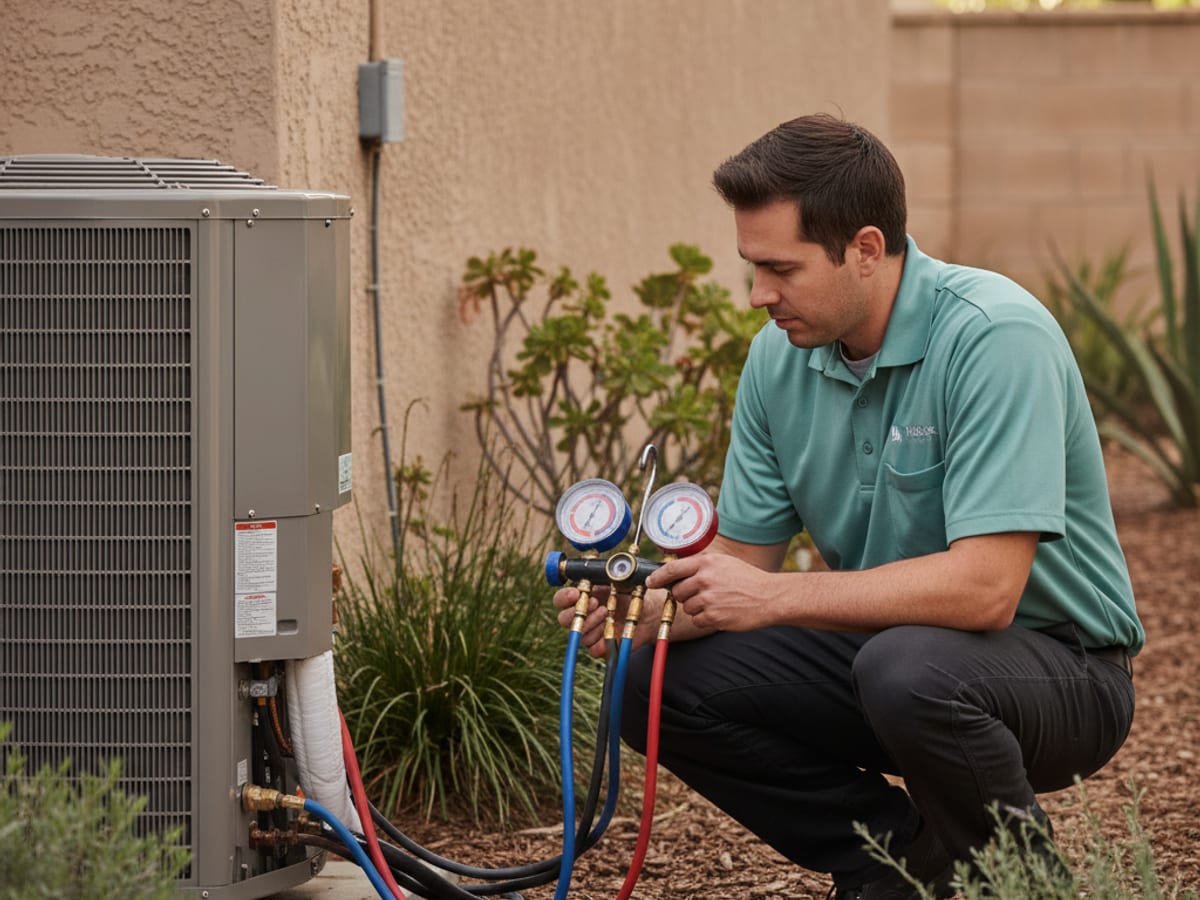
Refrigerant level check with gauges: slow leaks from age and wear on systems with extended service gaps
Capacitor microfarad test: degraded from repeated thermal cycling in 95-plus-degree summers
Compressor and fan motor amp draw: elevated amps from dirty coils or declining refrigerant charge on neglected systems
Condenser coil cleaning: dust and chaparral debris on outdoor units at the edge of the wildfire interface zone
Evaporator coil inspection: ash and fine particulate buildup from regional fire events that bypass standard filters
Static pressure check for duct leaks in older 1960s-80s tract housing with original or deteriorating ductwork
Condensate drain flush and float switch test: essential on systems that run long hours in East County summer conditions
Contactor and electrical connection inspection: age-related wear on older systems, terminal oxidation from the inland climate
Thermostat calibration and cycle timing check
Temperature split measured across the air handler
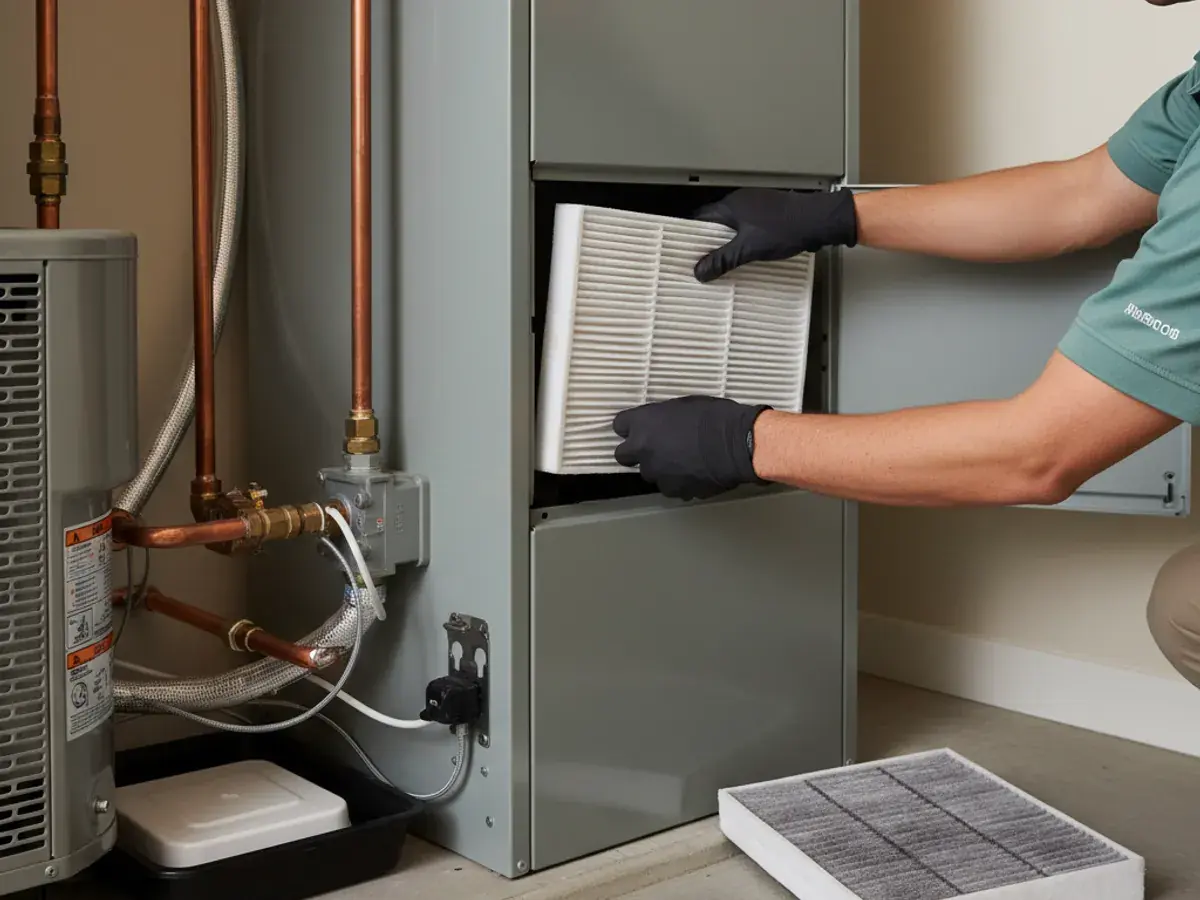
Filter condition check and replacement if needed: often severely overdue on rental-turnover systems
Blower wheel inspection for debris buildup from dusty conditions and smoke infiltration
Heat exchanger visual inspection on fall visits
Full written summary with findings and recommended action items
HVAC maintenance cost in Spring Valley
The company you are matched with quotes the visit in writing before starting. Ask whether they offer a single appointment or a plan, what they inspect, and which fees are extra.
Repair
Typical range
Notes
Single tune-up visit
Quoted by the matched company
Ask what they inspect and whether coil cleaning is included
Annual maintenance plan, if the company offers one
Quoted by the matched company
Ask how many visits they include and what each visit covers
Filter replacement
Priced by filter type and MERV rating
Depends on filter type and MERV rating
Refrigerant top-off (R-410A)
Priced by how much charge is needed
If low charge is found during inspection; quoted separately before adding
Refrigerant top-off (R-22)
Priced by supply availability and charge needed
R-22 supply is limited; persistent leaks on older systems point toward replacement
Capacitor replacement
Priced by part and labor
If the microfarad test fails during the tune-up
Condensate drain line clear (severe blockage)
Priced by severity of the blockage
Common on systems with extended deferred maintenance
Pricing is set by the company you are matched with, not by location. If the inspection turns up something that warrants a repair, that gets quoted separately and you decide whether to proceed.
What maintenance prevents in Spring Valley
Spring Valley has two main maintenance challenges: aging housing stock with systems that have had thin service histories, and East County heat loads that push equipment harder than the design assumptions of a 1975 installation. The failures that result from each are predictable and preventable with annual service.
Capacitor and compressor stress from East County heat
When outdoor temperatures consistently reach the mid-90s from June through September, the condenser unit is rejecting heat into already-hot ambient air. This makes the compressor work harder to achieve the same heat rejection, which raises operating temperatures throughout the system. Capacitors take the brunt of this: each compressor start under thermal stress accelerates capacitor degradation.
A tune-up that confirms capacitor health before the summer season begins is worth more in Spring Valley than the same visit in a coastal zip code. A capacitor that fails in July in East County means a no-cooling situation during the hottest conditions of the year. Catching degradation in April is a modest scheduled cost. Replacing it on an emergency call in July costs more, plus the service fee.
Deferred maintenance on older systems
The 1960s and 1970s housing stock in Spring Valley often comes with HVAC systems that have had inconsistent maintenance. Homeowners who bought a property and inherited the existing system may not know when it was last serviced. Rental properties in the area have the same deferred-maintenance pattern seen elsewhere in East County: multiple tenant cycles, each inheriting whatever condition the previous tenant left.
First-time service in Spring Valley gets treated as a baseline inspection. Everything gets documented. The coil will typically need a thorough cleaning. The capacitor will be tested carefully. The refrigerant level will be checked and logged. At the end of the visit you have a complete picture of where the system stands. That documentation is what makes subsequent maintenance meaningful.
Wildfire smoke and filter load
Spring Valley has been in the smoke-impact zone during several major regional fire events. Smoke from wildland fires carries fine particulates that bypass standard MERV-8 filters and deposit on evaporator coils and inside duct runs. A coil coated in smoke residue has reduced heat transfer efficiency and can cause the system to run longer and work harder to reach setpoint.
A fall tune-up after a fire season confirms coil condition and cleans any smoke residue that has accumulated. This is one reason some Spring Valley homeowners ask about two visits a year: the spring visit prepares for summer heat, and the fall visit addresses whatever the fire season put into the system.
Local angle
HVAC maintenance built for Spring Valley homes
Older housing stock and original ductwork
A large share of Spring Valley homes were built in the 1960s and 1970s and still have original or early-replacement ductwork. Metal duct systems from that era are often in reasonable structural shape but have never been professionally cleaned and may have failed cloth-tape joints that pull unconditioned attic air into the supply stream. A tune-up that includes a static pressure check identifies duct leakage. Addressing it improves both efficiency and indoor air quality.
Systems in this housing stock are also approaching or past expected service life. A 1995 system that has been running on reactive maintenance rather than scheduled tune-ups is statistically close to a major component failure. A scheduled tune-up either confirms it is in acceptable condition or identifies what is next so you can plan for it rather than react to it.
East County heat load and system sizing
Spring Valley consistently runs 10-15 degrees warmer than coastal San Diego in summer. Systems that were sized to code minimums in the 1980s may have been adequate then but are marginal now with modern comfort expectations and larger household loads. A tune-up cannot resize a system, but it can ensure that what you have is operating at its actual capacity. A system with low refrigerant, a degraded capacitor, and a dirty coil is only putting out a fraction of its rated output. Restoring those components gets you back to full capacity before you need it.
Jamacha and Sweetwater neighborhoods
The Jamacha Road and Sweetwater Road areas of Spring Valley include some of the neighborhood's older and more rural parcels. Properties in these areas sometimes have well-established trees and landscaping that can drop debris near outdoor condenser units, requiring more frequent coil cleaning. Longer lot setbacks can also mean the condensate line runs farther to daylight, increasing the chance of blockage. These are details that get noted during the inspection.
Rental properties and maintenance documentation
Spring Valley has a significant rental stock. For property owners, HVAC maintenance documentation is increasingly useful: it establishes system condition at the start of each tenancy, it provides a record if a tenant claims a system was not functioning on move-in, and it supports the case for normal wear versus damage if component failure occurs during a lease.
An annual maintenance plan for a rental property in Spring Valley is one of the more straightforward investments in property management. The alternative is an emergency repair call during a summer heat event when the only context is a tenant complaint and no service history.
What else is hvac maintenance in Spring Valley called?
Homeowners search for this a few different ways. In Spring Valley it also goes by HVAC tune-up in Spring Valley , seasonal HVAC tune-up in Spring Valley , preventive HVAC maintenance in Spring Valley , HVAC inspection in Spring Valley , furnace maintenance in Spring Valley , and AC maintenance in Spring Valley . They all reach the same licensed local pros, and the operator who answers will
sort out which one your job actually is.
Spring Valley maintenance questions
How much does HVAC maintenance cost in Spring Valley?
The company you are matched with quotes the visit in writing. Ask whether they offer a single appointment or a plan, what they inspect, and which fees are extra. Climate Pros SD does not sell a branded maintenance plan or inspection protocol. Filter replacement is priced separately by type. Ask whether coil cleaning is included. Ask the matched company how they price East County or unincorporated addresses.
My Spring Valley home has an older system. Is it worth getting tuned up?
Yes, especially for older systems. A tune-up on an aging system gives you a documented baseline of its current condition and identifies what, if anything, is on its way out. It also restores operating efficiency that has declined from accumulated maintenance deferrals. If the system is close to end of life, the tune-up tells you that in a planned way rather than through an emergency failure in July.
How does East County heat affect HVAC maintenance needs?
Significantly. Systems in Spring Valley reject heat into ambient air that is often 20-30 degrees warmer than coastal cities during peak summer. This raises compressor operating temperatures, accelerates capacitor degradation, and drives longer daily run times. Equipment that runs harder wears faster. A pre-summer tune-up that confirms capacitor health and refrigerant charge before the heat season is worth more in East County than the same visit in a coastal climate.
Should I have my HVAC serviced after a wildfire smoke event?
It is a good idea if your home was in a smoke-impact area. Wildfire smoke particles are fine enough to bypass standard filters and deposit on the evaporator coil. A coil coated in smoke residue loses heat transfer efficiency and makes the system work harder. A fall tune-up after fire season confirms coil condition and cleans any residue that has accumulated.
What should I ask the matched company to inspect?
Refrigerant level check with gauges, capacitor microfarad test, compressor and fan motor amp draw, condenser coil cleaning, evaporator coil inspection, static pressure measurement for duct leaks, condensate drain flush and float switch test, contactor and electrical connection check, thermostat calibration, temperature split measurement, filter condition check, and blower wheel inspection. Every visit ends with a written summary.
My Spring Valley rental has not been serviced in years. What should I expect?
First-time service on a long-neglected system gets treated as a baseline inspection. The coil will likely need a thorough cleaning. The capacitor will be tested and may show significant degradation. The filter is often overdue. The refrigerant level will be checked and documented. At the end of the visit, you have a complete picture of where the system stands and what, if anything, needs attention.
How often should I service the HVAC on a Spring Valley rental property?
Annually at minimum. Between tenants is also a good time to service if you do not know how the previous occupant maintained the system. Annual documentation establishes system condition at the start of each tenancy, which is useful if a tenant later claims the system was not functioning on move-in.
What is the best time of year to schedule a Spring Valley tune-up?
March or April for the pre-summer visit. Spring Valley reaches conditions where HVAC failure is a genuine discomfort issue by late May. The Santa Ana events in September and October also bring some of the hardest loads of the year to East County, and you want the system confirmed before those arrive. A November visit covers the heating side before winter.
How does static pressure testing help in older Spring Valley homes?
Static pressure measures resistance in the duct system. High static pressure indicates restrictions or leaks. In 1960s-80s homes with original ductwork, the cloth-tape joints often fail and allow the supply pressure to vent into the attic rather than deliver to registers. A static pressure test identifies this without cutting into walls. If leakage is found, mastic sealant applied at accessible joints can recover a significant share of the lost airflow.
Do you service the Jamacha Road and Sweetwater areas of Spring Valley?
Yes. Pros in our network cover all Spring Valley neighborhoods, including Jamacha Road, Sweetwater, and the neighborhoods along the 94 corridor. Ask the matched company how they price rural or unincorporated addresses and get that in writing.
Is the annual maintenance plan worth it in Spring Valley?
For most Spring Valley homes, two visits a year is a common request because of East County heat and fire-season smoke. Ask the matched company whether they offer spring and fall visits, what each visit covers, and how they bill it. Climate Pros SD does not sell a branded plan.