Last updated: May 26, 2026

HVAC Maintenance · El Cajon, CA

HVAC maintenance in El Cajon, CA

El Cajon is one of the hottest cities in San Diego County: 100 to 110 degrees on summer afternoons with no marine layer to take the edge off. A pre-season tune-up is the difference between an AC that holds all summer and one that fails on the first July heat wave.

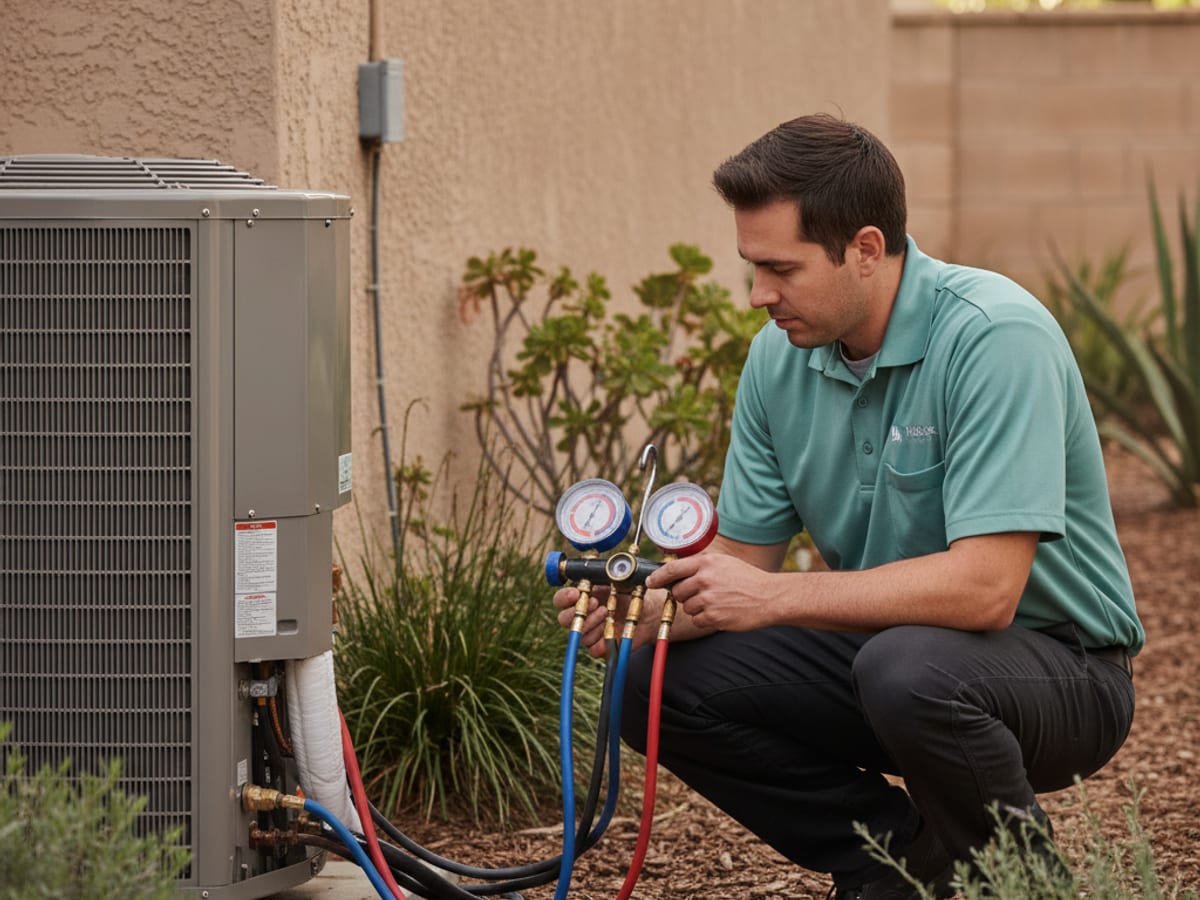
HVAC technician performing maintenance in El Cajon, CA

HVAC maintenance in El Cajon is available as a single tune-up visit or as an annual plan covering two visits, and the pros you're matched with quote the price up front before any work starts. The 21-point inspection includes refrigerant level check, capacitor microfarad test, compressor and motor amp draw, condenser coil cleaning, and temperature split measurement. Most appointments run 60 to 90 minutes.

El Cajon runs hotter than almost anywhere else in San Diego County. Summer peaks reach 100 to 110 degrees across downtown, Bostonia, and the surrounding flatlands, and the cooling season stretches nine to ten months. The city's heavy rental housing stock adds a layer of risk: maintenance-deferred units in older downtown and Bostonia neighborhoods often arrive at summer with dirty coils, weak capacitors, and low refrigerant that the previous tenant never flagged. Fletcher Hills newer construction generally holds up better, but even modern equipment needs annual service in this heat.

We match homeowners with pros across all El Cajon neighborhoods: downtown historic, Bostonia, Fletcher Hills, Rancho San Diego edge, and properties along the Mission Gorge corridor. No surcharge for the hills or the eastern residential streets.

What our El Cajon tune-up covers

A maintenance visit is not a filter swap and a handshake. The pros we send run a 21-point inspection built to catch the failures that show up in July, before they happen.

  • Refrigerant level check with gauges: slow leaks found in April, not on the hottest day of the year
  • Capacitor microfarad test: the most common El Cajon summer failure, caught before the heat arrives
  • Compressor and fan motor amp draw: high amps signal a unit working too hard in the peak heat
  • Condenser coil cleaning: dry inland grit and dust pack coils fast in this climate
  • Evaporator coil inspection for early freeze indicators or buildup from neglected filters
  • Static pressure check to catch duct leaks pushing the system into high-load conditions
  • Condensate drain flush and float switch test
  • Contactor and electrical connection inspection
  • Thermostat calibration and cycle timing check
  • Temperature split measurement: should read 16-22°F across the air handler
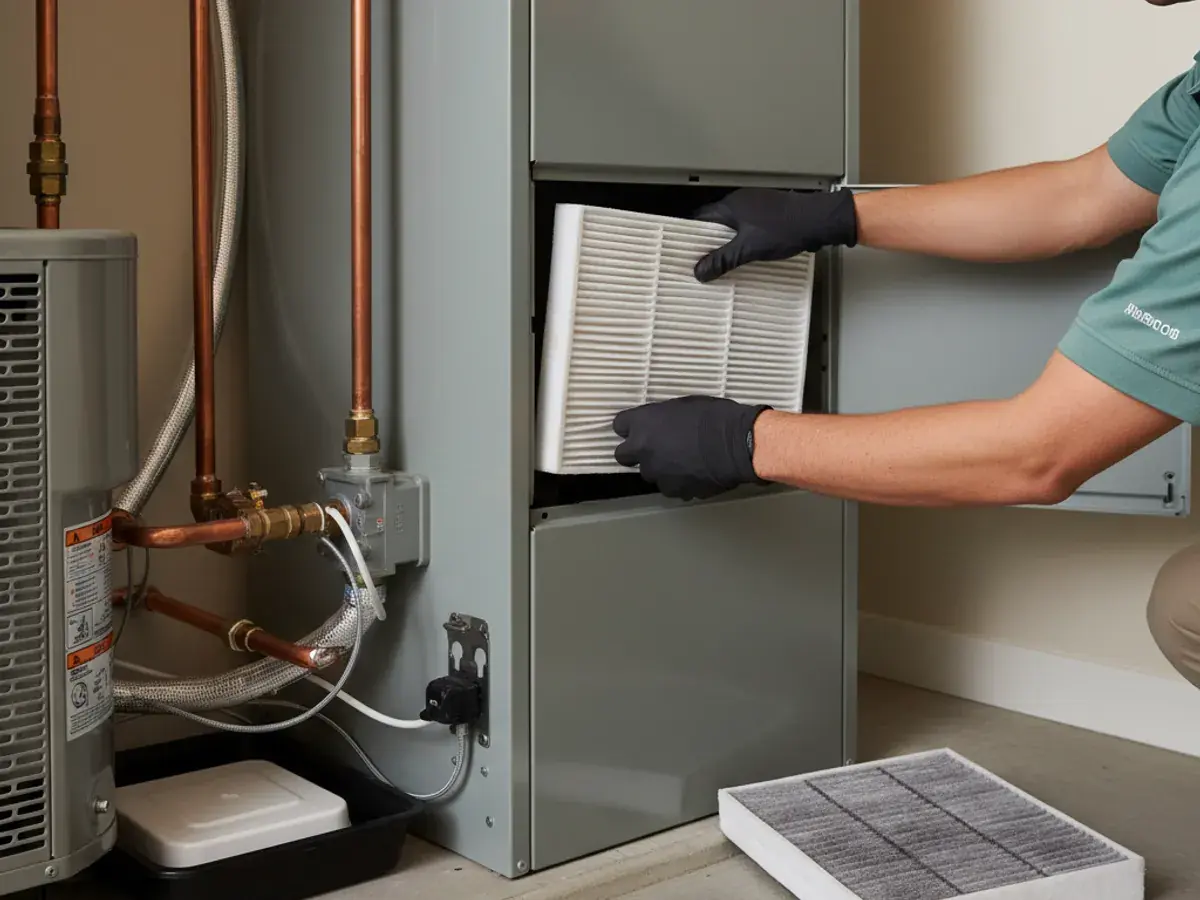
  • Filter condition check and replacement if needed (filter priced separately)
  • Blower wheel inspection for dirt buildup from heavy indoor dust loads
  • Belt and bearing check on older direct-drive systems in downtown and Bostonia stock
  • R-22 refrigerant assessment on pre-2010 systems: document levels, flag slow leaks
  • Full written summary with findings and recommended action items
Maintenance detail work by an HVAC technician in El Cajon, CA

HVAC maintenance cost in El Cajon

The pro you're matched with quotes every visit before starting, and there's no upsell pressure at the end of the appointment.

Repair Typical range Notes
Single tune-up visit Priced by the company you sign up with Full 21-point inspection, coil cleaning included
Annual maintenance plan (2 visits) Priced by the company you sign up with; typically less per visit than a single tune-up Spring pre-summer + fall pre-winter, same 21-point process each visit
Filter replacement Priced by filter type and MERV rating Depends on filter type and MERV rating
Heavy dust coil cleaning surcharge Quoted after inspection For units with significant compacted buildup from deferred maintenance
Refrigerant top-off (R-410A) Priced by how much charge is needed If low charge is found during inspection; quoted separately before adding
Refrigerant top-off (R-22) Priced by supply availability and charge needed R-22 supply is shrinking; persistent leaks on older systems point toward replacement
Capacitor replacement Priced by part and labor If the microfarad test fails during the tune-up
Condensate drain line clear (severe blockage) Priced by severity of the blockage If the drain is fully blocked and requires more than a basic flush

Pricing is set by the company you are matched with, not by neighborhood. If the inspection turns up something that warrants a repair, that gets quoted separately and you decide whether to proceed.

What maintenance prevents in El Cajon

A yearly tune-up is mostly about catching small problems before they become expensive ones. El Cajon's extreme inland heat accelerates equipment wear faster than almost any other city in the county, and the gap between a small finding and a large failure is shorter here. Deferred maintenance on rental properties adds another variable: a unit that sat through two summers without service is already behind.

Capacitor failure on the first triple-digit day

Run capacitors degrade with heat cycles. El Cajon logs more 100-plus-degree hours per year than nearly every city in San Diego County. A capacitor that measures within spec in April may fail by late June, but one already drifting low in April will almost certainly quit during the first heat wave. Testing every capacitor on every tune-up catches that. A weak capacitor replaced in May is a scheduled part-and-labor cost. The same failure on a Saturday in July means an urgent repair call and a wait.

Rental property neglect patterns

El Cajon has a significant rental housing stock in downtown and Bostonia. Tenants change, maintenance gets skipped, and HVAC units quietly accumulate problems across lease cycles. Dirty coils, low refrigerant, and failing capacitors are the most common findings on units that have gone two or more years without professional service. When a landlord calls for the first time, the unit is usually overdue.

A catch-up tune-up on a neglected unit sometimes reveals problems that a single visit can fix. Sometimes it reveals a unit that has been running in distress long enough that a repair conversation is warranted. Either way, you get an honest picture. The pros in our network aren't in the business of recommending replacements to pad a sale: the goal is making sure you know what you're working with before summer arrives.

Condenser coil overload from inland dust and grit

El Cajon sits at the base of dry chaparral hills and gets regular offshore wind events in the fall and winter that coat outdoor equipment with fine dust and debris. Combined with the city's dry inland conditions, condenser coils here accumulate buildup faster than coastal cities. A packed coil forces the compressor to work harder to reject heat, which pushes amp draw up and compressor life down. The coil gets cleaned on every visit. Left uncleaned for two or three seasons, even a newer unit starts to run hot.

Refrigerant leaks on older downtown and Bostonia systems

Slow refrigerant leaks are common on older systems and often go undetected until the unit stops cooling in a heat wave. A system can lose charge gradually over one to two summers and still maintain reasonable cooling through mild weather, then fail completely during the first week of triple digits. Refrigerant levels get checked on every visit. A slow leak caught in spring is a manageable repair. The same leak missed until July is an emergency.

Pre-2010 systems in older downtown and Bostonia housing often still run R-22, which is no longer manufactured in the US. A system that needs repeated top-offs is telling you it has a leak: and a leak on an R-22 system frequently becomes the conversation that ends with a replacement decision.

Local angle

HVAC maintenance built for El Cajon homes

Why El Cajon is hard on HVAC equipment

El Cajon sits in a valley about 14 miles inland from the coast with surrounding hills that trap heat and block any marine influence. When Coronado is 70 degrees on a July afternoon, El Cajon is 105. That heat differential explains why the cooling season here effectively runs from March through November, and why AC equipment in this city accumulates more annual run hours than comparable systems anywhere on the coast.

The valley geography also channels strong offshore winds in fall and winter, which carry fine dust and plant debris into condenser coils. Dry summer conditions compound the problem: without coastal humidity to keep particulates airborne, dust settles directly into equipment. The combination of high run hours, extreme temperatures, and accelerated coil fouling means equipment here wears faster than the calendar suggests.

Housing stock by neighborhood

Downtown El Cajon and Bostonia carry the oldest and most maintenance-deferred housing in the city. Many of the tract homes and apartment buildings here date from the 1950s through the 1970s, and the HVAC systems in rental units may have gone several years without professional service. Systems in this stock are often approaching or past their natural end of life, and multiple deferred issues at once are a common find.

Fletcher Hills, on the western edge of El Cajon, has a different character. This is 1970s and 1980s residential construction in better overall condition, with homeowners rather than landlords managing maintenance. Equipment here tends to be better maintained, though older units are still in the replacement window and benefit from honest inspection findings.

The Rancho San Diego edge on the eastern side of the city has newer construction from the 1990s and 2000s: tract development on larger lots with newer equipment. These homes typically have 15- to 25-year-old systems that are well past the midpoint of their expected lifespan and approaching replacement conversations.

Filter changes in a high-dust environment

El Cajon has one of the highest household dust loads in San Diego County. The combination of dry inland conditions, valley wind patterns, and proximity to dry chaparral means filters load faster here than in any coastal city. The standard recommendation of every two to three months assumes normal air quality: in El Cajon, monthly filter checks make more sense during summer, and more frequent changes are the norm for homes near hills or open land.

A loaded filter is the most common avoidable cause of HVAC failure the pros we send see reported in El Cajon. A choked filter cuts airflow, causes the evaporator coil to ice over, and drives the compressor into high-amp operation. Filter condition gets checked on every tune-up, along with a conversation about the right change schedule for the specific property.

The case for two visits per year in El Cajon

Most of coastal San Diego can manage with one tune-up per year. El Cajon genuinely benefits from two. The pre-summer visit in March or April catches capacitors, refrigerant levels, and dirty coils before the first heat wave arrives. The fall visit in October checks furnace operation and heating controls before the cold nights that do reach El Cajon: valley temperatures can drop into the low 30s on cold winter nights.

The annual plan covers both visits and typically costs less per appointment than paying for two single visits. It is the right choice for any El Cajon home running a system older than eight years, and especially for rental properties where maintenance history is uncertain.

El Cajon maintenance questions

How much does HVAC maintenance cost in El Cajon?

It depends on the company you're matched with and what the inspection finds. A single tune-up and the two-visit annual plan are both priced up front before anything starts, and the annual plan typically works out to less per appointment than paying for two single visits. Filter replacement is priced separately by type, and that is separate from the tune-up cost. Coil cleaning is included in every visit; units with significant compacted buildup from deferred maintenance may have an additional heavy-cleaning charge quoted after inspection.

How often should I service my HVAC in El Cajon's heat?

Twice a year for most El Cajon homes. The cooling season here runs nine to ten months with peaks hitting 100 to 110 degrees. A pre-summer visit in March or April and a fall visit in October is the right schedule. Rental properties or units with uncertain maintenance history should prioritize the spring visit at minimum: that is when deferred problems most often surface.

What does the 21-point tune-up include?

Refrigerant level check with gauges, capacitor microfarad test, compressor and motor amp draw, condenser coil cleaning, evaporator coil inspection, static pressure measurement, condensate drain flush and float switch test, contactor and electrical connection check, thermostat calibration and cycle timing, temperature split measurement, filter condition check, and blower wheel inspection. Every visit ends with a written summary of everything found.

I have a rental property in El Cajon. How do I know what shape the HVAC is in?

You probably don't, unless a technician has been out recently. Tenants rarely report gradual HVAC decline, and maintenance history is often incomplete when a property changes hands or tenants. A tune-up on a deferred-maintenance rental unit gives you an honest condition report. Findings range from units that are fine to units that have been running with low refrigerant for two summers. Either way, you know what you're dealing with before a tenant calls about no cooling in July.

Should I get my HVAC serviced before summer in El Cajon?

Yes, and earlier than you think. March or April is the right window. By May the schedule fills up. By June it is full. A tune-up that catches a failing capacitor or a low refrigerant charge in April is a scheduled repair. The same problem found on the first 105-degree day in July is an emergency repair with a wait. El Cajon's summer heat comes fast and stays long.

Why does my El Cajon AC filter get dirty so fast?

El Cajon has a high indoor dust load driven by dry inland conditions, valley wind patterns, and proximity to chaparral hills. Dust that coastal humidity keeps airborne settles directly into air filters and condenser coils here. In coastal cities, a filter change every two to three months is reasonable. In El Cajon, monthly checks during summer and any windy stretch make more sense. A loaded filter is the fastest path to an evaporator freeze and a repair call.

What is a run capacitor and why does it fail?

A run capacitor stores electrical charge and helps the compressor and fan motors start and maintain speed. Heat degrades them over time: the more heat cycles a capacitor endures, the faster it loses its rated microfarads. El Cajon's long, triple-digit summers accelerate this degradation faster than coastal cities. When a capacitor drops low enough, the motor it supports can't start under load: you'll hear a hum from the outdoor unit and the fan won't spin. Testing every capacitor on every tune-up catches this early. A failing one replaced in May is a scheduled cost. Missed until July, it comes with an emergency call premium.

My El Cajon HVAC is from the late 1990s. Is maintenance still worth it?

That depends on what the inspection shows. A system from the late 1990s is 25 to 30 years old and by the calendar is past its expected lifespan. But a well-maintained unit with sound mechanicals, tight electrical connections, a compressor within amp spec, and a clean refrigerant charge often has more life than the age suggests. The inspection gives you an honest reading. If it's running well, that gets reported. If there are signs of compressor stress, heat damage on electrical connections, or refrigerant that keeps needing attention, that gets reported too.

Do you service units in older downtown El Cajon buildings?

Yes. Pros in our network service older downtown buildings, Bostonia rentals, Fletcher Hills homes, and the newer construction on the Rancho San Diego edge. Units in older downtown and Bostonia buildings often need more attention on the coil cleaning and electrical connections, and that time gets budgeted for. Pricing applies regardless of the age or condition of the unit.

How does the extreme El Cajon heat affect compressor lifespan?

Compressors in El Cajon log significantly more annual run hours than the same equipment in coastal cities. A compressor that runs 2,000 hours per year reaches 20,000 hours in ten years: equivalent to 30 or more years of operation in a mild coastal climate. High run hours combined with poor coil condition and refrigerant imbalances are the three main accelerants of compressor failure. Annual maintenance addresses all three. Systems that get consistent tune-ups in this climate regularly hit 18 to 22 years. Systems that go without service rarely make it past 12.

What happens if I skip HVAC maintenance in El Cajon?

The condenser coil packs with inland dust and grit, which forces the compressor to work harder. Refrigerant levels drift low without anyone catching it until the system can't hold temperature on a hot afternoon. A capacitor that should have been caught at 60% drifts to failure on a 108-degree afternoon. Filters load and nobody changes them, causing an evaporator freeze. Any one of these is a service call. All of them together is a system that fails five years earlier than it should have.

Is maintenance different for my newer Fletcher Hills home than for older El Cajon stock?

The process is the same 21-point inspection on both. Newer Fletcher Hills construction typically has better ductwork, more efficient equipment, and a cleaner service history, so the findings tend to be less severe. Older downtown and Bostonia units more often show deferred maintenance issues: packed coils, weak capacitors, worn contactors. The inspection finds what's there, regardless of the home's age.
Service area

Where we serve El Cajon

We cover El Cajon and the surrounding East County communities, and we match you with a licensed local pro for maintenance.

Serving El Cajon

Need maintenance in El Cajon?

We match you with a licensed local HVAC pro for your repair or replacement.

Call now · (442) 777-6440 Our operators answer Quote