How much does furnace repair cost in Oceanside?
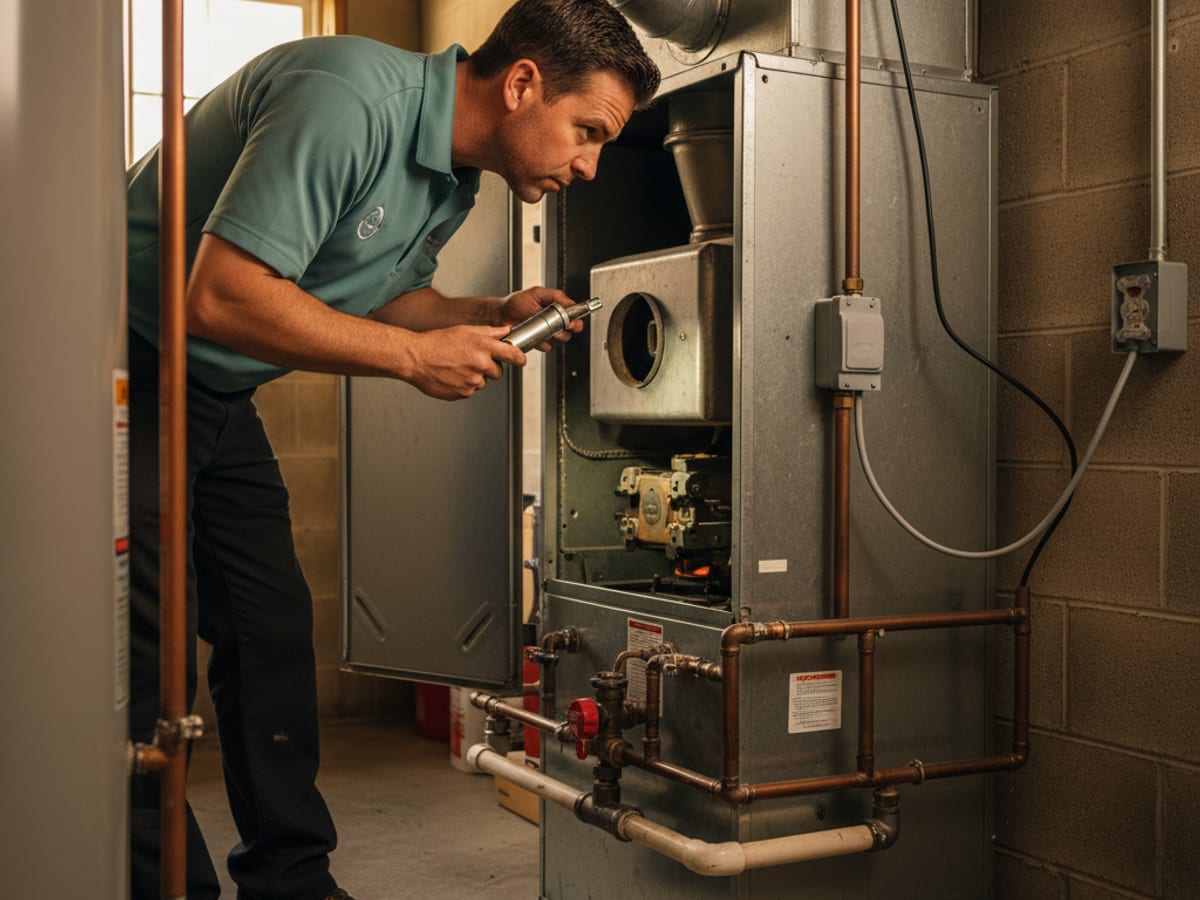
Furnace repair in Oceanside starts with a diagnostic visit from the pro you are matched with, priced upfront. An igniter or flame sensor repair usually costs less than a blower motor, gas valve, or heat exchanger. On an older system, the pro also walks you through repair versus replacement. Every repair is quoted before work starts.
How soon can a matched company reach Oceanside for furnace repair?
Leave a message that heat is out and whether anyone is vulnerable to cold. The matched company confirms whether they can take it as urgent.
My furnace barely runs all winter. Why did it still break?
That is the most common Oceanside pattern, and it is exactly because the furnace barely runs. A furnace that sits idle collects dust on the burners, lets the igniter grow brittle, and exposes the flame sensor to coastal moisture for months. When you finally call for heat, the weakest part fails. A fall tune-up catches most of it before you need the heat.
Does the ocean air affect my furnace?
Yes. Oceanside air carries salt and moisture year-round, which corrodes flame sensors, burner surfaces, and electrical connections faster than inland air does. The damage is slow and quiet, but it shortens the life of coastal furnace parts. The matched company cleans and checks the salt-exposed parts first when servicing a furnace here.
Is a furnace not turning on an emergency?
A cold house in mild Oceanside is uncomfortable but usually not life-threatening, so it is not always a true emergency. A gas smell or a carbon monoxide alarm is. If your CO detector sounds, leave the home and call 911 or the gas utility from outside. Do not wait for an HVAC match. For a cold home with no safety issue, a standard scheduled appointment is the normal path.
Should I repair or replace my furnace?
Repair is the better money when the fix costs less than half the price of a new system. Replacement wins when the unit is older, the heat exchanger is cracked, or repairs keep stacking up. The matched company should quote both numbers and an honest read so you can decide.
What is the 5,000 rule for furnaces?
Multiply the age of your furnace by the repair cost. If the result is over 5,000, replacement is the better move. An older furnace with even a moderate repair bill scores high and points to replacement. A newer furnace with the same repair scores low and points to repair.
Why does my furnace start and then shut off after a minute?
That short-cycling pattern in Oceanside is usually a dirty flame sensor, a clogged filter choking airflow, or a tripped high-limit switch. The furnace lights, fails a safety check, and shuts down to protect itself. A diagnostic from the matched company should find the actual cause rather than just resetting the system.
My furnace is blowing cold air. What is wrong?
If the blower runs but the air stays cold, the burners are not staying lit. In Oceanside that usually means a failed igniter, a corroded flame sensor, or a gas valve that will not open. Most are straightforward repairs if the matched company stocks the part.
How long do furnaces last in Oceanside?
Because Oceanside has such a short heating season, furnaces here run comparatively few hours a year, so they tend to outlast furnaces in cold-winter climates. The light duty cycle helps. The coastal salt air works the other direction on electrical and metal parts, so the matched company inspects the heat exchanger and connections at every visit regardless of age.
Should I switch to a heat pump instead of repairing my furnace?
Oceanside has one of the mildest winters in San Diego County, which makes it close to ideal for a heat pump. One unit heats and cools, runs cheaper than a gas furnace, and SDG&E rebates favor heat pumps. If replacement is on the table, the matched company should quote the heat pump number alongside the furnace number so you can compare.
What furnace brands do you repair?
Ask the matched company which brands and models they service. Capability is not assumed for every furnace still running in many Oceanside homes.
My Crown Heights furnace is from the 1970s and still has a pilot light. Is it safe?
Often, yes, but it deserves a real inspection rather than a guess. Standing-pilot furnaces from that era can run safely for decades if the heat exchanger is intact and the burners and gas valve are clean. Ask the matched company to use a camera and a combustion analyzer to check the heat exchanger, test the safety circuit, and verify there is no carbon monoxide spilling into the supply air. Findings should be in writing. If a CO alarm sounds, leave and call 911 or SDG&E first.
How often should a Pendleton-area rental furnace be tuned up?
Once a year, every year, ideally in October or early November. The rental pattern in North Oceanside is brutal on furnaces because they sit idle through tenant turnover and then get asked to start cold on the first chilly morning. A fall tune-up catches the failures that turn into outside-hours emergency calls. For property managers, the pro documents the visit and invoices clean so it slots into your annual maintenance budget.
When should I book a fall furnace tune-up in Oceanside?
Mid-October through early December is the window. The early-November slots fill first because every responsible homeowner is thinking the same thing once the first cool evening arrives. If you book by mid-October you will get your pick of times. Booking after a cold snap usually means a 2 to 3 week wait for non-emergency service.
Why did my furnace work fine last winter and fail this fall?
Because Oceanside furnaces fail from sitting, not from running. Through spring, summer, and early fall, the flame sensor sat exposed to coastal moisture, the igniter went through thousands of small temperature swings inside an idle cabinet, and dust settled on the burners. When you finally called for heat in November, the weakest part broke first. This is the most common Oceanside no-heat pattern, and the fall tune-up is built to catch exactly this.
Does the coastal humidity in Oceanside actually damage a furnace?
Yes, more than most homeowners realize. Salt and moisture in the marine air corrode the flame sensor, the burner surfaces, and the electrical connections at a meaningfully faster rate than dry inland air does. The damage is slow and invisible until something fails. On coastal Oceanside furnaces, the flame sensor is the part the matched company always cleans and inspects first because it sits right in the salt-affected airflow.
My furnace works but my house never gets warm. What is happening?
The blower is moving air but the burners are not running long enough to actually heat the space. The most common Oceanside causes are a dirty flame sensor that drops the burners after 30 to 90 seconds, a tripped high-limit switch from a clogged filter, or a thermostat that is miscommunicating with the control board. The diagnostic finds which one in under an hour.
Is it worth fixing an old furnace if I am planning to install a heat pump anyway?
Maybe. If the heat pump install is more than a year out, fixing a small failure (igniter, sensor, thermostat) is usually fine and buys you time. If the heat pump is coming within a few months, an expensive furnace repair almost never makes sense. The matched company should quote the repair number, the heat pump number including current rebates, and an honest read on which way the math leans for your situation.