How much does AC repair cost in La Mesa?
Climate Pros SD matches La Mesa homeowners with a licensed HVAC company. That company quotes the diagnostic, any trip fee, and the repair in writing before work starts. Appointment timing is set by that company, not by this brand.
How fast can you get to La Mesa for AC repair?
Call volume spikes during a heat wave. Ask the matched company whether they offer after-hours visits, when they could arrive, and what the fee would be.
Is it cheaper to repair or replace an AC?
Repair is cheaper when the fix costs less than half the price of a new unit. Replacement wins when the unit is older, uses R-22 refrigerant, or needs a compressor or evaporator coil. Ask for both numbers and a straight read so you can decide.
What is the 5,000 rule for AC?
Multiply the age of your AC, in years, by the repair cost, in dollars. If the result is over 5,000, replace the system. On an older unit, even a moderate repair bill can push the total past that threshold, pointing to replacement. The same repair cost on a much newer unit stays well under the threshold, pointing to repair.
Why is my AC not cooling in La Mesa?
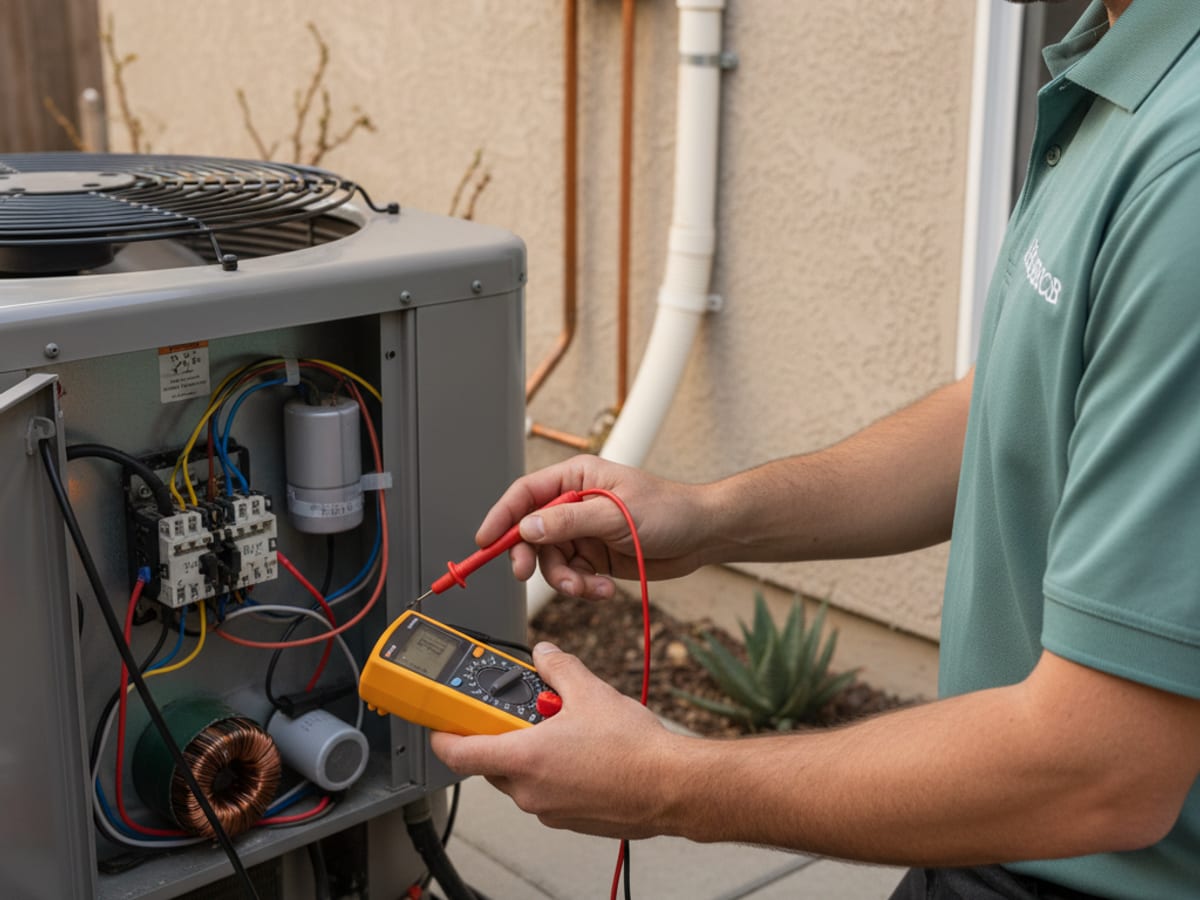
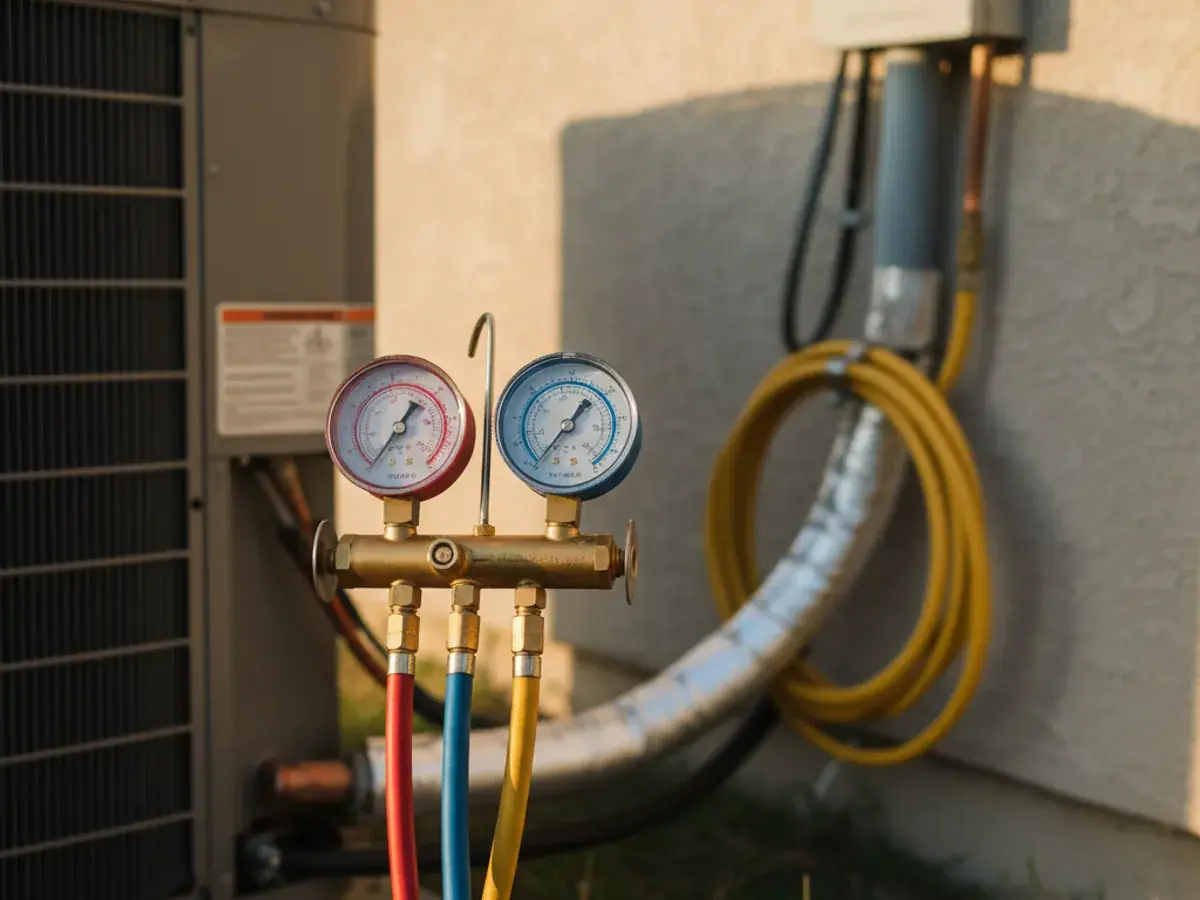
In La Mesa the most common causes are a failed run capacitor, low refrigerant from a slow leak, a frozen evaporator coil, or a dirty condenser coil. Many La Mesa homes also have undersized or retrofitted systems that have run marginal for years. The matched company's diagnostic checks all of this with gauges, a multimeter, and static pressure readings before quoting anything.
My older La Mesa home has always been a little warm in summer. Is that normal?
Not necessarily. La Mesa sits in a middle climate where a weak or undersized AC can limp along for years without fully failing, so homeowners get used to a house that is warmer than it should be. That slow decline usually has a real cause, like a failing capacitor, low charge, or a duct problem. A full diagnostic finds it.
Can you repair AC units on the Mt. Helix hillside?
Yes. Many Mt. Helix homes have condensers on slopes, in tight side yards, or set below the house, which makes access harder. Those repairs are staged for the conditions, and most close in a single visit. The diagnostic and repair pricing don't change for the harder hillside access.
Do you need a permit for AC work in La Mesa?
A repair does not need a permit. Replacing the AC system does. The City of La Mesa normally requires a mechanical permit through the Community Development Department at City Hall on Allison Avenue for a changeout, and that permit gets pulled as part of the job so the work is inspected and on record.
How long does an AC unit last in the La Mesa climate?
Service life in La Mesa depends on runtime, exposure, and maintenance more than on any published average. The moderate central climate is easier on equipment than the East County heat, so well-maintained units often reach the higher end. A yearly tune-up and clean filters reliably extend service life.
Do you charge extra to come to Fletcher Hills or the Village?
Climate Pros SD does not set a citywide price. The matched company quotes that address.
My AC is blowing warm air. What should I check first?
Check that the thermostat is set to cool and the filter is not clogged. Then look at the outdoor unit. If it hums but the fan will not spin, that is usually a capacitor. If the fan runs but the air is still warm, the system is likely low on refrigerant. Both are usually quick, single-visit repairs.
Can you repair my AC quickly in La Mesa?
Most of the time, yes. The matched company carries the parts that fail most often in La Mesa, including capacitors, contactors, motors, and refrigerant. Capacitor and contactor jobs are almost always finished in a single visit. A part that has to be ordered, like a specific control board, may take an extra day.
What AC brands do you repair?
The matched company repairs major brands, including Carrier, Trane, Lennox, Goodman, Rheem, American Standard, York, and Bryant. Ask the matched company which brands they service. Typical shops cover both modern R-410A systems and older R-22 units still running in many of the postwar Fletcher Hills homes and the retrofitted Village bungalows.