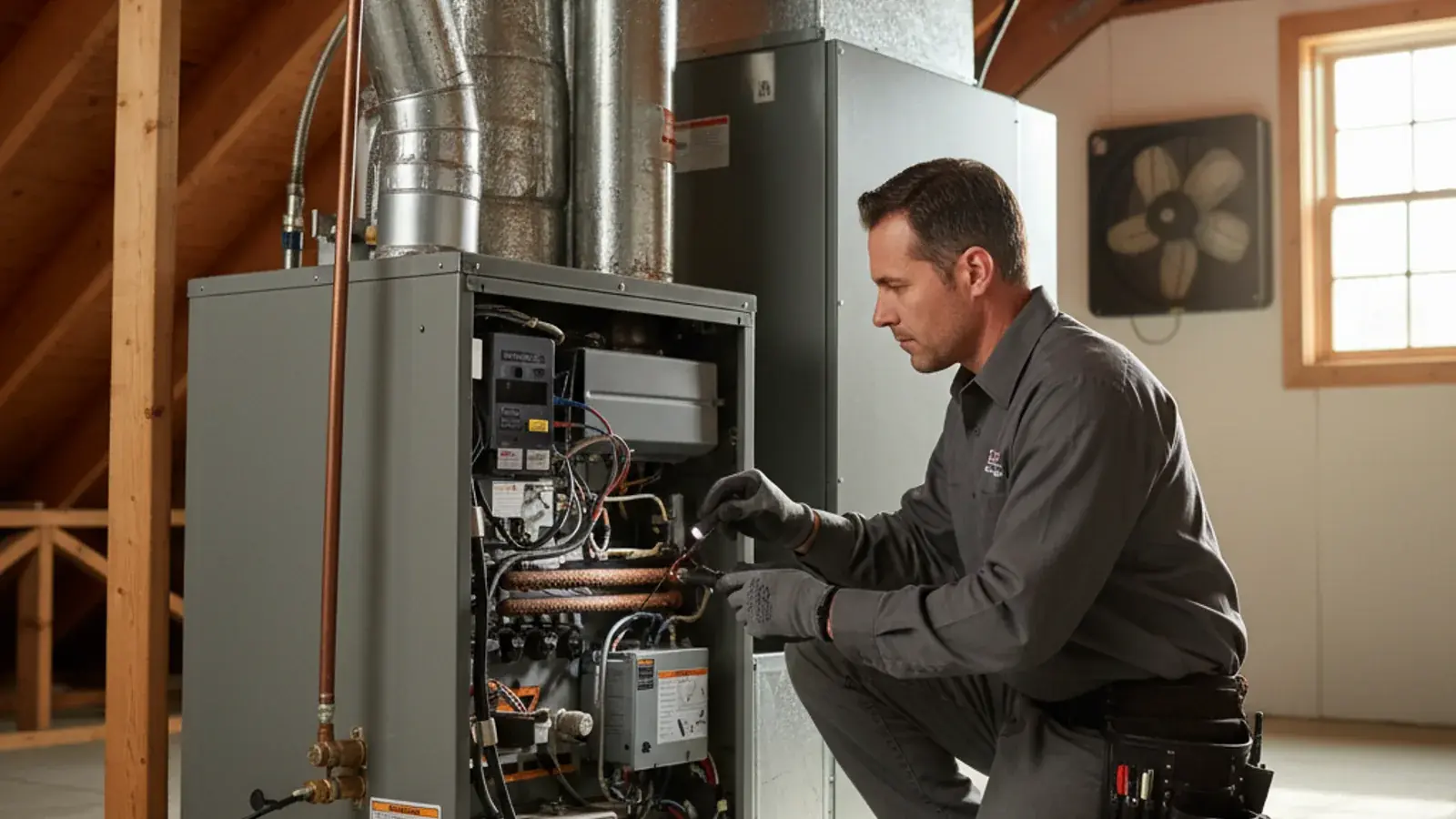
TL;DR
- Seven warning signs: blowing cold air, short cycling, strange noises, yellow/orange flames, climbing gas bills, uneven heating, and age past 15 years.
- Yellow or orange flames and a startup “boom” are urgent safety issues. Shut off the furnace and call. They indicate incomplete combustion and possible carbon monoxide risk.
- Repair versus replace is a quote conversation with a licensed C-20 pro, not a published price table. Heat-exchanger problems are a safety issue first.
- If your CO detector sounds or anyone has sudden headaches or nausea near the furnace, leave the home and call 911 immediately.
Most furnace failures aren’t sudden. They send warning signs for weeks or months before they quit. Some of those signs mean you’ve got time to plan a replacement. Some mean you need to stop using the furnace today for safety. Knowing which is which matters.
Climate Pros SD is a referral service. We match San Diego County homeowners with licensed, independent HVAC professionals. The matched company diagnoses, prices, and does the work. You contract and pay that company directly.
Here are the seven most common signs a furnace is going out, what each one actually indicates, and when to call.
How do you know if your furnace is leaking carbon monoxide?
Before the list, the non-negotiable: if your CO detector sounds, or you smell something like exhaust or sulfur near your furnace, or anyone in the home has sudden headaches, nausea, or dizziness, leave the home and call 911 immediately. Carbon monoxide poisoning kills faster than most people realize. A cracked heat exchanger can leak CO into your living space without any other visible symptom.
If you don’t have a CO detector within 10 feet of every sleeping area, buy a battery-powered unit at a hardware store and install it. That is a safety product, not an HVAC quote.
OK, onto the list.
1. Furnace runs but blows cold air
What’s happening: Most commonly, the igniter is failing or the flame sensor is dirty. The blower still runs (it’s controlled separately), but the burners aren’t firing.
How urgent: Moderate. The furnace isn’t heating you, but it’s not a CO event by itself. Turn it off until a tech can come out. Running the blower without heat wastes energy for no benefit.
The fix: A matched licensed pro inspects the igniter and flame sensor. Ask what the diagnostic covers and what the repair would be before any work starts. Furnace repair is the service page if you want to request a match.
2. Short cycling (on/off every few minutes)
What’s happening: The furnace starts, heats briefly, shuts off, then restarts. Common causes: overheating (dirty filter restricting airflow, triggering high-limit safety shutoff), failing limit switch, oversized furnace for the space, or a failing flame sensor.
How urgent: Moderate. Short cycling can stress the heat exchanger over time. Get it diagnosed rather than living with it all winter.
The fix: Start with the filter. If that doesn’t solve it, a tech visit is next. Ask the matched company to name the failed part and whether they recommend repair or replacement.
3. Strange noises at startup or during operation
Different sounds mean different things:
- Loud “boom” on startup. Delayed ignition: gas is pooling in the burner chamber before igniting. This is a safety issue. Stop using the furnace until a tech inspects.
- Rattling or clanking. Usually a loose panel, a bolt backed out, or a worn blower wheel bearing. Not a CO event by itself, but worth checking.
- Grinding or squealing. Blower motor bearings failing. The motor is on borrowed time.
- High-pitched whining. Blower motor capacitor failing, or belt slipping (older belt-drive models).
How urgent: The “boom” is urgent. The others can usually wait a few days if the furnace is otherwise heating and the flame is blue.
The fix: The matched pro names the cause after they open the unit. Don’t budget from a published parts list. Ask for the finding in writing.
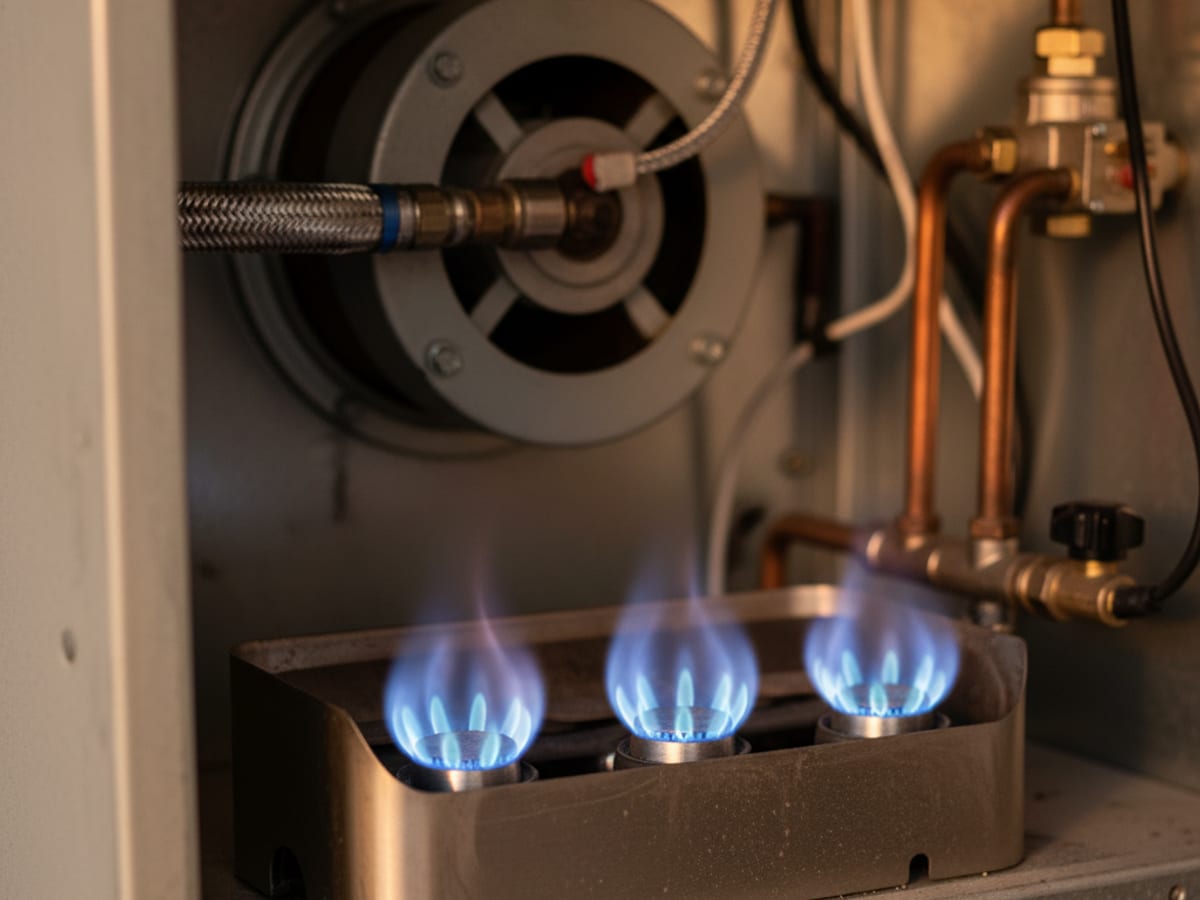
4. Yellow or orange flames instead of blue
What’s happening: A gas furnace’s burner flames should be sharp, steady blue. Yellow, orange, or flickering flames indicate incomplete combustion, which produces carbon monoxide.
How urgent: Urgent. This is a safety issue.
The fix: Shut off the gas valve at the furnace. Call for a tech. Burner cleaning, gas pressure adjustment, or heat exchanger inspection may be required. Don’t use the furnace until a licensed pro says it is safe.
5. Climbing gas bills with no change in usage
What’s happening: Furnace efficiency can drop from dirty burners, a partially blocked flue, an aging heat exchanger, miscalibrated gas pressure, or a hairline crack in the heat exchanger. A bill change alone is not a diagnosis.
How urgent: Moderate, but worth addressing. Efficiency loss often tracks a problem that will get worse.
The fix: Ask the matched company for a furnace inspection that includes combustion analysis (CO output and efficiency measurement), then clean or adjust as needed. Annual HVAC maintenance is the usual place that conversation starts. Ask what they charge. Climate Pros SD does not set fees.
6. Uneven heating throughout the house
What’s happening: Some rooms too hot, some too cold. Often not the furnace itself. Typical causes are ductwork issues, poor insulation in parts of the home, or a blower that has lost capacity.
How urgent: Low. Annoying but not a CO event by itself.
The fix: Static pressure diagnostic, duct inspection, blower motor check. May need balancing or sealing. ENERGY STAR notes that a typical forced-air house can lose about 20% to 30% of the air moving through ducts because of leaks, holes, and poorly connected ducts. That is a national typical-house statement, not a measurement of your home.
7. The furnace is 15+ years old and starting to fail
What’s happening: Past about 15 years, repair decisions start to look different. You are weighing one repair against the chance that another component fails later. Mild San Diego heating seasons can mean less wear than colder climates, but age still matters.
How urgent: Not urgent if it is still heating safely. Plan.
The fix: Start getting replacement quotes from licensed C-20 contractors before a mid-winter failure. An older furnace is sometimes a candidate for heat pump conversion (see our heat pump vs. AC comparison). If your home has a 100-amp panel, a heat pump may need electrical work. That is a licensed electrician’s call, not a brand promise. Read heat pump rebate status before you assume any 2026 incentive applies.
Should you repair or replace your furnace?
Trade people often describe two heuristics. They are decision aids, not guarantees:
- The 5,000 rule: multiply the quoted repair by the system’s age in years. If that product is over 5,000, replacement is commonly discussed.
- The 50% rule: if the repair approaches about half of a replacement quote, replacement is commonly discussed.
Ask the matched company for both numbers: this repair, expected remaining life after the repair, and a replacement quote. Heat-exchanger damage is a carbon monoxide safety issue. Treat it as safety first, then money.
Do not plan a 2026 replacement around a stacked federal-plus-state rebate package. Section 25C does not apply to property placed in service after December 31, 2025. TECH Clean California single-family heat pump HVAC incentives stopped accepting new reservations on November 14, 2025. HEEHRA single-family rebates were fully reserved statewide as of February 24, 2026.
What should a good HVAC technician tell you?
A good technician tells you the full picture: the finding, the repair option, expected life after repair, and what a replacement would cost on their quote. They don’t pressure. You get the information, you decide.
If a tech walks in and immediately pushes replacement without a thorough diagnostic, get a second opinion. If a tech diagnoses a cracked heat exchanger and says don’t use the furnace until it is addressed, they are being honest about a safety issue.
What does a furnace diagnostic include?
Ask the matched company what their diagnostic includes and whether the fee applies toward repair. Each company sets its own policy. Climate Pros SD sets none.
A thorough visit typically covers:
- Combustion analysis (CO output, efficiency measurement)
- Flame color inspection
- Heat exchanger visual check, and camera inspection when the tech judges it needed
- Gas pressure measurement
- Electrical and safety controls check
- Written report with findings
If they recommend replacement, ask them to show the quote, permit path, and current rebate status. You decide.
Frequently asked questions
How long do furnaces last in San Diego?
Many gas furnaces run 15 to 25 years. San Diego’s mild heating season often means less wear than colder climates. Past 15 years, start planning for replacement, especially if repair costs are climbing or you’re seeing any of the warning signs above. The matched pro estimates remaining life for your unit.
Is it worth repairing a 20-year-old furnace?
Use the repair quote, the 5,000-rule arithmetic, and safety findings. A heat-exchanger problem is not a “cheap repair” conversation. A 20-year-old furnace can be a candidate for heat pump conversion, but 2026 incentive rules are tighter than 2025. Confirm status before you count on any program. See federal 25C.
What does a yellow flame on my furnace mean?
Yellow or orange flames indicate incomplete combustion, which produces carbon monoxide. This is a safety issue. Shut off the gas valve at the furnace and call for an inspection. A healthy furnace burns with sharp, steady blue flames.
How do I know if my furnace is leaking carbon monoxide?
You often can’t tell without a detector. CO is odorless and invisible. Install a battery-powered CO detector within 10 feet of every sleeping area. If the detector sounds, or anyone has sudden headaches, nausea, or dizziness near the furnace, leave the home and call 911 immediately.
Why does my furnace short cycle?
Most common cause is a dirty filter restricting airflow, which trips the high-limit safety switch. Replace the filter first. If short cycling continues, typical causes include a dirty or failing flame sensor, a bad limit switch, or an oversized furnace that heats the home too quickly. Short cycling can stress the heat exchanger. Get it diagnosed.
What’s the average cost of a furnace replacement in San Diego?
Climate Pros SD does not publish brand prices. Ask two or three licensed C-20 contractors for written, itemized quotes. Compare equipment, permits, and what is excluded. For City of San Diego, a mechanical permit is required to install, alter, replace, or repair heating systems. Other cities have their own rules. The matched contractor pulls the permit, not this brand.
Furnace acting up? Call (442) 777-6440. Emergency HVAC is how we match you with a licensed pro. Ask whether a tech is available today. The matched company confirms their own timing.
We cover Escondido, Poway, Santee, El Cajon, Oceanside, and all of San Diego County.