TL;DR
- Shut the AC off immediately if it is frozen. Running it can destroy the compressor.
- Five causes: clogged filter, blocked vents, low refrigerant from a leak, dirty evaporator coil, or blower problems.
- Clogged filter is the most common. Replace it, then let the system thaw 2 to 4 hours before restarting.
- If it freezes again after thawing, or ice is on the outdoor line set, call a technician. That is usually a leak or airflow problem, not a filter.
- Climate Pros SD matches you with licensed companies. We do not publish a freeze-up repair price list.
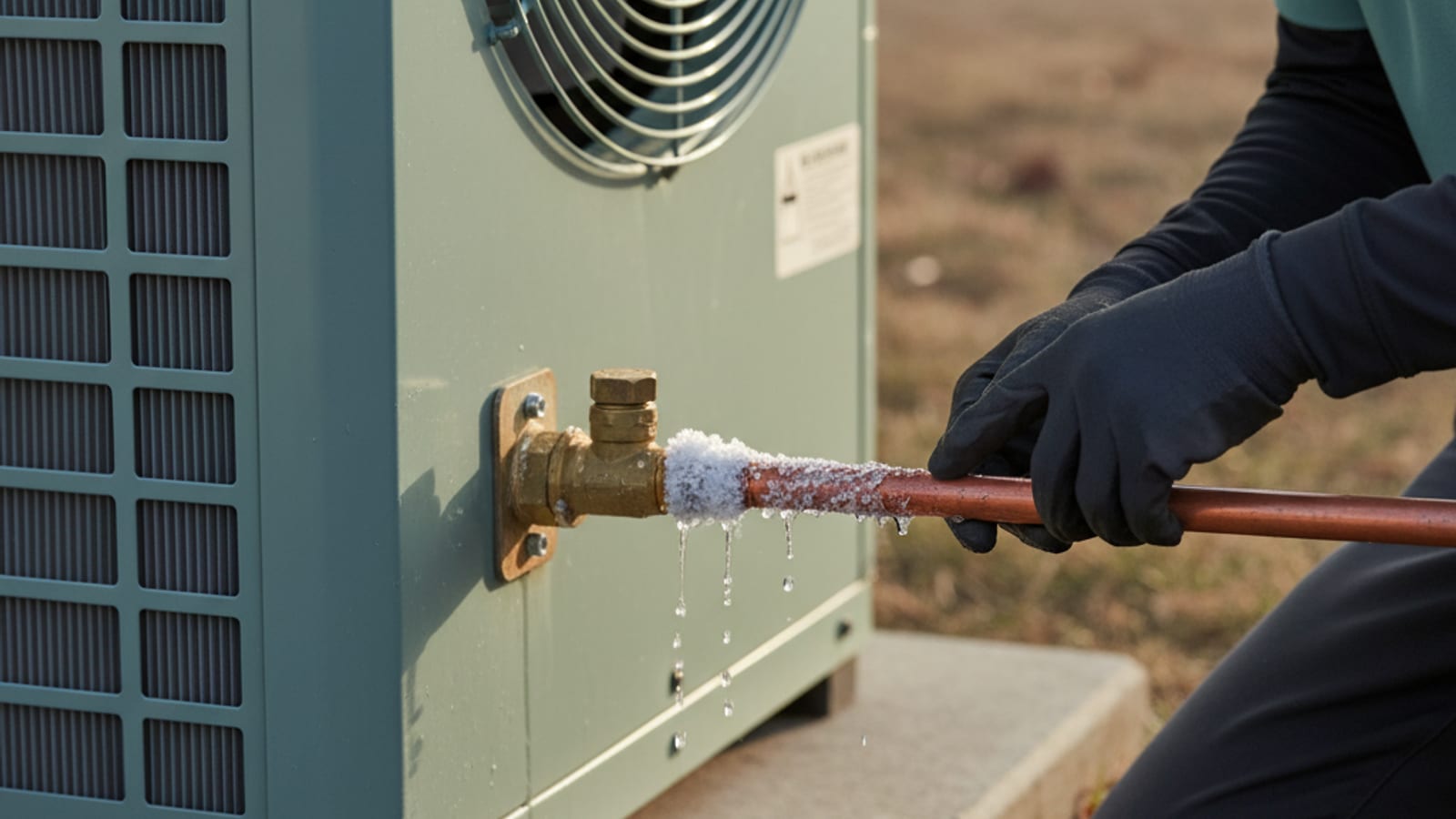
If you see ice on the outdoor refrigerant line, the indoor coil, or the line-set connections, shut the system off at the thermostat before you keep reading. A frozen AC that keeps running can destroy its compressor. Then come back and diagnose the cause.
Climate Pros SD is a referral service. The matched licensed contractor sets the diagnostic fee and the repair price in dollars after seeing the unit.
How do you safely un-freeze your AC?
- Set the thermostat to OFF (not COOL).
- Switch the thermostat fan to ON (air across the coil melts ice faster without running the compressor).
- Wait 2 to 4 hours for the ice to melt. Peek at the coil every hour.
- Once all ice is gone and the coil is dry, turn the thermostat back to COOL.
- If it freezes again within 30 to 60 minutes of running, you have one of the problems below. The system needs a tech.
Running a frozen system even for an hour can burn out the compressor. Shut it off first.
Cause 1: Clogged air filter (most common)
A restricted filter means less airflow across the indoor evaporator coil. Refrigerant in the coil gets colder than it should, drops below freezing, and condensation turns to ice instead of water. This is also a leading cause of AC not cooling calls.
How to diagnose: Pull the filter. If it is gray or black and you cannot see light through it, this is almost certainly the problem.
Fix: Replace the filter with the correct size, MERV 8 to 11, arrow pointing toward the blower. Un-freeze the system using the steps above, then run it.
If it freezes again: Not the filter. Move to cause 2.
Cause 2: Blocked return air or closed vents
Same root cause as a dirty filter (restricted airflow), different source. Common culprits:
- Return air grille blocked by furniture, a rug, drapes, or toys leaning against it.
- Too many supply vents closed. Closing more than about 20% of supplies to “save energy in unused rooms” starves the return-air side.
- Collapsed flex duct in the attic (animals sometimes sit on these and partly collapse them).
Fix: Open all supply vents. Clear the area around return-air grilles. Un-freeze and retest.
Closing vents does not save energy in a properly sized forced-air system. It redistributes load and can damage equipment. If you want zone control, install a real zoning system, not closed vents.
Cause 3: Low refrigerant (leak)
A system that is low on refrigerant runs colder than it should and can freeze the coil. Low refrigerant means a leak. Refrigerant does not get “used up” in a sealed system.
How to diagnose: Needs a tech with gauges. An AC repair diagnostic measures the charge and whether the system is low.
Fix: Find the leak (UV dye, electronic leak detector), repair it, pressure-test with nitrogen, vacuum, and recharge to manufacturer spec. Location of the leak (accessible joint versus coil) drives the quote. Climate Pros SD does not publish a leak-repair band.
What not to do: Do not just “top off” refrigerant without finding the leak. The system may work for a few months, then freeze again because the leak is still there.
Cause 4: Dirty evaporator coil
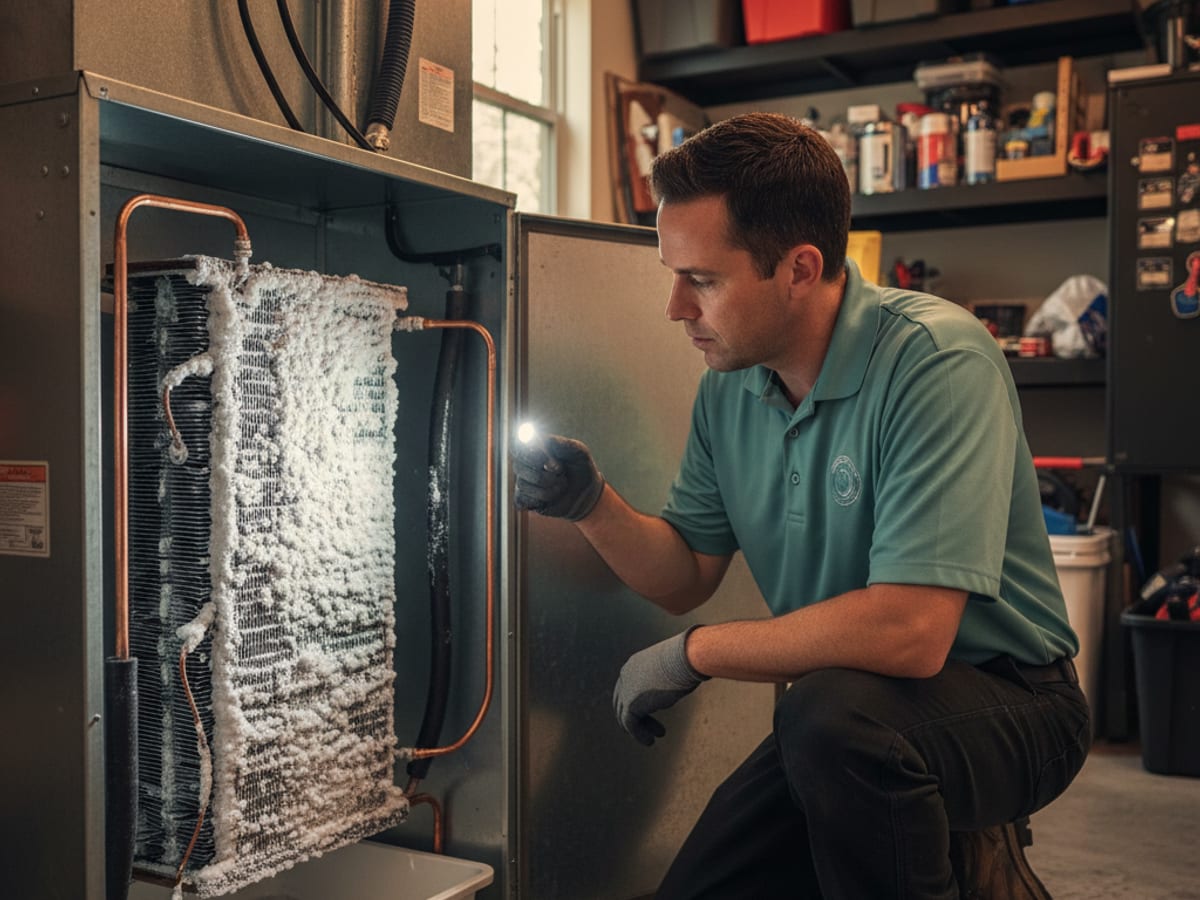
If the indoor coil is coated with dust, pet dander, or biological growth, it insulates against heat transfer and refrigerant gets too cold. You may also smell mustiness when the system starts, a sign indoor air quality needs attention.
How to diagnose: Open the access panel on the indoor unit. Look at the coil. If the fins are gray, brown, or fuzzy rather than clean aluminum, it is dirty.
Fix: Professional coil cleaning: no-rinse evaporator cleaner, dwell time, drain through the condensate line. Access (attic versus closet) changes labor. Ask for that line in dollars.
What not to do: Do not attempt this DIY with random cleaners. The wrong chemistry can damage the coil coating.
Cause 5: Blower motor problems
If the indoor blower is not moving enough air, the coil freezes even with a clean filter and open vents. Causes:
- Blower wheel caked with dust (cuts airflow)
- Failing blower motor capacitor
- Variable-speed motor losing a phase (if the issue is breaker or wiring rather than the motor, a licensed electrician can diagnose the electrical side)
- Belt-drive blower with a loose or broken belt (rare on modern equipment)
How to diagnose: Measure static pressure with the blower running. Measure motor amp draw versus nameplate. Visual inspection of the blower wheel.
Fix: Wheel cleaning, capacitor replacement, or motor replacement depending on cause. Those are different tickets. Ask the matched contractor which one the test showed.
What if multiple issues are causing the freeze-up?
Sometimes a freeze-up is a combination: a marginally dirty filter plus a slightly low charge plus a somewhat dirty coil. Any one of those alone might not freeze the system. Together they tip it over.
A thorough diagnostic visit rules these out one by one. The matched licensed tech brings gauges, multimeters, and coil cleaner. Regular HVAC maintenance catches most of these issues before they cause a freeze-up.
What should you check right after the ice melts?
Even if you identified and fixed the cause (for example, changed the filter), check the condensate drain. When a system freezes and thaws, melt water often exceeds drain capacity. Water can back up into the air handler and cause secondary damage.
Pour a pitcher of water into the condensate drain pan on the indoor unit. It should drain quickly. If it pools or drains slowly, the drain is partly clogged and will back up on the next long run. Flush it with a wet-dry vacuum on the outside end.
When should you skip the DIY and call a technician?
Skip DIY if any of these are true:
- The system has frozen multiple times this summer already
- Ice is visible on the outdoor line set (suggests low refrigerant, not filter)
- You already replaced the filter and it is freezing again
- The system is making gurgling or hissing sounds
- Humidity in the house feels elevated with AC running
Those point toward refrigerant or equipment issues. The pro sets the diagnostic fee and confirms it before the visit. Matched companies cover most of San Diego County, including Escondido, El Cajon, Poway, Chula Vista, and Carlsbad.
Frequently asked questions
Can I run my AC while it’s frozen?
No. Running a frozen AC can burn out the compressor. Shut it off at the thermostat immediately, switch the fan to ON, and let the ice melt for 2 to 4 hours before restarting.
How long does it take for a frozen AC to thaw?
Most systems thaw completely in 2 to 4 hours with the fan set to ON. Check the coil every hour. Do not restart the compressor until all ice is gone and the coil is dry.
Why does my AC freeze up at night but not during the day?
Nighttime temperatures are lower, so the evaporator coil runs colder. A system with marginal airflow or a slightly low charge that works in 90°F heat can freeze when outdoor temps drop into the 60s. Same root causes. They just show up faster in cooler conditions.
How much does it cost to fix a frozen AC in San Diego?
It depends on the cause. A clogged filter is a homeowner replacement. Coil cleaning, leak search, leak repair, recharge, and blower work are separate quotes. Climate Pros SD does not publish those job bands. Ask the matched licensed contractor for the diagnostic fee in dollars and whether it applies toward repair if you approve the work.
Can low refrigerant cause an AC to freeze?
Yes, and it is the second most common cause after airflow restriction. Low refrigerant drops evaporator pressure, which drops coil temperature below 32°F and freezes condensate on the coil. Refrigerant does not get used up. If it is low, there is a leak. Topping off without finding the leak is a temporary fix.
Should I call for emergency service if my AC is frozen?
Not usually. Shut the system off, run the fan only to thaw the coil, and replace the filter. Once thawed, restart and see if it cools normally. If it freezes again within 24 hours, schedule a standard diagnostic. Frozen-AC issues rarely need true after-hours rates. The exception: extreme heat (95°F+) with vulnerable household members where waiting overnight is not safe. After-hours is a separate line on the quote, not a number from this page.
A frozen AC is a symptom, never the root cause. Fix the root cause and the system can last. Ignore it and it can become a compressor replacement. Call before it becomes that version. Not sure this is your symptom? Our HVAC symptom finder matches what the system is actually doing to the likely cause.