The two most common mini-split complaints in San Diego cost nothing to check yourself: a clogged mesh filter inside the indoor head and a blocked condensate drain line. The failures that actually need a technician (a refrigerant leak in the line set, a failed outdoor compressor, or a communication error between indoor and outdoor units) are a written quote, not a website menu.
Climate Pros SD is a referral service. We match you with licensed, independent HVAC professionals. They diagnose and price the work. You pay them directly.

Why is my mini split not cooling or heating?
A blocked filter is the most likely cause, and it’s the easiest to rule out. The washable mesh filter behind the front cover of the indoor head packs with dust fast, especially during Santa Ana wind season. A packed filter starves the indoor coil of airflow, so the head blows weak air that never reaches the set temperature.
Check it first. Pop the front cover, slide out the mesh filter, and hold it to a light. If you can’t see through it, rinse it, let it dry fully, and reinstall. Run the system 20 to 30 minutes and check whether output improves.
If the filter is clean and the problem persists, the next likely causes are a refrigerant leak in the line set, a failing indoor blower motor, or a communication fault between the two units. None of those are DIY fixes. A technician needs gauges to check refrigerant charge and diagnostic tools to read both control boards.
What does a blinking light on my mini split mean?
A blinking light is the system telling you which part failed, and the pattern is brand-specific. Mitsubishi, Daikin, LG, and Fujitsu each use their own blink codes. A pattern that repeats every cycle usually points to a specific fault: a communication error with the outdoor unit, a float switch tripped by a clogged drain, or a sensor reading out of range.
Write down the exact pattern before calling for service. That detail often lets a technician arrive with the right part already in hand. Ask whether they can visit. They confirm timing. Climate Pros SD does not.
Why is my mini split leaking water?
Almost always a clogged or poorly sloped condensate drain. Wall-mounted indoor heads rely on a small drain line running from the unit, often through the wall, to a discharge point outside. Algae, dust, and mineral buildup narrow that line. Once it backs up, water drips out of the unit instead of draining outside.
Many multi-zone systems add a condensate pump to lift water uphill. That pump is a common failure on its own, especially on heads mounted with no gravity option.
DIY check: If you can safely access the outdoor drain termination point, a wet/dry vacuum held over the opening for 30 to 60 seconds often pulls a soft clog free. If water still backs up, or if a pump is involved, that’s a service call.
Ask the matched company what drain clearing and pump replacement cost on their price list. This site will not publish those dollars.
Why won’t my mini split’s outdoor unit turn on?
This is where ductless systems diverge most from central AC. A standard central system’s indoor and outdoor units run on a simple thermostat circuit. A mini split’s indoor head and outdoor condenser talk to each other over a dedicated communication wire. A loose terminal, a corroded contact, or a failed board on either end can shut the outdoor unit down even though the indoor head still powers on.
Before assuming a major failure, check the basics: outdoor breaker, indoor head actually calling for cooling or heating, remote batteries. Past those checks, likely causes are a failed contactor or capacitor outdoors, a break in the communication wire, or a failed outdoor control board.
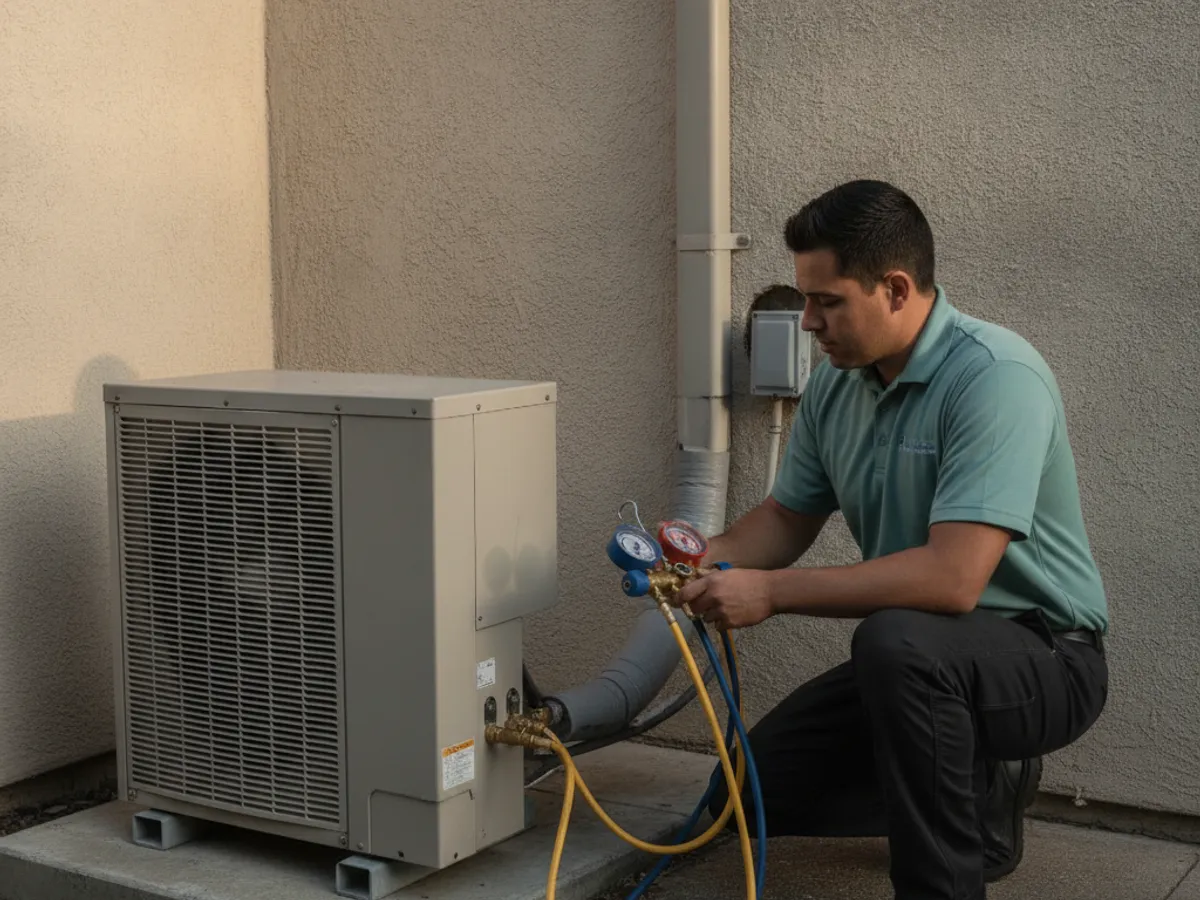
How much does mini split repair cost in San Diego?
Ask the matched licensed C-20 contractor for a diagnostic fee, whether it applies toward repair, and a written finding. Climate Pros SD sets none of those numbers.
Compare quotes by failure type:
| Problem | Likely cause | What to ask the pro |
|---|---|---|
| Weak airflow, poor cooling | Dirty filter, blocked coil | DIY filter first, then coil cleaning quote |
| Water dripping from indoor unit | Clogged drain line | Drain-clearing quote |
| Water dripping, multi-zone system | Failed condensate pump | Pump replacement quote |
| Blinking error code | Sensor, drain float, or charge | Bring them the blink pattern |
| Outdoor unit won’t start, indoor head on | Contactor, capacitor, comms wire | Electrical/comms diagnosis |
| Runs but doesn’t condition | Refrigerant leak in the line set | Leak search, then repair or recharge |
| Compressor failure | Inverter compressor | Repair versus full-system quote |
Refrigerant work requires EPA Section 608 certification. A leak repair or recharge always needs a licensed technician.
Repair or replace: when is a mini split worth fixing?
Age and repair cost together answer this. Trade people describe the 5,000 rule: multiply the repair estimate by the system’s age in years. If that product crosses about 5,000, replacement is commonly discussed. It is a heuristic, not a brand guarantee.
Ductless compressors carry a real cost premium over many central-AC compressors, because inverter compressors are often brand-matched to the indoor heads. That premium is why a full system swap sometimes beats one expensive repair on an older mini split. Ask for both numbers.
Why mini splits fail differently across San Diego
Ductless systems are the default fix for housing that never had central ductwork: older beach cottages in Pacific Beach, additions and ADUs across North County, and homes where new ducts aren’t practical.
In the beach-block stretches of Pacific Beach, salt air and marine layer moisture accelerate corrosion on the outdoor condenser’s coil fins and contacts. Inland properties around Fallbrook and Rancho Bernardo often run longer refrigerant line sets to a condenser tucked away from the house. A longer exposed line gives a slow leak more distance to develop. A mini split’s outdoor unit and line set take more environmental abuse than a central AC’s shorter, sealed runs. Worth a visual check twice a year even when nothing seems wrong.
Frequently asked questions
Why is my mini split blinking and not cooling?
A blinking light with no cooling almost always means the system stopped mid-cycle to protect itself, most often from a clogged filter, a tripped float switch from a clogged drain, or a refrigerant issue. Clean the filter first. If blinking continues after a clean filter and a full power cycle, note the pattern and call for a diagnostic.
How much does it cost to fix a mini split that’s leaking water?
Ask for a drain-clear versus pump-replace quote. Either repair is cheaper than water damage to drywall or flooring below the indoor unit. This site will not publish a dollar range.
Is it worth repairing an old mini split or should I replace it?
Use the repair quote relative to age (5,000-rule arithmetic) and parts availability. A filter or drain fix is worth doing at any age. A compressor replacement on an old proprietary inverter is the conversation to have in writing.
Can I recharge my mini split’s refrigerant myself?
No. Handling refrigerant requires EPA 608 certification. Adding refrigerant to a system with an active leak is a temporary patch. The real fix is finding and repairing the leak first.
Why does my mini split’s outdoor unit not turn on even though the indoor head works?
This points to the communication link, a failed contactor or capacitor, or a tripped breaker. Because the indoor head can power on normally even when the outdoor unit is dead, this often gets mistaken for a total system failure.
If your filter is clean and the problem persists, the next step is a diagnostic. Mini split installation and repair connects you with vetted San Diego HVAC pros who carry parts for the major ductless brands. Homeowners in Rancho Bernardo and Fallbrook with longer line-set runs, and coastal owners across Pacific Beach dealing with salt-air corrosion, use the same match process as the rest of the county.
For background on a new system, see ductless mini split installation and how a mini split actually works. If your home has central AC instead, see AC refrigerant leak. Call (442) 777-6440 or contact us.