Short cycling is an AC that starts, runs a very short cycle, then stops and repeats before the house is actually cooled and dried. Time one cycle. If it is well under a normal 15-minute run on a warm afternoon, treat it as a fault: dirty filter, blocked condenser, low refrigerant, weak capacitor, or a unit that is too large for the house.
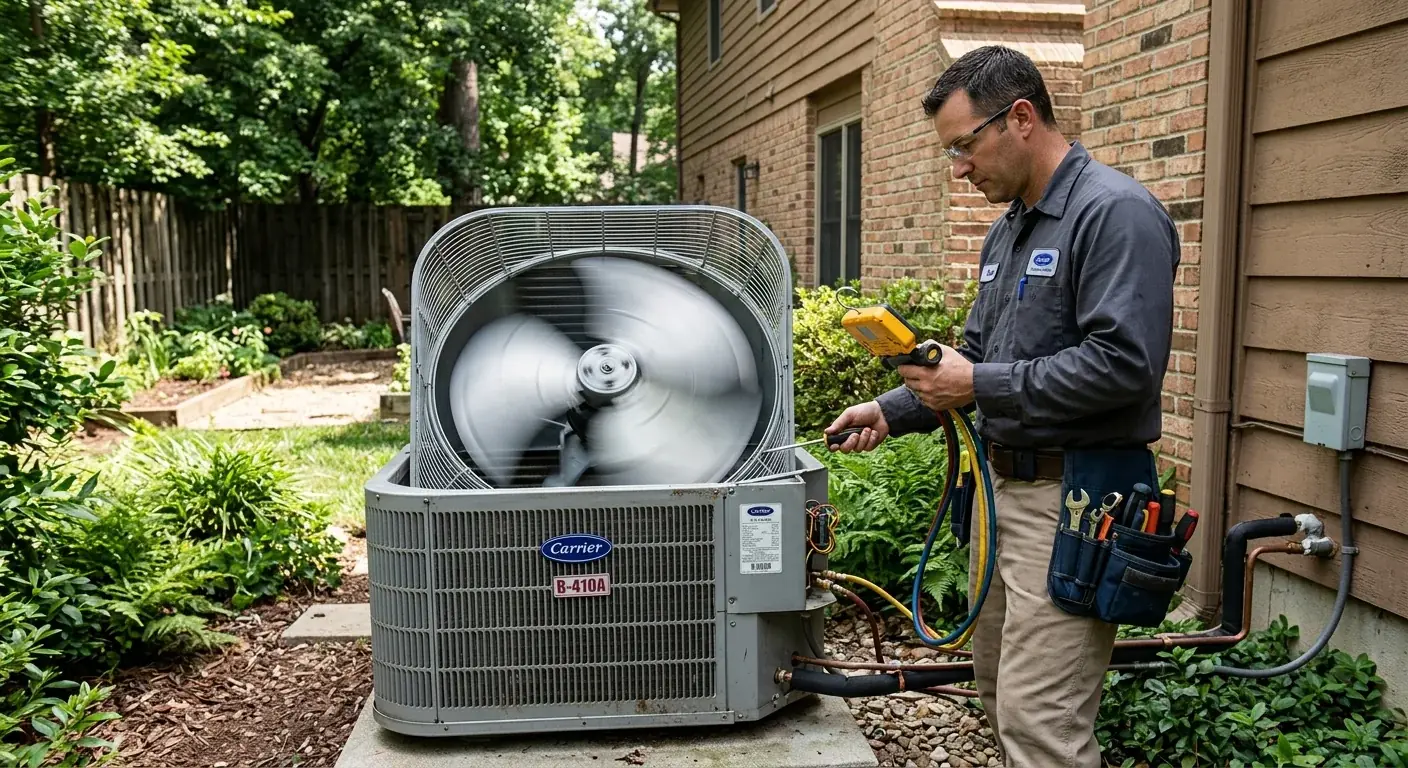
Short cycling means the AC never finishes a cooling cycle
If the outdoor unit starts, runs under about ten minutes, then shuts off and repeats, stop resetting it. Check the filter, outdoor clearance, and thermostat first. Then have a licensed pro test refrigerant, airflow, and sizing. Inland San Diego dust and pollen clog filters fast. An oversized unit also short-cycles because it hits setpoint before it wrings humidity out of the air.
Checklist
- Time one on-cycle with a phone clock.
- Replace a visibly dirty filter.
- Keep two feet clear around the condenser.
- Confirm the thermostat is not set several degrees below room temperature by accident.
- Read AC sizing with Manual J if the unit is new and already cycling this way.
Related: AC repair and HVAC symptom finder.
What short cycling actually is
A healthy cooling cycle on a warm San Diego afternoon often runs on the order of 15 minutes or more so the coil can remove humidity. A one- or two-minute cycle does not do that work. Each start also stresses the compressor more than steady running does.
Inland dust and pollen clog filters. Coastal salt packs outdoor fins. Either restriction can trip the system off early. An oversized unit, common when someone copied tonnage without Manual J, also short-cycles and leaves sticky air even when the display hits setpoint.
Top causes in San Diego homes
Licensed AC repair is the right next step after the filter and clearance checks. Climate Pros SD does not repair equipment.
One major factor is low refrigerant levels. If your AC is running low on refrigerant, typically due to a leak, it struggles to absorb enough heat. This can cause the evaporator coil to get too cold, sometimes even freezing. The system then shuts down prematurely to prevent damage, only to cycle on again shortly after once the pressure equalizes or ice melts. Refrigerant work is not DIY. See AC refrigerant leak signs.
Another common issue is a dirty air filter or clogged coils. A heavily soiled air filter restricts airflow across the evaporator coil. Similarly, if outdoor condenser coils are caked in dirt and debris, heat can’t dissipate efficiently. Both scenarios cause the system to overheat or struggle, triggering safety limits that force the AC to shut off early. In San Diego, dust, pollen, and ocean mist contribute to these blockages, making regular filter changes and professional coil cleaning essential for efficient operation.
Lastly, a failing capacitor can also cause short cycling. This vital electrical component provides the initial burst of power needed to start the compressor and fan motors. If it’s weak or failing, the compressor might struggle to start or only run for a short period before shutting down. You might hear clicking or humming from the outdoor unit before it cuts out. This is a relatively inexpensive fix for a qualified technician. Our article on AC capacitor replacement in San Diego offers more insight. Prompt attention to these issues restores proper AC function and protects its longevity.
Why an oversized AC short cycles forever
Oversizing is a common San Diego short-cycle cause. When an AC is too powerful for the space, it hits setpoint too quickly and shuts off before the coil removes humidity.
The problem with an oversized system is twofold. First, because it cools air so rapidly, it doesn’t run long enough to effectively remove humidity. Your thermostat might read the right temperature, but the air still feels clammy, forcing you to set the thermostat even lower, wasting energy. San Diego’s occasional high humidity makes this even more noticeable. Second, this rapid cycling means the system is constantly starting and stopping, leading to accelerated wear and tear and energy waste. Unlike a dirty filter, this isn’t a fixable part; it’s a fundamental mismatch.
Why does this happen so often? Some installers, unfortunately, default to larger AC units than necessary, believing “bigger is better” or skipping proper load calculations. A professional HVAC contractor uses a detailed process called Manual J load calculation to determine the precise cooling capacity your home needs, accounting for factors like square footage, insulation, and local climate. Without this critical step, you’re likely to end up with an AC that’s too big and destined to short cycle for its entire lifespan, significantly impacting efficiency and comfort. If you suspect your AC might be oversized, learning about proper AC sizing with Manual J in San Diego can shed more light. The comfort and wear costs continue until sizing or the failed part is corrected.
Quick checks before you call a tech
Before you request a licensed match, complete the checks below.
First, check your air filter. A clogged filter is one of the most common causes of restricted airflow, leading to your AC struggling and short cycling. If it’s visibly dirty, replace it with a clean one. We recommend checking your filter monthly and replacing it every 1-3 months, especially during peak cooling season here in San Diego.
Next, inspect your thermostat settings. Ensure your thermostat isn’t set too aggressively or accidentally lowered significantly. Also, verify it’s not set to “AUTO” fan mode, which can sometimes contribute to short cycling if the system constantly tries to reach a very specific temperature without proper air circulation.
Finally, look for obstructions around your outdoor condenser unit. Leaves, dirt, grass clippings, or overgrown shrubs can block airflow, preventing proper heat dissipation. This causes the system to overheat and shut down prematurely. Ensure there’s at least two feet of clear space around all sides. Clear debris by hand. Do not pressure-wash the coil. While these won’t fix a major issue like a refrigerant leak, they are excellent first steps and provide valuable information to a technician. You can even check the California Contractors State License Board (CSLB) at cslb.ca.gov to verify a technician’s license.
What short cycling does to your equipment life
Short cycling might seem like just an inconvenience, but its cumulative effects are severely detrimental to your AC system’s health and lifespan. Each time your air conditioner turns on, the compressor, fan motors, and other electrical components experience a surge of power and mechanical stress. These start-up cycles are the most demanding part of your AC’s operation.
When your system short cycles, these intense start-up events happen much more frequently than designed. Over time, this accelerates wear and tear on critical components, especially the compressor. The compressor is the most expensive part of your AC system, and its premature failure often means needing a full AC replacement rather than a repair. Repeated hard starts wear the compressor faster than a system that completes normal cycles. Do not treat a year range on this page as a warranty.
Beyond the compressor, frequent cycling also strains electrical contacts, fan motors, and control boards, increasing the likelihood of electrical failures. It also means your AC works harder to achieve less. Because it never runs long enough for true set-point temperature or adequate dehumidification, it often consumes more energy overall than a properly functioning unit, leading to unnecessarily high utility bills each month in San Diego. The comfort issues, wasted energy, and accelerated breakdown of parts all add up to a costly problem. Fixing the cause protects the compressor. Climate Pros SD does not quote a dollar savings.
Related service: HVAC maintenance. Local coverage: all 67 cities we cover in San Diego County.
Not sure this is your symptom? Our HVAC symptom finder matches what the system is actually doing to the likely cause.
When to call us
If the checks do not stop the short cycling, request a licensed diagnosis. Refrigerant, capacitors, and sizing are not homeowner repairs.
Climate Pros SD is a referral service. It matches you with a licensed C-20 contractor. That company diagnoses and quotes. Climate Pros SD does not repair or install. Call (442) 777-6440.