A banging or clanking noise from an AC is worth taking seriously. In a San Diego home it often traces to a loose compressor mount, debris in the blower, a loose duct hanger, or internal compressor damage. Three of those paths mean shut the system off at the breaker if you can do that safely. Here is how to locate the sound before you authorize work.
Climate Pros SD matches you with licensed HVAC companies. We do not repair equipment or set prices. Ask the matched company for the diagnostic fee in dollars and whether it applies toward the repair.
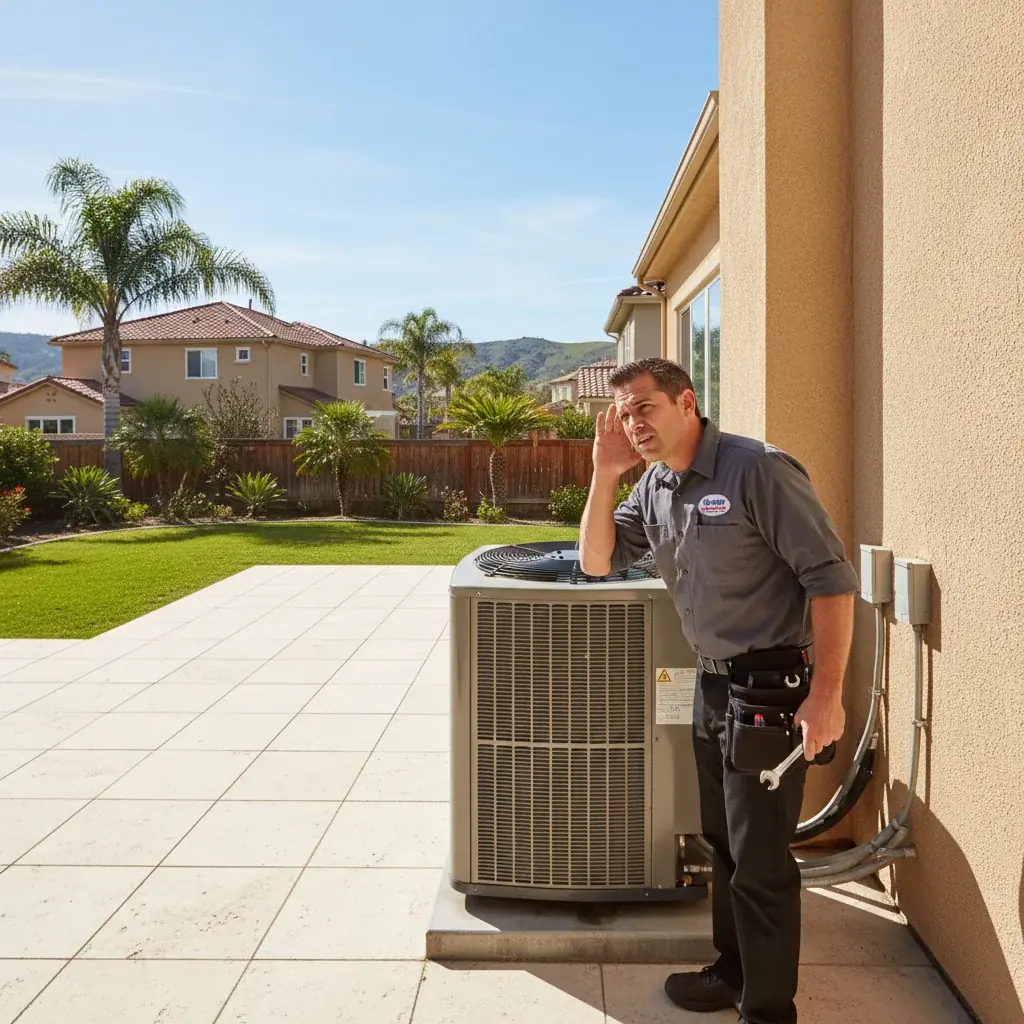
The four real causes of an AC banging noise
These are listed from attic-side causes to the outdoor compressor. Climate Pros SD does not have a percentage mix of San Diego “banging” calls.
Loose ductwork hanger. As the blower starts, static pressure can slap a loose strap against a rafter. You often hear a single thump at start and stop, not a continuous bang. Many older attics still have original hangers. The matched company quotes after they see access.
Debris in the indoor blower wheel. Anything past a missing or collapsed filter can hit the wheel once per rotation, a rhythmic clack. Cleaning the wheel does not replace a missing filter. If the coil is matted, say so on the request.
Loose compressor mount or fan blade. Rubber isolation mounts harden in inland heat. A loose compressor knocks the cabinet at start and stop. A bent fan blade ticks the shroud once per turn. Shut the outdoor breaker before you look through the grille.
Internal compressor damage. A heavy dull bang that does not follow the fan, plus metal sounds, means stop the equipment. Running it can spread debris through the circuit. Repair versus replacement is a diagnosis, not a blog total.
When to shut the system off immediately
Cut power at the thermostat and the outdoor breaker if you can do that safely, if any of these are true:
- The banging is heavy, dull, and comes from inside the outdoor unit
- The banging is rhythmic and tied to fan rotation
- You can hear metal grinding under the bang
- The outdoor unit is vibrating visibly more than usual
- You smell anything burning or chemical
- The banging started suddenly during operation, not on startup
Running a compressor with broken internal parts can contaminate the refrigerant circuit with metal. That is why you stop the equipment. This page does not publish a compressor-swap total or a flush-plus-compressor total.
You can often keep running, but schedule service, if:
- The bang is a single soft thump on startup and shutdown only (likely ductwork)
- The bang is rhythmic but light, clearly inside the indoor unit (debris in blower)
- The system is otherwise cooling normally
The matched pro confirms timing. This brand does not promise same-day arrival.
The diagnostic sequence
Work through this order before authorizing any repair. It separates a hanger or debris job from a compressor event. Ask for the price in dollars after the cause is named.
- Locate the source. Stand next to the outdoor condenser, then walk inside near a supply register, then check the furnace closet or air handler.
- Time the banging. Single thump on startup only: ductwork. Rhythmic with fan rotation: fan blade or debris. Continuous heavy banging during runtime: compressor failure. Bang on shutdown only: refrigerant line shock or compressor mount.
- Visual check the outdoor unit (power off). Look for bent fan blades, debris, or a compressor that visibly shifts when you rock the cabinet.
- Pull the return filter and check the blower (power off). Shine a light into the blower opening. Lint, fiberglass, or a foreign object can be the bang.
- Listen at supply registers. A bang that is loudest at registers but quiet at the unit is often a duct hanger or flex duct slapping a rafter.
- If those steps do not identify it, you need a tech. A compressor diagnosis needs an amp clamp and a refrigerant pressure check. Do not guess.
What a quote should name
Ask the matched company to name the failed part, whether refrigerant recovery is required, attic or condenser access, and whether they recommend repair or replacement. R-22 equipment changes the parts conversation. Incentive math belongs on the live rebate pages, not in this article.
The trade’s 5,000 heuristic (age in years times the repair quote) is a rule of thumb, not a brand guarantee. Use the quote in your hand. See the $5,000 rule.
Why inland condensers see harder outdoor wear
East County and inland North County outdoor units sit in hotter afternoon air than the coast. NWS describes ocean moderation near San Diego and warmer summer days in nearby valleys. Rubber isolation mounts and fan hardware age faster in that heat. Coastal salt is a different failure mode. Age plus a new bang at startup is a reason to get a diagnosis, not a reason to assume the mount year.
Frequently asked questions
Will my AC explode if I keep running it with a banging noise?
No. A damaged compressor can still spread metal through the circuit if you keep running it. Shut it off when the bang is heavy, metallic, or from the outdoor cabinet during runtime.
Why does my AC bang loudly when it turns on, then run quietly?
A loose compressor mount or a single duct hanger under startup pressure can do that. If it is one thump at start and stop, you can often wait for a scheduled visit. Continuous runtime banging is different.
Can debris in the outdoor unit cause banging?
Yes. Cut power first. Palm fronds and pods in the grille can hit the fan. Do not bend a damaged blade back. The matched company replaces or balances it.
How do I know if my compressor is broken vs. just struggling?
A broken compressor produces a heavy, dull, irregular banging that does not match the fan rotation. A struggling compressor (low refrigerant, failing capacitor) typically hums, takes a long time to start, or trips the breaker. If you hear actual banging from the outdoor unit and the sound is heavy and arrhythmic, assume compressor damage and shut it off.
Is a banging AC covered by home warranty?
Sometimes. Read the written contract for the compressor cap, labor, refrigerant, and exclusions. This site does not publish a typical cap. Compare the company’s repair quote to the contract language.
Does insurance cover a damaged AC compressor?
Only if the damage was from a covered peril, such as a documented storm or a tree on the unit. Wear and tear is typically excluded. If the noise started after a storm, document it and ask your carrier.
The right move depends on the source
A banging AC is one of three things: a hanger or duct fix, a mechanical fix, or a compressor event. The diagnostic sequence above tells you which. Do not authorize a compressor replacement until the company has named the source.
Related reading:
- AC making loud noises: a full sound-by-sound guide
- AC compressor replacement cost in San Diego
- AC fan motor not spinning: causes and costs
Call (442) 777-6440 to be matched with a licensed independent HVAC professional. See AC repair.
Related services: AC installation and HVAC maintenance. Not sure this is your symptom? Our HVAC symptom finder matches what the system is actually doing to the likely cause.