Last updated: May 26, 2026

HVAC Maintenance · Carlsbad, CA

HVAC maintenance in Carlsbad, CA

Coastal salt air and marine layer cycling run Carlsbad HVAC systems harder than most homeowners expect. A pre-season tune-up that checks coil coatings and refrigerant before summer beach crowds arrive is how Carlsbad equipment stays reliable all year.

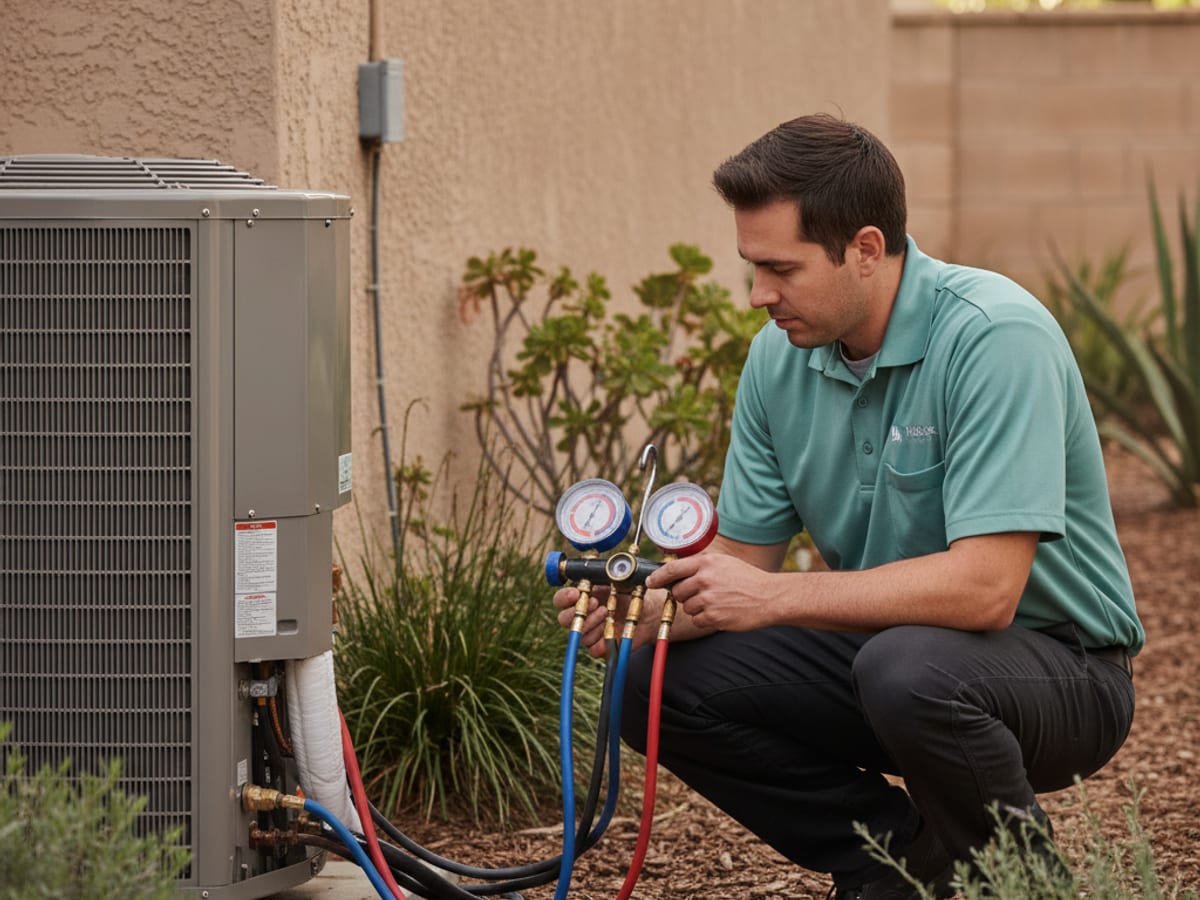
HVAC technician performing maintenance in Carlsbad, CA

HVAC maintenance in Carlsbad is available as a single tune-up visit or as an annual plan covering two visits, and the pros you're matched with quote the price up front before any work starts. The 21-point inspection includes refrigerant level check, capacitor microfarad test, compressor and motor amp draw, condenser coil cleaning, coil coating condition check, and temperature split measurement. Most appointments run about 90 minutes.

Carlsbad sits along the North County coast, and the proximity to the Pacific changes what HVAC equipment deals with. Salt air is corrosive to aluminum condenser coil fins, and within three to five miles of the coast the degradation is measurable within a few years. Marine layer cycling also means the outdoor unit runs longer hours than most people expect for a coastal city. Afternoon cloud cover burns off, temperatures swing 15 degrees in three hours, and the system responds to each cycle. That is extra runtime logged in La Costa, Aviara, and the beachside blocks of Carlsbad Village.

We match homeowners with pros across every Carlsbad neighborhood, from the coastal blocks along Carlsbad Boulevard to Calavera Hills, Bressi Ranch, and Rancho Carrillo further inland. Salt-air inspection items are part of every coastal visit.

What our Carlsbad tune-up covers

Salt air, marine layer cycling, and Santa Ana events create a specific set of failure points in Carlsbad. The 21-point inspection is built around catching them early.

  • Refrigerant level check with gauges: marine humidity and salt air accelerate seal wear; leaks caught here save July emergencies
  • Capacitor microfarad test: Santa Ana events push Carlsbad systems to 95-100F loads where capacitor failures happen
  • Compressor and fan motor amp draw: extended runtime from marine layer cycling shows up here as elevated amps
  • Condenser coil cleaning: removes salt residue, coastal dust, and biological growth from North County sea air
  • Coil coating condition check: aluminum fin corrosion from salt air within three to five miles of coast assessed every visit
  • Evaporator coil inspection for moisture buildup common in high-humidity coastal environments
  • Static pressure check for duct leaks that increase runtime in marine layer conditions
  • Condensate drain flush and float switch test: higher humidity loads the drain line faster in Carlsbad
  • Contactor and electrical connection inspection: salt air accelerates terminal corrosion
  • Thermostat calibration and cycle timing check
  • Temperature split measurement across the air handler: should read 16-22 degrees F
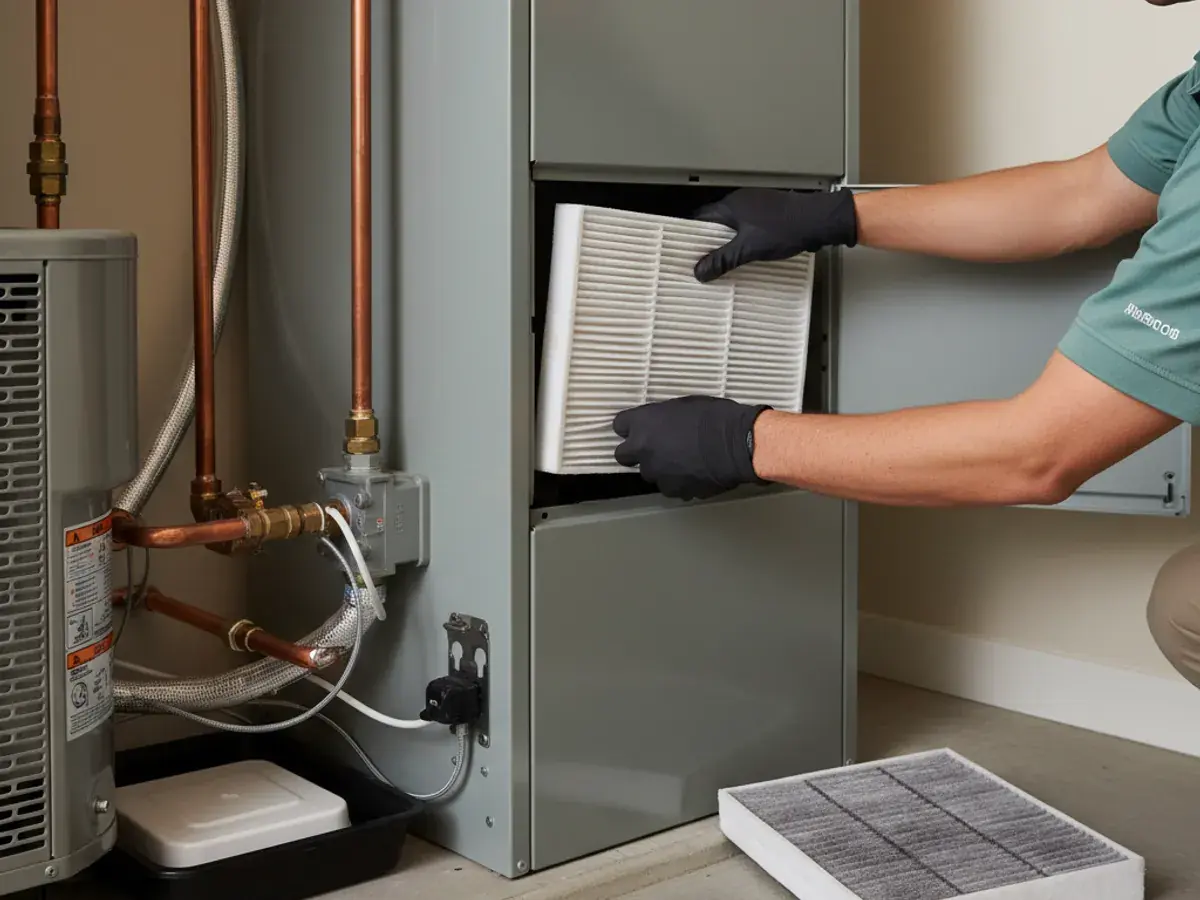
  • Filter condition check and replacement if needed (filter priced separately)
  • Blower wheel inspection for moisture-related buildup
  • Heat exchanger visual inspection on fall visits
  • Full written summary with findings and recommended action items
Maintenance detail work by an HVAC technician in Carlsbad, CA

HVAC maintenance cost in Carlsbad

The pro you're matched with quotes every visit before starting, and there's no upsell pressure at the end of the appointment.

Repair Typical range Notes
Single tune-up visit Priced by the company you sign up with Full 21-point inspection, coil cleaning included
Annual maintenance plan (2 visits) Priced by the company you sign up with; typically less per visit than a single tune-up Spring pre-summer + fall pre-winter, same 21-point process each
Filter replacement Priced by filter type and MERV rating Depends on filter type and MERV rating
Coil coating application (coastal corrosion protection) Quoted after inspection Applied when inspection finds early fin corrosion on coastal-facing units
Refrigerant top-off (R-410A) Priced by how much charge is needed If low charge is found during inspection; quoted separately before adding
Refrigerant top-off (R-22) Priced by supply availability and charge needed R-22 supply is limited; persistent leaks on older systems point toward replacement
Capacitor replacement Priced by part and labor If the microfarad test fails during the tune-up
Condensate drain line clear (severe blockage) Priced by severity of the blockage Higher coastal humidity means drain lines load faster in Carlsbad

Pricing is set by the company you are matched with, not by address. If the inspection turns up something that warrants a repair, that gets quoted separately and you decide whether to proceed.

What maintenance prevents in Carlsbad

A yearly tune-up in Carlsbad is about catching the specific failure modes coastal climate creates. Salt air, marine layer cycling, and Santa Ana heat events are a combination that does not appear in any standard HVAC maintenance guide written for the Midwest or Southeast. These are the failures a Carlsbad-specific tune-up is most likely to prevent.

Coil corrosion going unnoticed until airflow drops

Aluminum condenser coil fins corrode in salt air. The timeline depends on distance from the water and how much marine influence a property gets, but for homes within three to five miles of Carlsbad Boulevard the degradation is measurable within three to five years on an unprotected unit. Corrosion does not announce itself. The fins slowly lose their ability to transfer heat efficiently, the system works harder to compensate, and runtime increases. By the time airflow problems become obvious, the coil may need more than cleaning.

A visual inspection every year catches early fin corrosion before it becomes a coil replacement conversation. When the early stages are caught, a protective coating applied during the visit stops the progression. When it is caught late, you get a clear picture of what the coil looks like and what addressing it will take.

Capacitor failure during Santa Ana events

Carlsbad residents sometimes assume the coastal climate means easy conditions for HVAC equipment. The marine layer keeps summer daytime highs in the mid-80s on most days, and that is genuinely mild. But Santa Ana events in September and October push temperatures to 95-100 degrees on the coast, and those events arrive after a long cooling season that has already logged significant run hours. A capacitor that is drifting low in April is very likely to fail during the first Santa Ana. Testing every capacitor on every tune-up catches that. A weak one replaced in spring is a scheduled part-and-labor cost. The same failure during a Santa Ana event means an urgent repair call and typically a longer wait for parts.

Drain line overload from coastal humidity

Coastal air carries more moisture than inland air, which means the condensate system in a Carlsbad home works harder. In high-humidity months, the evaporator coil pulls significant water out of the air and that water has to drain somewhere. A partially blocked drain line that would cause an overflow every six months inland may overflow every two months in a coastal environment like La Costa or Carlsbad Village. The tune-up includes a drain flush and float switch test. A float switch that is stuck or a drain that is slow to clear gets addressed during the visit, not after a water damage call.

Electrical terminal corrosion from salt air

Every electrical connection on an outdoor unit exposed to ocean air is subject to salt corrosion over time. Contactors, wire terminals, and capacitor connections on Carlsbad units closer to the coast show corrosion that is not present on inland units of the same age. Corroded connections cause resistance, which causes heat, which shortens the life of whatever component is downstream. Every accessible connection gets inspected and tightened on each visit. Terminal corrosion caught early is cleaned and treated. Left alone, it becomes a contactor failure or a board-level issue.

Local angle

HVAC maintenance built for Carlsbad homes

How the marine layer changes HVAC demand in Carlsbad

Carlsbad's coastal climate looks mild from the outside. Compared to Escondido or El Cajon, it is. But the marine layer cycling that characterizes coastal North County creates a specific pattern of HVAC demand that differs from both hot inland climates and genuinely mild coastal ones. Morning cloud cover keeps temperatures in the low 60s. By noon the layer burns off and temperatures rise quickly. By late afternoon the sea breeze kicks in and the system cycles down again. This happens most summer days, and each temperature swing is a call for the system to respond.

The result is that Carlsbad HVAC systems, especially in La Costa and the oceanfront blocks of Carlsbad Village, log more start-stop cycles per day than a system in a climate with steadier temperatures. More cycles means more wear on compressor start components, more thermal stress on capacitors, and more condensate production. A tune-up that accounts for marine cycling is different from a generic 21-point check.

Neighborhood-by-neighborhood differences

La Costa and Aviara sit in the south end of Carlsbad closest to the coast, in newer construction from the 1980s through 2000s. Systems here are generally in better shape than north county inland, but salt air exposure is real at this distance, and the golf course and lagoon proximity adds humidity. Many La Costa homes have two-zone systems covering multiple floors, which means two sets of components to inspect. Corrosion issues on the outdoor units here tend to show up before they do in Calavera Hills or Bressi Ranch.

Carlsbad Village and the Strand blocks along Carlsbad Boulevard are the most salt-exposed addresses in the city. A unit sitting on the west side of a building two blocks from the beach is a different maintenance situation than one a mile inland. These are the properties where coil coating condition and electrical terminal corrosion get the closest attention.

Bressi Ranch and Rancho Carrillo sit further inland toward the eastern edge of Carlsbad, with housing stock from the 2000s and newer. Salt air influence is less severe here, but these are also planned communities with HOA restrictions on visible equipment. Clearance and access during service is sometimes tighter on these properties. Calavera Hills is mixed-vintage from the 1980s and 1990s and tends to have older systems entering the replacement window.

Coastal-rated equipment and what it means at service

Coastal-rated HVAC equipment uses treated coil coatings and corrosion-resistant materials designed specifically for salt-air environments. It is the standard for new installations within a certain distance of the coast, and many Carlsbad homes built in the 2000s and later have it. But coatings wear over time, and a coastal-rated system that has never had the coil coating inspected since installation may no longer have meaningful protection.

Part of every Carlsbad coastal visit is assessing whether the coating is still intact. If the fins are clean, the coating looks uniform, and there is no visible corrosion, that gets documented and the visit moves on. If early corrosion is starting at the fin edges or the coating is breaking down, that opens a conversation about reapplication. A protective coating applied before corrosion gets established costs far less than a full coil replacement down the line, so catching it early is worth the ask.

Carlsbad maintenance questions

How much does HVAC maintenance cost in Carlsbad?

It depends on the company you're matched with and what the inspection finds. A single tune-up and the two-visit annual plan are both priced up front before anything starts, and the annual plan typically works out to less per appointment than paying for two single visits. Filter replacement is priced separately by filter type and is not part of the base tune-up. Coil cleaning is included in every visit. For units showing early salt-air corrosion, a protective coating application is quoted after inspection.

Does salt air really affect my HVAC system in Carlsbad?

Yes, concretely. Aluminum condenser coil fins corrode in salt air environments. Within three to five miles of the coast the degradation is visible in three to five years on unprotected units. Salt also accelerates corrosion on electrical terminals and contactors. The effect is more pronounced on units facing the ocean or on west-facing exposures. Coil coating inspection is part of every coastal Carlsbad tune-up.

How often should I service my HVAC in Carlsbad?

Twice a year is the right schedule for most Carlsbad homes. The marine layer cycling and salt air exposure justify more frequent attention than a single annual visit. A pre-summer check in March or April catches refrigerant levels and coil condition before the season. A fall visit in October covers the furnace heating controls and catches anything the summer put stress on. The annual plan covers both visits and is typically the better value over two separate single-visit appointments.

What is the best time of year to schedule HVAC maintenance in Carlsbad?

March or April for the pre-summer visit. That is before Santa Ana season and before the schedule fills. The first Santa Anas can hit Carlsbad in late September or October, and those are when coastal systems get their hardest loads. You want refrigerant levels and capacitor condition confirmed before that. For the fall visit, November works well after the Santa Ana season settles.

What does a 21-point tune-up include?

Refrigerant level check with gauges, capacitor microfarad test, compressor and motor amp draw, condenser coil cleaning, coil coating condition check for coastal corrosion, evaporator coil inspection, static pressure measurement, condensate drain flush and float switch test, contactor and electrical connection check, thermostat calibration and cycle timing, temperature split measurement, filter condition check, and blower wheel inspection. Every visit ends with a written summary of everything found.

My Carlsbad home is a newer build in Aviara. Do I still need maintenance?

Newer systems need maintenance just as much as older ones, especially in a coastal environment. Aviara sits close enough to the lagoon and coast that salt air influence is real. A system that is three years old and has never had a coil coating inspection or refrigerant check is not automatically fine just because it is new. Capacitors degrade with heat cycles regardless of age, and drain lines in coastal high-humidity homes load faster. The only way to know the system is in good shape is to check it.

What happens during a Santa Ana in Carlsbad?

Santa Ana events push Carlsbad temperatures to 95-100 degrees on the coast, sometimes higher. For a city that spends most of summer in the mid-80s, that is a significant jump, and it arrives after a long cooling season that has already logged heavy runtime. Systems with weak capacitors fail during the first heat surge. Systems with low refrigerant charge stop cooling when demand peaks. A pre-season tune-up that catches those issues in spring removes the Santa Ana risk.

Is maintenance different for a La Costa home versus Calavera Hills?

Somewhat. La Costa sits closer to the coast and the lagoon, so salt air exposure and humidity are higher. Coil coating condition and electrical terminal corrosion get closer attention on La Costa units. Calavera Hills sits further inland with less marine influence, but it tends to have older housing stock with systems entering the replacement window. The inspection covers the same 21 points, but what it typically finds differs by location.

What is a coil coating and do I need it?

A coil coating is a protective treatment applied to the aluminum fins of a condenser coil that slows salt-air corrosion. Coastal-rated HVAC equipment ships with this coating from the factory, but the coating wears over time. Whether you need reapplication depends on what the inspection finds. If the coating looks intact and the fins show no corrosion, you do not need it. If early fin degradation shows up, reapplication stops it well before it turns into a coil replacement conversation.

How does the marine layer affect my AC runtime?

Marine layer cycling creates a demand pattern that is harder on equipment than either a steady hot climate or a genuinely mild one. Morning cloud cover keeps temperatures low, then the layer burns off mid-day and temperatures rise quickly, then the sea breeze brings them back down. Each swing is a system response. More cycles per day means more compressor starts, more thermal stress on capacitors, and more condensate production. Over a season, that is more run hours and more wear than the moderate peak temperatures suggest.

Do you service Bressi Ranch and Rancho Carrillo?

Yes. Pros in our network cover all Carlsbad neighborhoods at the same pricing structure, including Bressi Ranch, Rancho Carrillo, Calavera Hills, La Costa, Aviara, and the coastal Village blocks. Bressi Ranch and Rancho Carrillo homes are planned community builds from the 2000s, typically with HOA restrictions on visible equipment. Service is done within clearance requirements and everything is left in order. No surcharge for any address.

My outdoor unit faces the ocean. Is that a problem?

West-facing units within a few blocks of Carlsbad Boulevard or the Strand take more direct salt air exposure than units on sheltered or inland-facing sides of a building. If your unit faces the ocean, coil coating condition and electrical terminal inspection are the first things checked. It does not mean the unit will fail, but it means the maintenance calculus is weighted more toward corrosion prevention than heat load management.

Can I do anything between tune-ups to protect my system?

Yes. Rinse the condenser fins with a gentle garden hose spray every two to three months to remove salt residue and coastal dust before it packs in. Check the condensate drain pan during high-humidity months, especially in summer. Change the filter on schedule, and increase frequency if air quality degrades from fires or heavy coastal particulates. None of that replaces a professional inspection, but it noticeably extends how long the system stays in good condition between visits.
Service area

Where we serve Carlsbad

We cover Carlsbad and the surrounding North Coastal communities, and we match you with a licensed local pro for maintenance.

Serving Carlsbad

Need maintenance in Carlsbad?

We match you with a licensed local HVAC pro for your repair or replacement.

Call now · (442) 777-6440 Our operators answer Quote