A Poway summer is a stress test. Ten months of cooling demand, peak-summer afternoons, and PSPS power shutoffs in the eastern hills that hard-start compressors when the grid comes back. A spring tune-up is how Poway systems get through August without an emergency call.
Climate Pros SD matches Poway homeowners with a licensed HVAC company. That company quotes in writing whether they offer a single visit or a maintenance plan, what they inspect, and any fees before work starts. Typical industry tune-ups look at capacitors, coils, and refrigerant charge. Ask the matched company which of those they include. Appointment length is set by that company.
The timing matters more in Poway than almost anywhere in the county. The first heat waves land in late May, contractor calendars tighten by June, and the failures a tune-up catches, weak capacitors, slow refrigerant leaks, packed condenser coils, are exactly the ones that take systems down on the first peak-summer weekend. A capacitor reading 70 percent of its rated microfarads in April is a cheap planned line item. The same capacitor discovered dead in July is a sweaty two-day wait.
Climate Pros SD matches Poway homeowners with a licensed HVAC company for tune-ups across Poway: the 1970s-90s stock around Old Poway Village and Poway High, the newer Green Valley Trails subdivisions in PSPS territory, and the equestrian properties on Garden Road where paddock dust packs condenser coils faster than anywhere else in the inland valleys.
What the Poway tune-up covers
Every item is measured, not eyeballed, and the written report shows the readings so you can compare year over year.
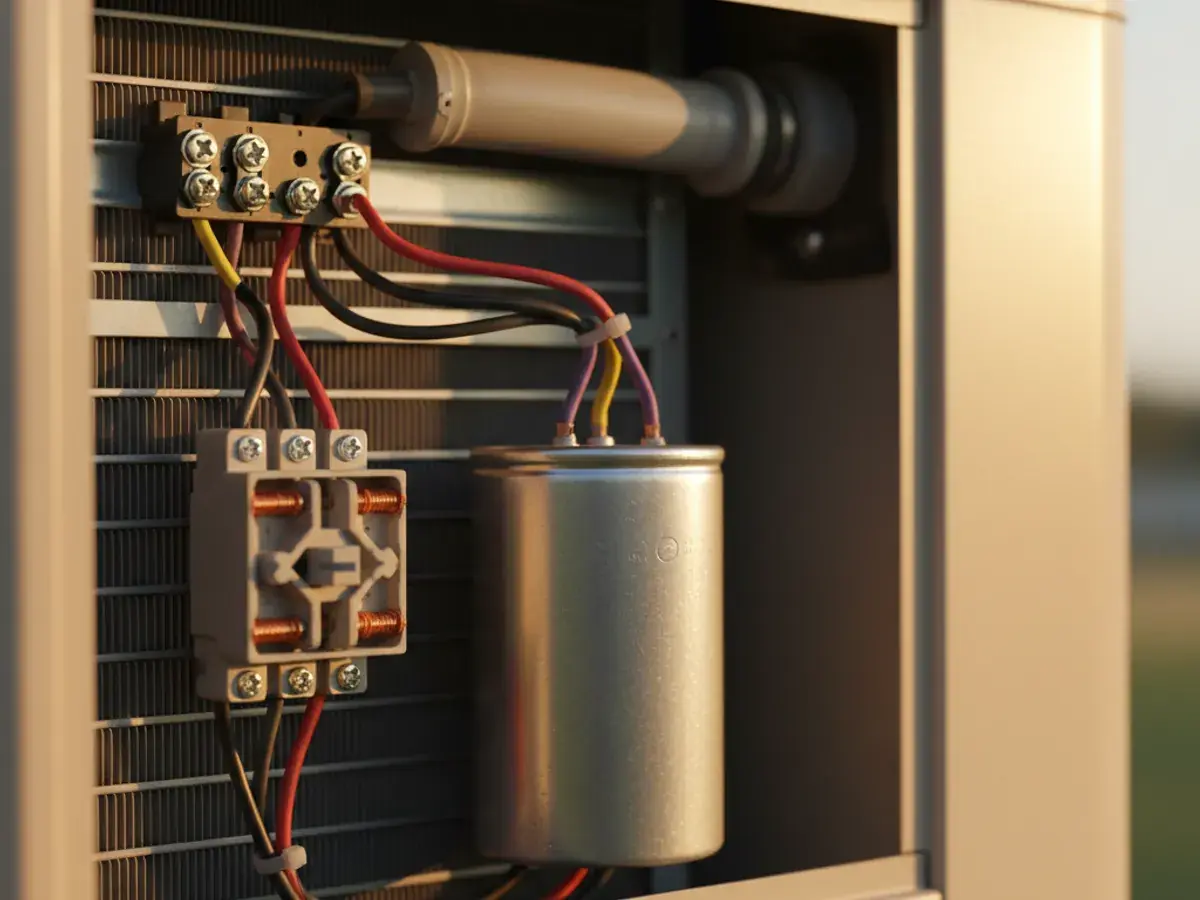
Run capacitor microfarad measurement, the single highest-value check in Poway given PSPS hard-start risk
Refrigerant pressure, superheat, and subcooling, catches slow leaks before summer demand exposes them
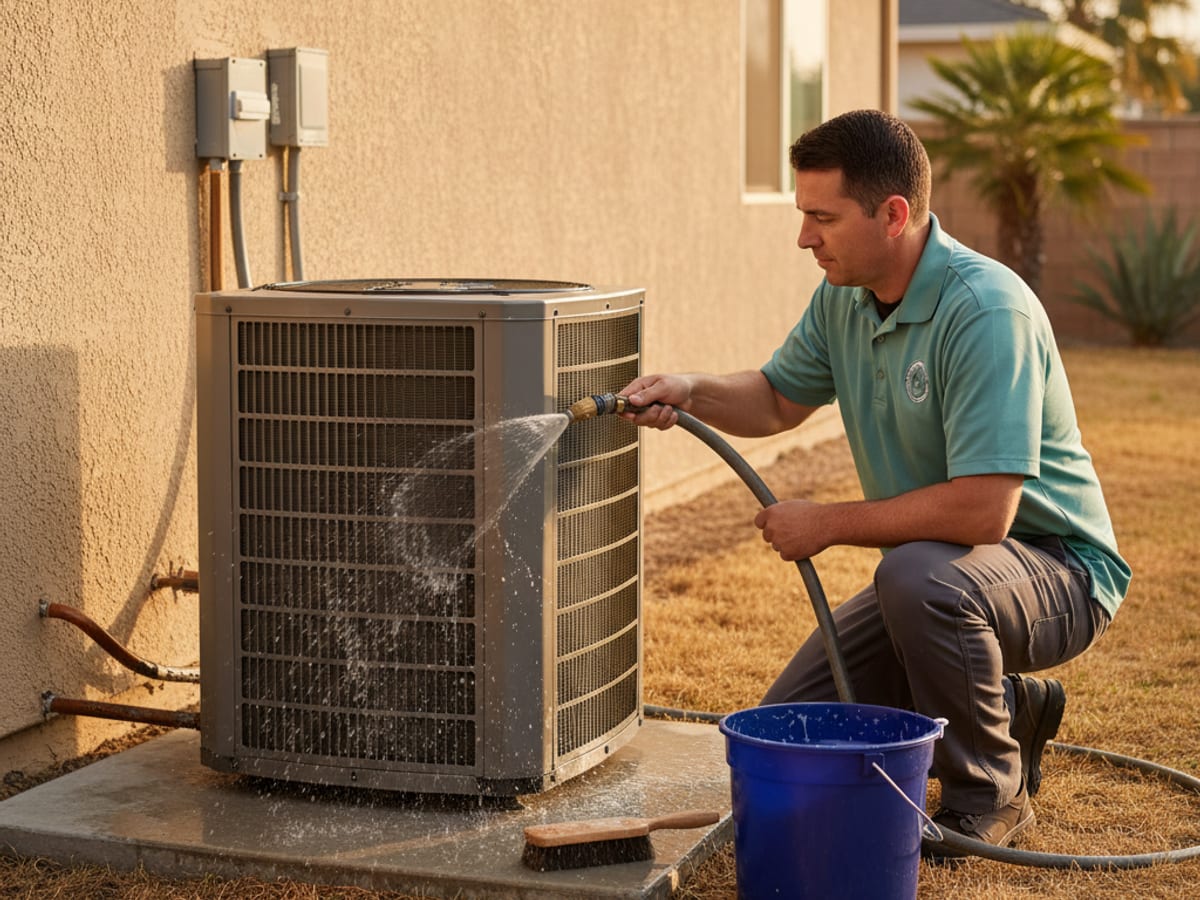
Condenser coil wash and fin straightening, critical on Garden Road equestrian properties
Evaporator coil visual inspection for buildup and early freeze indicators
Blower wheel inspection and motor amp draw
Static pressure across the filter and coil, flags duct restrictions that stretch runtime on peak-summer days
Contactor, relay, and electrical connection inspection
Condensate drain flush and float switch test
Thermostat calibration and cycle timing
Temperature split across the air handler, should read 16 to 22 degrees
Hard-start assessment for eastern Poway properties in SDG&E shutoff territory
Written report with every reading and any recommended follow-up, no upsell pressure
AC tune-up cost in Poway
The company you are matched with quotes the visit in writing before starting. Ask whether they offer a single appointment or a plan, what they inspect, and which fees are extra.
Repair
Typical range
Notes
Spring AC tune-up
Quoted by the matched company
Full cooling-side inspection, coil wash included
Annual plan upgrade (2 visits)
Quoted by the matched company if they offer a plan
Adds a fall heating check; the better value if you keep it on the calendar
Capacitor replacement
Priced by capacitor size and brand
If the microfarad test fails; installed during that visit only if they quote it and you approve
Hard-start kit
Priced by compressor size
Recommended for Green Valley Trails and eastern hill properties in PSPS territory
Refrigerant top-off (R-410A)
Priced by the amount of refrigerant needed
Quoted separately if the charge check finds the system low
Filter replacement
Priced per filter
By filter type and MERV rating
If the inspection finds a repair, it's quoted before anyone touches anything.
What a spring tune-up prevents in Poway
Poway equipment ages on a different clock. A system here logs 2,500 to 3,000 operating hours a year against 800 to 1,200 for the same equipment in Carlsbad. The three failures below account for most of the July and August emergency calls that show up in Poway, and all three are catchable in April.
Capacitor death on the first hot weekend
The run capacitor is a common summer failure in inland San Diego County, and Poway adds a multiplier: PSPS shutoffs. When SDG&E restores power after a shutoff, the compressor takes full line voltage against unequalized refrigerant pressure. A capacitor already drifting low rarely survives that. The microfarad test shows exactly how much margin is left, and a borderline capacitor can be replaced during that visit if the matched company quotes it, instead of failing during a heat wave.
Slow refrigerant leaks that hide until June
A system at 80 percent charge cools fine in April. It cannot hold the set point on a peak-summer afternoon. The matched company checks charge with gauges in spring, when a slow leak is a documented finding and a scheduling conversation, not an emergency. Persistent leaks on older R-22 systems are a different conversation, and the matched company should tell you honestly when topping off stops making financial sense.
Coil packing on equestrian and hillside properties
Garden Road paddock dust and dry chaparral debris pack condenser fins fast enough that two skipped seasons can visibly restrict airflow. The compressor pays for that restriction in amp draw and head pressure all summer. The coil wash in every tune-up resets it, which is why it is included rather than sold as an add-on.
Local angle
Tune-ups built for how Poway actually runs
Old Poway Village and the Poway High tracts
The older core of Poway runs 1970s-90s systems, many at or past the typical replacement window. On equipment this age the tune-up doubles as an honest condition report: amp draw against spec, contactor heat damage, refrigerant history. An inspection that tells you the system has two summers left is cheaper than learning it from a dead compressor in August.
Green Valley Trails and the eastern hills
Newer systems, but PSPS territory. The capacitor check and hard-start assessment matter most here, and the written report notes shutoff exposure so you have the context when SDG&E announces the next event. One habit worth keeping: after a restoration, wait ten to fifteen minutes before switching the thermostat back to cool so refrigerant pressures equalize.
Garden Road equestrian properties
Dust load drives everything: coils pack faster, filters load in four to six weeks instead of monthly, and skipped maintenance shows up as evaporator freezes on hot afternoons. Ask the matched company to treat the coil wash and filter check as the core of the visit on these properties, not the formality it can be on a suburban lot.
What else is ac tune-up in Poway called?
Homeowners search for this a few different ways. In Poway it also goes by AC tune up in Poway , air conditioning tune up in Poway , air conditioner tune-up in Poway , and pre-summer AC service in Poway . They all reach the same licensed local pros, and the operator who answers will
sort out which one your job actually is.
Poway ac tune-up questions
How much does an HVAC tune-up cost in Poway?
The matched company quotes a spring AC tune-up in Poway. Ask whether it covers the capacitor microfarad test, refrigerant charge check, condenser coil wash, electrical inspection, condensate drain flush, and a written report. The two-visit annual plan adds one additional visit for a fall heating check. Parts found failing during the inspection, capacitors most commonly, are quoted separately and installed during that visit only if they quote it and you approve.
When should I schedule a tune-up in Poway?
March or April. Poway gets its first real heat in late May, and tune-up slots fill quickly once the first heat wave hits. A spring appointment means anything the inspection finds gets fixed on your schedule instead of during an emergency backlog.
What is the difference between the single tune-up and the annual plan?
The single visit is the one-time spring cooling tune-up. The annual plan covers two visits, the same spring tune-up plus a fall heating check that covers ignitors, flame sensors, and heat pump defrost controls before winter. If your system is a heat pump or your furnace is past 10 years old, the plan is the better value.
Does a tune-up really prevent summer breakdowns?
It prevents the most common ones. Weak run capacitors, low refrigerant charge, and packed condenser coils account for the majority of July and August no-cool calls in Poway, and all three are measurable in spring. A tune-up does not make a 25-year-old compressor young again, but it tells you honestly where the system stands before the season that breaks it.
I am in Green Valley Trails with PSPS shutoffs. Does the tune-up account for that?
Yes. Eastern Poway visits include a hard-start assessment because power restoration after a shutoff is the hardest start a compressor sees all year. If the capacitor is trending low the matched company may recommend replacing it, and for properties with repeated shutoff exposure a hard-start kit, priced by compressor size, meaningfully reduces the restoration surge.
Do you tune up heat pumps and mini splits in Poway?
Yes. Heat pumps get the same cooling-side inspection plus a reversing valve check, and mini splits get blower wheel cleaning, drain pump testing, and charge verification on the line set. Ask the matched company how they price each system type.