TL;DR
- Mini splits fit a specific set of San Diego homes: additions and ADUs, rooms that stay far off setpoint, older homes without ductwork, or true zone control.
- Climate Pros SD does not publish installed mini-split prices. Ask for equipment, line sets, electrical, condensate, and start-up as line items.
- Most mini split problems are install problems: wrong sizing, bad flare connections, no vacuum test, or skipped condensate drainage.
- If you are straight-replacing a working central system with sound ducts, central AC is often the simpler path.
Ductless mini splits are a strong answer for a specific set of San Diego HVAC problems. Not for every home. Climate Pros SD matches you with licensed HVAC companies. We do not install equipment, set prices, or promise same-day work.
Here is when to consider one, when to skip it, and what separates a good install from a bad one.
What is a ductless mini split?
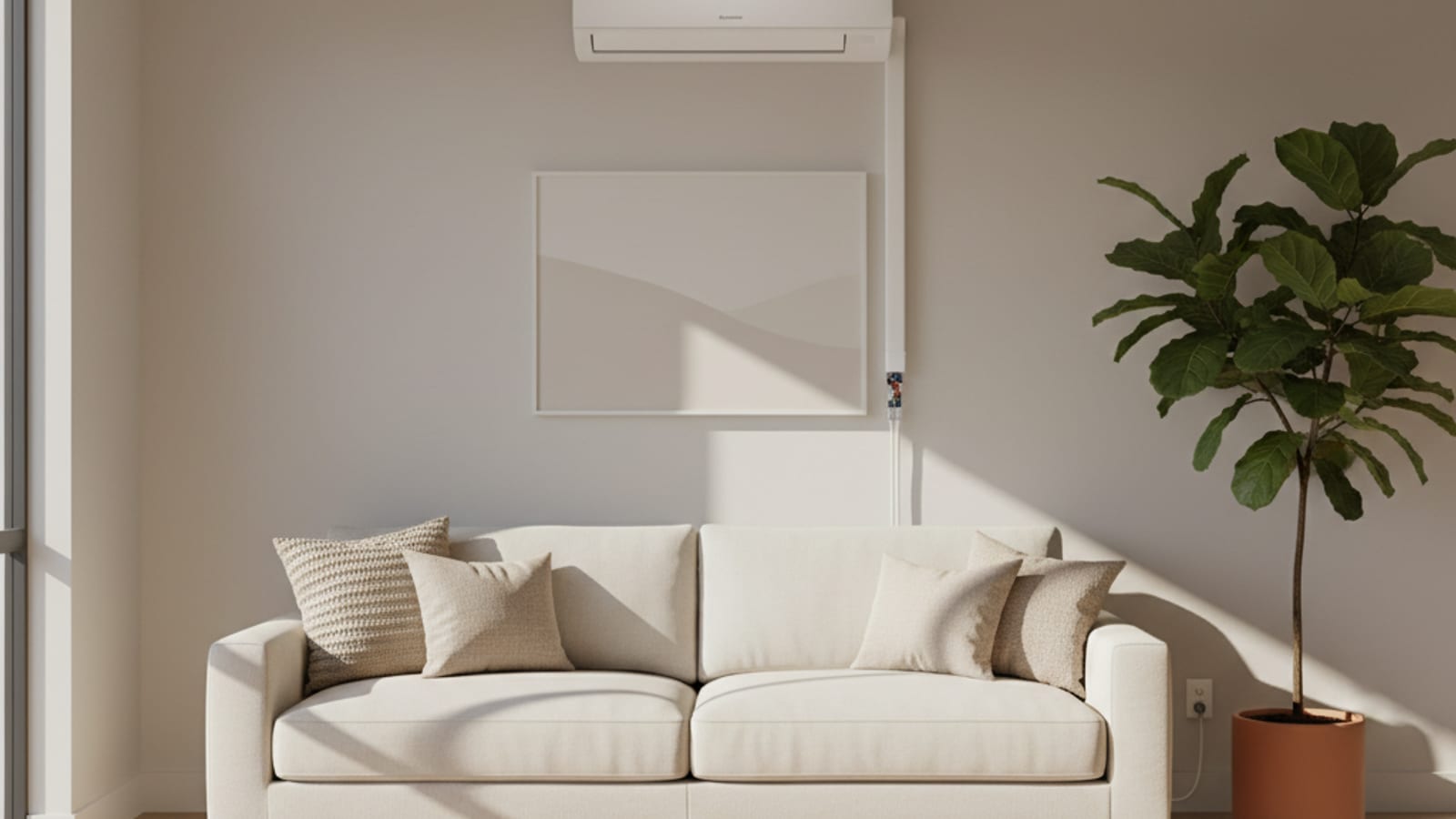
A mini split is a heat pump without ductwork. One outdoor unit (the condenser) connects to one or more indoor units (called heads) via a refrigerant line set that runs through the wall. Each indoor head cools and heats its own zone independently.
“Mini split” because it is a small split system. “Ductless” because no ductwork is involved.
Modern residential mini splits are heat pumps. They cool and heat. For economics, see our heat pump vs. AC comparison.
When does a mini split make more sense than central AC?
1. Additions, ADUs, and garage conversions
You added space to the back of the house, or converted the garage into a home office. Your central AC was sized for the original footprint. It does not have capacity for the new room. Extending ductwork is expensive and often disappointing.
A single-zone mini split solves this cleanly. One outdoor unit, one wall-mounted head, refrigerant line through the wall, independent thermostat. No ductwork, no rebalancing the existing system, no extra load on the main AC. The matched licensed contractor sizes and installs it. Climate Pros SD does not.
2. One room is always far off the rest of the house
Usually the master bedroom, a sunroom, or a second-story room. Even with central AC running, this room never reaches setpoint. Or it overshoots.
This is often a duct balancing problem. Redoing the ductwork is intrusive. A mini split in that single room gives independent control without touching the central system.
3. Older homes without ductwork
Historic homes, mid-century bungalows, Craftsman homes in La Jolla Village or Coronado. Plenty of San Diego homes never had central ducts. Retrofit ductwork into a 1920s craftsman is a major project. Multi-zone mini split installation can condition several rooms without opening walls for ducts.
4. You want true zoning without a damper system
Central AC with a real zoning system (multiple thermostats, electronic dampers, separate returns) can work, but it is a retrofit on the existing ducts.
Multi-zone mini splits are zoning by default. Each head is its own zone with its own thermostat. Master bedroom cooler while the living room is warmer is the normal design.
5. You want to avoid duct loss
ENERGY STAR says a typical forced-air house can lose about 20% to 30% of the air moving through ducts because of leaks, holes, and poorly connected ducts. That is a national typical-house statement, not a measured result for your San Diego attic. Mini splits have no ductwork, so they do not have that leak path. They do not automatically beat a well-sealed ducted system on your bill.
When should you skip a mini split?
Large open floor plans
If you have a large open living area, a mini split’s wall-mounted head sits in a fixed spot and has to throw air a long way. A central system with multiple supply vents often distributes better.
Budget-first replacements of working central systems
If you are replacing a working central system with sound ducts, mini splits usually cost more than a straightforward AC installation. Unless you need the zoning or the capacity increase, central is often cheaper. Ask for both quotes.
Homes where the wall-mounted head aesthetic is unacceptable
Wall-mounted heads are visible. They are small and modern-looking, but some homeowners find any visible equipment unacceptable. Concealed ducted mini splits (slim-ducted units that hide in a soffit) exist. They add complexity and cost. Ask for that option as a separate line, not a percentage markup from this blog.
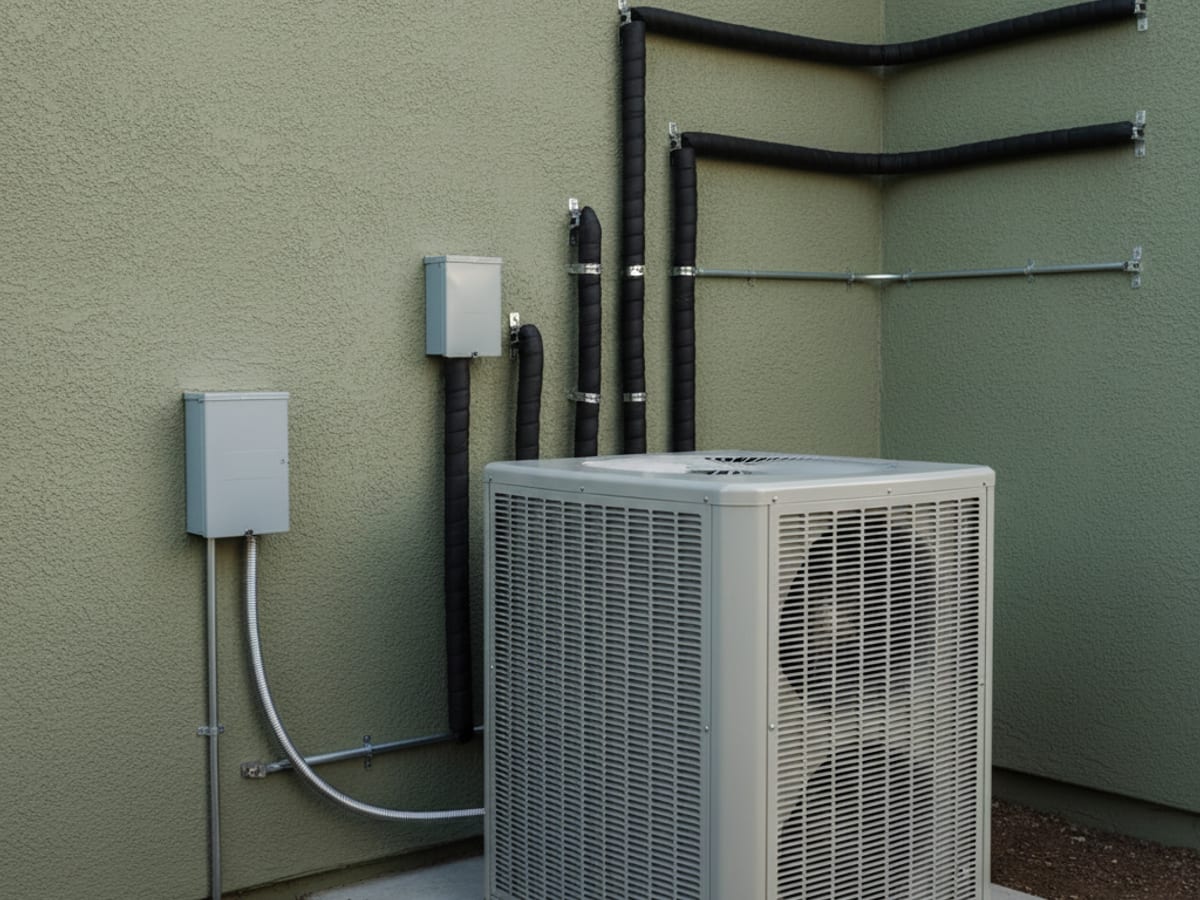
Mini split vs central AC: what should a 1,600 sq ft quote compare?
| Scenario | Mini split (multi-zone) | Central AC + furnace |
|---|---|---|
| Installed price | Written quote from the matched company | Written quote from the matched company |
| Duct loss | No ducts | ENERGY STAR typical-house 20% to 30% national, not your measured leakage |
| Zone control | Native, per head | Single zone unless a zoning retrofit |
| Best for | No existing ductwork, problem rooms, additions | Working ductwork already in place |
The federal 25C tax credit does not apply to property placed in service after December 31, 2025. If you mention 25C for 2025 property, the IRS annual limit for qualified heat pumps and heat pump water heaters was $2,000. TECH single-family HVAC reservations stopped November 14, 2025. HEEHRA single-family was fully reserved February 24, 2026. Those AMI design caps are not live money. Do not stack TECH and HEEHRA. SDG&E Golden State retail offerings have ended. Confirm current programs at sdge.com/rebates.
Rule of thumb: if ductwork already exists and works, central is often cheaper. If you are starting from no ductwork or solving a problem room, a mini split often wins on performance. Use the quotes, not this table as a bid.
What does a good mini split installation look like?
Most mini split problems are installation problems, not equipment problems.
1. Proper sizing, zone by zone
Each head gets its own load calculation. An oversized head in a bedroom will short-cycle and leave humidity. Identical heads in every room is often wrong.
2. Refrigerant line set properly flared and vacuumed
Mini splits connect via flare fittings. A bad flare leaks. A properly flared line set is torqued to spec for each line size and vacuum-tested before charging. Skip the vacuum step and the system can fail early.
3. Correct line set length and refrigerant adjustment
Every mini split has a pre-charged refrigerant amount for a specific line set length. Longer runs need refrigerant added. Shorter runs need some recovered. Installers who do not adjust charge for line set length leave systems mis-charged.
4. Proper condensate drainage
Indoor heads generate condensate that needs to drain, typically by gravity to an exterior drain. Some installs require a condensate pump. Skipping the pump where one is needed leaves water in walls.
5. Electrical sized right
Each outdoor condenser needs the right dedicated circuit, breaker, and disconnect. A licensed electrician handles the electrical side when panel work or new circuit runs are needed.
What should you ask a mini split installer?
- “How are you sizing each zone? Can I see the calculation?”
- “What is your flare process? Are you torqueing to spec and vacuum-testing?”
- “How are you handling condensate from each indoor head?”
- “Is this a Mitsubishi / Daikin / Fujitsu / LG authorized dealer install for warranty purposes?”
- “What is included in the install price: line sets, electrical, disconnect, start-up?”
The answers will tell you fast if they know what they are doing.
Which mini split brand is best?
Matched licensed contractors commonly quote Mitsubishi, Daikin, Fujitsu, and LG. A quick rundown of product lines, not a brand ranking from this site:
- Mitsubishi Electric: Cold-climate Hyper-Heat models exist for climates far colder than San Diego. Parts support is generally strong.
- Daikin: Broad lineup, including concealed-duct options. Commissioning can be more involved.
- Fujitsu: Strong efficiency ratings on paper. Technician familiarity varies by company.
- LG: Broader price range. Confirm local parts support.
Warranty support and parts availability matter for the life of the system. Ask who honors labor if a different company returns.
The bottom line
If you are adding space, solving a problem room, converting a home without ducts, or want true zoning, a mini split is often the right answer. If you are straight-replacing a working central system, it usually is not.
Ask the matched company for brand-neutral quotes and which path is better for your rooms.
Frequently asked questions
How much does a mini split cost in San Diego?
Climate Pros SD does not publish installed prices. A single-zone job and a multi-zone job are different scopes. Ask for equipment, line sets, electrical, condensate, permit pulled by the licensed contractor, and start-up. Do not subtract a 2026 federal, TECH, or HEEHRA stack that is not open money. See heat pump rebates.
How long do mini splits last?
There is no published Climate Pros SD lifespan. Quality of the flare, charge, and condensate work matters more than a year range. Bad installs fail early regardless of brand.
Are mini splits more efficient than central AC?
They can be, especially if your ducts leak. ENERGY STAR’s 20% to 30% typical-house duct loss is national, not a measured San Diego house. Mini splits deliver the air they make into the room. They do not guarantee a lower SDG&E bill.
Can a mini split heat and cool?
Yes. Modern residential mini splits are heat pumps. They cool in summer and heat in winter. In San Diego’s mild climate they heat well outside of the mountain communities.
Do mini splits look bad on the wall?
They are visible. Modern wall-mounted heads are slim. If any visible equipment is unacceptable, ask about concealed ducted heads as a separate quote.
Do mini splits qualify for SDG&E and federal rebates?
Do not budget Section 25C for a 2026 install. TECH single-family reservations stopped November 14, 2025. HEEHRA single-family funds were fully reserved as of February 24, 2026. Design caps are not currently available money. Confirm SDG&E at sdge.com/rebates. A 2025 install could still involve 25C on the 2025 return, with the IRS $2,000 heat pump / HPWH annual cap. See the heat pump rebate guide.
Can I add a mini split to one room without changing the rest of my HVAC?
Yes. A single-zone mini split runs independently from your central system. Common use case: a bedroom that stays far off the rest of the house. The two systems do not share ducts. Timing on site is the matched company’s, not a brand promise.
Thinking about a mini split? Call (442) 777-6440. Climate Pros SD matches you with a licensed pro. We serve Rancho Bernardo, San Diego, El Cajon, Vista, and all of San Diego County. The matched company walks the rooms, measures, and leaves a written quote.
Related service: AC repair.